0%

Choosing a High-Performance Electric Motorcycle involves more than comparing top speed or horsepower. The right bike should match your commute, riding experience, charging access, and budget. A machine that feels thrilling on an open road may be tiring in stop-and-go traffic.

Specifications offer a useful starting point, but they need context. Battery capacity does not guarantee a particular range; rider weight, temperature, speed, hills, and cargo can all change the result. Check whether range figures come from independent testing or manufacturer estimates, and look for details about charging time and battery warranty. Numbers alone can mislead.

Pay attention to the ride itself. Seat height, handlebar reach, braking feel, and low-speed balance become obvious during a test ride. So does weight. If a dealer permits, try the bike on familiar roads and note how it responds at the speeds you actually use. A short ride cannot answer everything, and that is easy to forget when a new bike feels exciting.

The seven tips ahead focus on practical checks: motor performance, usable range, charging, safety features, comfort, ownership costs, and service support. Compare models using the same criteria, and confirm important claims with current specifications or a qualified dealer. A little skepticism helps. The best choice is not always the fastest one; it is the motorcycle you can ride confidently and maintain over time.
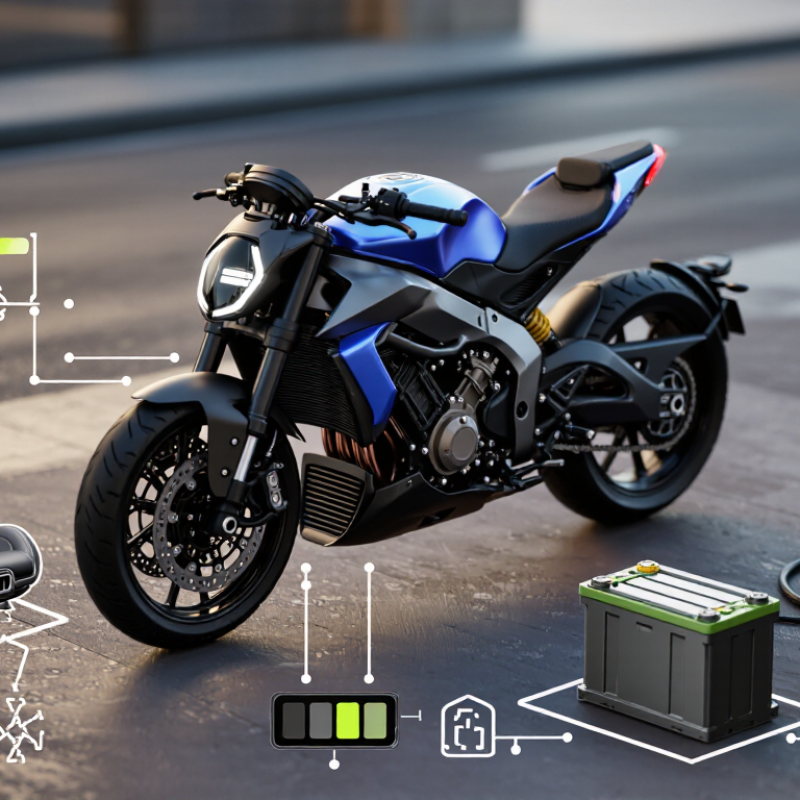
7 Tips for Choosing a High Performance Electric Motorcycle?

Define Performance Needs: Compare Power, Torque, and the EU A1 11 kW Limit

A high-performance electric motorcycle should fit the roads and riding you actually face. Compare continuous power, torque, and weight, not just the largest number in an advertisement. Power helps sustain speed, while torque affects how quickly the bike responds from a stop. That difference is clear when joining traffic or climbing a steep street. Feel matters, too. A sharp throttle can make modest power harder to manage in wet conditions.

For riders considering the EU A1 category, the key limit is 11 kW of maximum continuous rated power. The motorcycle must also stay within a power-to-weight ratio of 0.1 kW per kilogram. Check the vehicle’s official technical documents; a peak-power figure alone may not tell you how it is classified. Regulations and licensing details can vary by location, so confirm the requirements where you ride. Numbers can be slippery. Compare the bike’s weight with its usable power, then consider whether its acceleration feels smooth at low speeds. A quick test ride may reveal an awkward throttle response that a specification sheet misses. I would not treat one impressive figure as proof of real-world performance.

Choosing an A1-Class Electric Motorcycle: Rated Power Limits

Compare the A1 power ceiling with the power-to-mass limit. The bars show the maximum rated power allowed by these two limits at each example vehicle mass.

Under EU A1 rules, power is limited to 11 kW and the power-to-weight ratio to 0.1 kW/kg. Values are calculated as the lower of 11 kW or 0.1 kW/kg × the example mass; they are regulatory calculations, not specifications for particular motorcycles.

Match Battery Capacity to Range: Compare kWh, Wh/km, and Test-Cycle Claims

Battery capacity is only half the range story. Compare usable kilowatt-hours with claimed consumption in watt-hours per kilometer. For example, a 6 kWh usable pack divided by 60 Wh/km suggests 100 km under those test conditions. That is arithmetic, not a road promise. SAE J2982, the industry’s electric-motorcycle energy-consumption and range test practice, provides a repeatable basis for comparing results. Check whether a specification follows a documented procedure, and whether its battery figure is gross or usable.

Tip: Match the claim to your route. A steady, warm-weather test may not resemble stop-start traffic, steep hills, cold mornings, or a passenger. Those details matter. A 20 km commute with a fast road section can use more energy than the same distance at moderate city speeds. Treat test-cycle range as a comparison tool, not a guarantee.

Before buying, calculate your own buffer: usable kWh × 1,000 ÷ realistic Wh/km. If the trip is 80 km and your estimate is 80 Wh/km, that is 6.4 kWh before reserve. Ask for the test cycle, temperature, speed profile, and payload behind the figure. Small caveat: real riding is messy, and my own route estimate could still be optimistic.

Check Charging Fit: SAE J1772 Level 2 Supports AC Charging up to 19.2 kW

When comparing high-performance electric motorcycles, check the charging connection before judging a bike by its peak power. SAE J1772 Level 2 equipment can deliver AC charging at up to 19.2 kW under suitable conditions. That figure describes the equipment’s potential, not a guaranteed motorcycle charging speed. The bike’s onboard charger sets its own limit, and many motorcycles accept much less. Check the owner’s manual for connector compatibility and the maximum AC input.

Look beyond the plug. A Level 2 station may need a suitable circuit, and charging speed can vary with battery temperature, charge level, and electrical supply. A cold battery may take power more slowly. So can a nearly full one. If a motorcycle accepts 3.3 kW, connecting it to a 19.2 kW station will not make it charge at 19.2 kW. Confirm whether an approved adapter is needed, and avoid assuming every public station has the same cable or access. I once focused too much on the station’s headline rating; the bike’s actual onboard limit mattered more. Check the figures, then picture your regular parking spot and charging routine.

Assess Braking and Tires: EU Regulation 168/2013 Requires ABS on L3e-A2/A3 Bikes

When comparing electric motorcycles, check the exact L-category and subcategory on the registration or type-approval documents. Under EU Regulation 168/2013, L3e-A2 and L3e-A3 motorcycles are required to have an anti-lock braking system. Confirm that the specification matches the paperwork, rather than relying on a sales description. A dashboard ABS warning light should perform its self-check as described in the owner’s manual. If it stays lit after the system’s normal check, ask a qualified technician to inspect the bike. Small detail. Big safety value.

ABS helps reduce wheel lock during hard braking, but it cannot create grip where tires have little. Inspect tread for uneven wear, cracks, or embedded debris, and check cold pressure against the manufacturer’s guidance. Electric motorcycles can be heavy, and their immediate torque may expose weak traction sooner than expected. Make sure tire size and load ratings suit the bike. On a safe, open test route, assess whether the brakes feel progressive and predictable, not grabby. Wet roads change everything. I would not judge stopping performance from one short ride; surface, temperature, and tire condition can distort that impression.

Review Ownership and Battery Safety: Warranty, Service Access, and UN 38.3 Transport Tests

A fast electric motorcycle is only as dependable as the support behind its battery. Read the warranty before focusing on peak power or range. Check how long the battery, motor, and controller are covered, and whether capacity loss has a stated threshold. “Normal wear” can mean different things. Ask for the definition in writing. I would also check whether a dropped service appointment affects coverage; the fine print can be less clear than the sales conversation.

Service access matters when a warning light appears far from home. Ask where trained technicians work, how long common parts take to arrive, and whether battery diagnostics require a specialist. A nearby shop is useful only if it can actually service the high-voltage system. For transport, request the battery’s UN 38.3 test summary and confirm its details match the pack being supplied. These tests address safe transport of lithium batteries, not riding safety or crash protection. Keep the document with purchase records. I once assumed a generic battery sheet was enough; that was a shaky assumption. Verify the exact model and serial details, and ask who handles shipping if the battery needs repair.

7 Tips for Choosing a High Performance Electric Motorcycle: Ownership and Battery Safety—Warranty, Service Access, and UN 38.3 Transport Tests

Tip What to Check Useful Evidence Why It Matters Warning Sign
1. Match performance to real use Compare continuous and peak motor output, acceleration, top speed, and expected range. Consider your route, passenger or cargo load, and local speed limits. A specification sheet that distinguishes peak from continuous power, plus a supervised test ride where legally permitted. Peak output is not necessarily available continuously. Speed, temperature, rider load, terrain, and riding style can affect energy use and range. Range or power claims with no stated test conditions, or unclear distinction between peak and continuous ratings.
2. Read the battery warranty carefully Check the warranty period, mileage limits, capacity or state-of-health threshold (if specified), exclusions, claim process, and whether coverage transfers to a later owner. The written warranty and owner’s manual applicable in your country or region. Warranty terms and consumer protections vary by product and jurisdiction; written conditions are more reliable than verbal assurances. Vague coverage language, unspecified battery-capacity criteria, or no clear instructions for making a claim.
3. Confirm practical service access Ask where the motorcycle can be inspected and repaired, which technicians are trained for high-voltage work, and how diagnostic access and parts supply are handled. A current service-location list, written repair and parts process, and clear guidance for roadside or warranty support. A capable service network can reduce downtime and help ensure that battery and electrical-system work is performed safely. No identifiable repair route, unclear access to replacement parts, or instructions to open a high-voltage battery yourself.
4. Verify UN 38.3 transport documentation For lithium batteries offered for transport, request the applicable UN 38.3 test summary and confirm that it identifies the battery type and relevant test information. A test summary from the manufacturer or supplier. UN Manual of Tests and Criteria subsection 38.3 covers tests including altitude simulation, thermal cycling, vibration, shock, external short circuit, impact or crush, overcharge, and forced discharge, as applicable. UN 38.3 concerns lithium-battery transport testing; it is not a guarantee of motorcycle performance, service life, or safety in every situation. A general safety claim with no battery-specific documentation, or a test summary that does not match the supplied battery type.
5. Understand charging and storage requirements Check compatible charger specifications, charging temperature limits, storage guidance, and the recommended response to a damaged or unusually hot battery. The owner’s manual, charger label, and written battery-care instructions. Following the manufacturer’s charging and storage instructions helps avoid incompatible equipment and improper handling. No temperature guidance, unclear charger compatibility, or advice to ignore swelling, leakage, smoke, or abnormal heat.
6. Inspect braking, tires, and chassis suitability Check braking equipment, tire load and speed ratings, suspension adjustment, rider fit, and the motorcycle’s maximum permitted load. Vehicle documentation, tire sidewall markings, maintenance schedule, and a fit check or test ride. Performance is useful only when the motorcycle’s tires, brakes, and chassis suit its speed, load, and intended riding conditions. Unclear load limits, tires with unsuitable ratings, or no maintenance guidance for critical components.
7. Check ownership costs and local requirements Estimate charging access, routine maintenance, insurance, registration, licensing, and any local rules affecting motorcycle classification or road use. Written running-cost information where available, insurance quotes, and current guidance from relevant local authorities. Vehicle rules and costs vary by location; confirming them before purchase helps avoid unexpected restrictions or expenses. Assurances that licensing, registration, or insurance is unnecessary without confirmation from local authorities or an insurer.

Safety note: Follow the motorcycle and battery manufacturer’s instructions. Do not dismantle or repair a high-voltage battery unless qualified and authorized to do so.

FAQS

How can I estimate a motorcycle’s range from its battery capacity?

Divide usable battery capacity in watt-hours by estimated consumption in watt-hours per kilometer. A 6 kWh usable battery at 60 Wh/km suggests about 100 km under those conditions. Not guaranteed.

Why does usable battery capacity matter?

A listed capacity may be gross, while usable capacity is the energy available for riding. Ask which figure the specification uses. That difference can change your estimate.

What should I check behind a claimed range?

Ask for the test procedure, temperature, speed profile, and payload. A steady, warm-weather test may not match your commute. Details matter.

How do hills, cold mornings, or passengers affect range?

They can increase energy use. Stop-start traffic and fast road sections may also change consumption. My own route estimate could still be optimistic.

How much range buffer should I plan?

Estimate your route using realistic Wh/km, then keep extra capacity for unexpected conditions. For an 80 km trip at 80 Wh/km, the basic estimate is 6.4 kWh. Add a reserve.

What should I check about the brakes and tires?

Check that the ABS warning light completes its normal self-check. Inspect tires for cracks, uneven wear, debris, and correct cold pressure. Wet roads change everything.

What should a test ride tell me about braking?

On a safe, open route, check whether braking feels progressive and predictable. One short ride cannot reveal everything. Surface and tire temperature matter.

What should I review in the battery warranty and service support?

Check coverage periods and any stated capacity-loss threshold. Ask where trained technicians work and how quickly common parts arrive. Get unclear terms in writing.

What battery documents should I request for transport or repair?

Request the battery’s transport-test summary and confirm its details match the supplied pack. Keep it with your purchase records. A generic sheet may not be enough.

Conclusion

Choosing a High-Performance Electric Motorcycle starts with matching its output to your riding needs. Compare power and torque, and consider how the EU A1 category’s 11 kW limit may affect which motorcycles suit your licence and intended use. To estimate practical range, look beyond battery capacity in kWh: compare energy consumption in Wh/km and treat test-cycle figures as estimates rather than guarantees, since real-world range varies with speed, weather, terrain, and load.

Check that the motorcycle’s charging connection and charging rate fit the equipment available to you; SAE J1772 Level 2 supports AC charging up to 19.2 kW, although a vehicle may accept less. Also review braking performance and tire suitability, noting that EU Regulation 168/2013 requires ABS for L3e-A2 and L3e-A3 motorcycles. Before buying, examine warranty coverage, service access, and battery safety documentation, including whether the battery has passed UN 38.3 transport tests. These checks help you compare performance with everyday usability and long-term ownership needs.


Owen

Owen

Owen is a professional marketing specialist with a strong understanding of the company’s products, their practical applications, and the needs of the customers who use them. He combines product knowledge with clear, thoughtful communication, helping readers understand how different solutions work......