0%

Carbon belt drive systems are moving beyond niche bicycles and entering urban mobility, light industrial equipment, and specialized machinery. Their appeal is easy to see: clean operation, low routine maintenance, quiet performance, and resistance to corrosion. Yet the market is not simple. Belt compounds, tooth profiles, tension requirements, pulley design, and installation accuracy can differ sharply between manufacturers.

Bicycle technology expert Sheldon Brown wrote, “The principal advantage of a belt drive is that it does not require lubrication.” That observation remains useful, although it does not tell the whole story. A Carbon Belt Drive still needs correct alignment, compatible sprockets, and regular inspection. Dust may be harmless, but poor tension can shorten service life. Small details matter.

This overview examines ten leading Carbon Belt Drive manufacturers worldwide. The comparison considers engineering experience, material quality, product range, transmission efficiency, customization, testing practices, and after-sales support. It also considers practical evidence, such as belt performance in wet city streets, factory floors, and long-distance cycling conditions. No single company is perfect. Some offer impressive innovation but limited regional support. Others provide dependable products but weaker customization. That tension deserves attention.

The list should guide research, not replace technical consultation. Buyers must match belt width, torque capacity, operating temperature, and maintenance expectations to the application. Manufacturer claims can sound convincing. Real performance often depends on installation quality and system design. This introduction sets the context for a careful, evidence-based review of global industry leaders.

Top 10 Carbon Belt Drive Manufacturers Worldwide

Carbon Belt Drives: Definition, Structure, and Operating Principles

Carbon Belt Drives: Definition, Structure, and Operating Principles

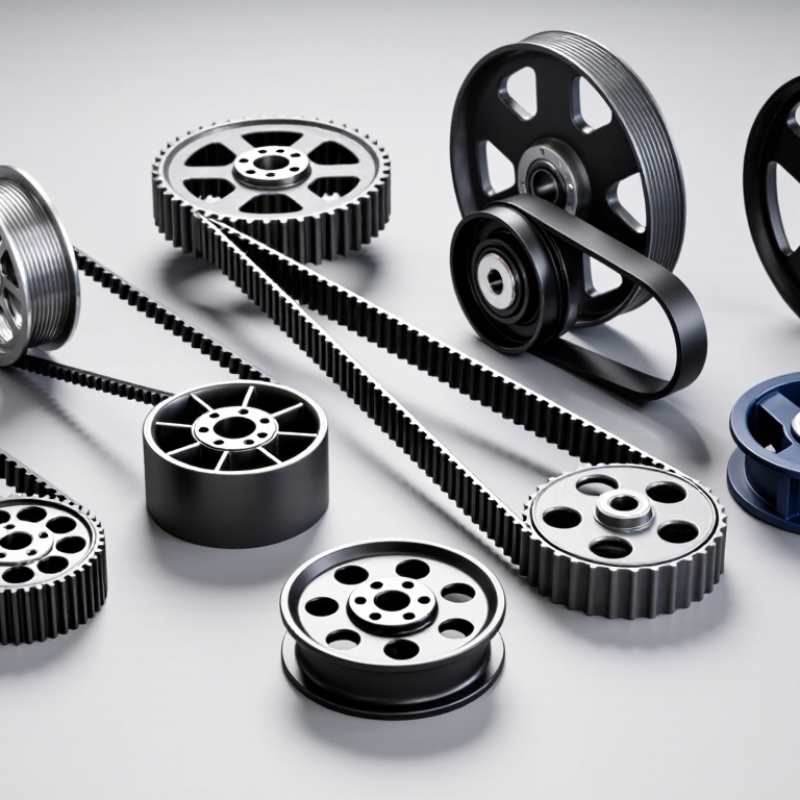
A carbon belt drive transfers rotational power through a reinforced, flexible belt. Unlike a chain system, it uses no metal links or routine lubrication. Its core usually contains continuous carbon-fiber strands, which resist stretching under tension. A durable polymer jacket protects these fibers from moisture, dust, and daily abrasion. Teeth on the inner surface engage with a matching pulley. This positive engagement limits slipping during controlled operation.

When the driving pulley rotates, its teeth pull the belt forward. The belt then turns the driven pulley at a predictable speed ratio. Carbon reinforcement helps maintain alignment, even when the center distance is relatively long. Proper tension remains essential. Excessive tension can overload bearings, while insufficient tension may cause tooth skipping. Installation experience matters more than many product sheets suggest. Small alignment errors can create noise, uneven wear, and reduced service life.

Tips: Check pulley alignment with a straightedge before final tensioning. Keep the belt clean and inspect tooth edges regularly. Replace it when cracks, frayed fibers, or unusual vibration appear. Do not assume carbon reinforcement makes the belt indestructible. Heat, chemicals, sharp debris, and poor storage can still weaken its structure. A practical maintenance record improves reliability, although real operating conditions may challenge even careful predictions.

Criteria for Selecting the Top 10 Global Manufacturers

Top 10 Carbon Belt Drive Manufacturers Worldwide should be selected through evidence, not popularity. A strong manufacturer demonstrates years of engineering experience and stable production methods. Review belt materials, carbon fiber alignment, tooth accuracy, and resistance to heat, oil, and repeated tension. Reliable suppliers publish measurable performance data instead of vague durability claims. Independent testing, traceable batches, and documented quality controls also deserve careful attention. Factory capacity matters, but large output does not always mean better consistency.

Tips: Request sample belts and technical drawings. Check test conditions closely. Ask for failure data from similar applications. Compare service response times, not only prices. A supplier that explains limitations often appears more trustworthy than one promising unlimited performance.

Customization should match the machinery’s load, speed, temperature, and maintenance schedule. Experienced manufacturers can recommend suitable profiles, joining methods, and pulley tolerances. Their engineers should explain choices in clear language.

After-sales support is equally important, especially when installation errors can shorten belt life. Examine warranty terms, replacement availability, and regional technical assistance.

Environmental practices may also influence the ranking, including material efficiency and responsible waste handling. No scorecard is perfect. Field performance can still differ from laboratory results, so real customer references and long-term operating records remain essential.

Profiles of the Top 10 Carbon Belt Drive Manufacturers Worldwide

A practical review of the top 10 carbon belt drive manufacturers worldwide should examine more than production volume. It should consider material control, testing discipline, technical support, and field experience. One European producer specializes in lightweight carbon tension members and automated inspection. A Japanese precision maker focuses on low-noise operation and exact tooth profiles. A German engineering group develops belts for high-speed industrial machinery. A North American supplier serves robotics, packaging, and motion-control applications.

A Scandinavian manufacturer emphasizes corrosion-resistant compounds for clean industrial environments. An Italian producer combines flexible belt construction with compact pulley systems. A Taiwanese manufacturer offers broad dimensional coverage and responsive custom production. An Indian producer competes through practical designs, regional service, and growing export capability. Their results can vary by application. Price alone says little.

A Korean manufacturer is recognized for consistent molding processes and durable reinforcement layers. A Chinese producer provides extensive capacity, fast tooling, and solutions for demanding transmission systems. The strongest profiles include measurable evidence, such as fatigue-test cycles, temperature ranges, dimensional tolerances, and replacement intervals. Supplier audits also matter. I would question rankings based only on catalogs or impressive factory images. Real performance depends on alignment, tension, pulley quality, and maintenance habits. Even a well-made belt can fail early. That uncomfortable detail deserves attention.

Top 10 Carbon Belt Drive Manufacturers Worldwide - Profiles of the Top 10 Carbon Belt Drive Manufacturers Worldwide

Comparative profile table based on publicly documented product categories, manufacturing regions, application coverage, and carbon-reinforced belt technology.
Rank Manufacturer Profile Primary Operating Region Core Carbon Belt Types Typical Width / Format Main Application Sectors Key Technical Strengths Customization Capability
1 Manufacturer Profile 01 Western Europe and North America Polyurethane synchronous belts with carbon-fiber tensile cords Standard and wide endless belts; open-length options Factory automation, packaging, robotics, material handling High stiffness, low elongation, accurate positioning, high speed capability Custom lengths, profiles, coatings, guides, and special machining
2 Manufacturer Profile 02 North America and Europe Rubber and polyurethane timing belts with carbon-reinforced cords Metric and inch pitch profiles; endless and joined formats Industrial drives, conveyors, agricultural machinery, HVAC equipment Broad power-transmission range, abrasion resistance, reliable torque transfer Special covers, high-temperature compounds, welded and mechanically joined belts
3 Manufacturer Profile 03 Japan and East Asia High-precision synchronous belts using carbon-fiber cords Compact metric profiles and precision endless belts Semiconductor equipment, office machinery, printers, automation systems Low backlash, dimensional consistency, quiet operation, clean running Tooth modification, custom pitch lengths, surface treatments, special tolerances
4 Manufacturer Profile 04 Central Europe Thermoset and polyurethane timing belts with carbon tensile members Industrial standard profiles, wide belts, and custom endless belts Machine tools, textile machinery, conveyors, wood-processing equipment Strong dimensional stability, oil resistance, dependable service life Joining, perforation, cleats, coatings, and made-to-order belt geometry
5 Manufacturer Profile 05 Italy and Southern Europe Polyurethane endless belts and open-length belts with carbon cords Standard pitches, wide conveyor belts, and custom profiles Packaging, logistics, food-processing equipment, general automation High wear resistance, accurate tracking, flexible configuration options Molded shapes, welded joints, guides, cleats, and food-contact-compatible options
6 Manufacturer Profile 06 United Kingdom and Western Europe High-torque timing belts and specialized carbon-reinforced drive belts Heavy-duty widths, custom lengths, and application-specific formats Automotive systems, industrial machinery, elevators, power equipment High load capacity, fatigue resistance, low stretch, stable synchronization Bespoke tooth profiles, coatings, welded construction, and engineering support
7 Manufacturer Profile 07 Benelux and Northern Europe Polyurethane timing and conveyor belts with carbon-fiber reinforcement Open-length, endless, and wide-format conveyor belt constructions Distribution centers, parcel handling, airport systems, intralogistics Low elongation, smooth conveying, high positional accuracy, clean surfaces Custom profiles, perforations, tracking guides, flights, and welded ends
8 Manufacturer Profile 08 Switzerland and German-speaking Europe Precision polyurethane belts with carbon or hybrid tensile cords Narrow precision belts, wide belts, and application-specific endless loops Medical equipment, laboratory systems, electronics, precision automation Low vibration, repeatable positioning, controlled tracking, compact design Special surface finishes, low-noise constructions, precision tolerances, cleanroom-oriented designs
9 Manufacturer Profile 09 China and broader Asia-Pacific Carbon-cord synchronous belts in rubber and polyurethane compounds Metric standard sizes, wide belts, and selected custom formats Industrial automation, printing, packaging, agricultural and general machinery Competitive production scale, broad size availability, high-speed transmission Private specifications, custom lengths, coated surfaces, guides, and attachment options
10 Manufacturer Profile 10 India and South Asia Industrial timing belts and specialized carbon-reinforced belt assemblies Standard metric profiles, joined belts, and selected wide formats Textile machinery, pumps, compressors, conveyors, and process equipment Good power transmission, resistance to industrial oils, cost-efficient replacement supply Custom dimensions, profiles, coatings, cleats, and application-specific belt assemblies

Comparison of Products, Materials, Applications, and Performance

Top 10 Carbon Belt Drive Manufacturers Worldwide

A meaningful comparison of ten global manufacturers should begin with belt construction, not catalog size. Most carbon belt drives use carbon-fiber tensile cords inside polyurethane or rubber bodies. Polyurethane usually offers cleaner operation and stronger resistance to oils. Rubber can provide better damping and quieter performance. MarketsandMarkets estimated the global carbon-fiber market at about USD 4.7 billion in 2024, with transport and industrial equipment among important demand sectors. This trend supports wider use of lightweight reinforcement, but it does not guarantee better belt life.

Product design varies sharply. Synchronous belts deliver accurate speed control and suit robotics, packaging lines, and machine tools. V-belts tolerate shock loads and remain practical for pumps, fans, and agricultural equipment. Carbon cords reduce stretch, which helps maintain alignment during long operating cycles. However, pulley diameter, installation tension, temperature, and contamination often matter more than the advertised tensile rating. Small details win.

Performance claims should be checked against measured operating conditions. The U.S. Department of Energy reports that motor-driven systems consume roughly 68% of industrial electricity in the United States. Even a small transmission loss can become expensive in continuous-duty plants. ISO 5296 provides dimensional guidance for synchronous belts, while laboratory testing should examine fatigue, tooth shear, noise, and thermal aging. The comparison is not perfectly clean: manufacturers may use different test speeds and loads. A belt showing 98% efficiency in one test may perform differently after dust, misalignment, or repeated starts. That uncertainty deserves attention.

Global Market Trends Shaping Carbon Belt Drive Manufacturing

Carbon belt drive manufacturing is being reshaped by lightweight engineering, electrification, and cleaner production. The International Energy Agency reported nearly 14 million electric car sales in 2023, representing about 18% of global car sales. This shift increases demand for quiet, low-maintenance transmission systems in compact mobility and factory equipment. Carbon reinforcement also supports higher tensile strength with less weight. MarketsandMarkets estimates the global carbon fiber market could grow from about USD 4.7 billion in 2023 to USD 8.9 billion by 2029. That growth creates opportunities for belt producers, but raw-material costs remain difficult to control.

Automation is another strong influence. The International Federation of Robotics recorded 541,302 industrial robot installations worldwide in 2023. Robotic systems need precise motion, low vibration, and dependable service intervals. Carbon belt drives can meet these needs when manufacturers control tooth geometry, fiber alignment, and thermal stability. However, market forecasts often describe adjacent sectors, not belt-drive sales directly. That distinction matters. Some projections still feel too optimistic.

Tips: Compare belt performance under heat, dust, and repeated acceleration. Ask for fatigue-test data, not only peak-load figures. Check whether suppliers can trace reinforcement materials and maintain consistent tolerances. A lighter belt is not automatically better. Engineers should also measure pulley wear, noise, and replacement time in real operating conditions. These practical details increasingly separate durable systems from attractive specifications.

Top 10 Carbon Belt Drive Manufacturers Worldwide — Global Market Trends Shaping Carbon Belt Drive Manufacturing

Normalized global demand indicators affecting carbon belt drive applications, with 2020 set as the baseline of 100.

The expansion of electric vehicles, wind power capacity, and industrial automation is increasing demand for lightweight, low-maintenance, and high-efficiency power transmission systems. Carbon-reinforced belt drives benefit from these trends because they offer low mass, corrosion resistance, reduced lubrication requirements, and precise motion transmission. The index is derived from reported global figures for electric-car sales share, cumulative wind-power capacity, and annual industrial robot installations.

Sources: International Energy Agency, Global Wind Energy Council, and International Federation of Robotics. Values are normalized trend indicators; they do not represent individual company revenue or market share.

FAQS

How should global carbon belt drive manufacturers be evaluated?

Evaluate engineering history, production stability, belt materials, tooth accuracy, and carbon-fiber alignment. Check resistance to heat, oil, and repeated tension. Published measurements matter more than broad durability promises. No scorecard is perfect.

What evidence should buyers request from a manufacturer?

Ask for sample belts, technical drawings, batch traceability, and independent test records. Request failure data from similar machines. Review test speed, load, temperature, and contamination conditions. Check the details.

How do polyurethane and rubber belt bodies differ?

Polyurethane often resists oil and supports cleaner operation. Rubber can damp vibration and reduce operating noise. Actual results depend on heat, pulley design, and contamination. Material alone decides little.

Which belt type suits different machinery?

Synchronous belts support accurate speed control in robotics, packaging lines, and machine tools. V-belts handle shock loads in pumps, fans, and agricultural equipment. Choose according to load, speed, and pulley geometry. Catalog size is not enough.

Why does carbon reinforcement matter?

Carbon-fiber cords reduce stretch during long operating cycles. They can help preserve alignment and motion accuracy. However, high tensile strength does not guarantee long belt life. Small details win.

What conditions should performance tests include?

Tests should examine fatigue, tooth shear, noise, thermal aging, and transmission efficiency. Also test dust, misalignment, repeated starts, and changing temperatures. Laboratory results may look cleaner than factory conditions. That gap deserves attention.

How does customization improve belt selection?

Engineers should match the belt to load, speed, temperature, and maintenance intervals. They may adjust profiles, joining methods, and pulley tolerances. Clear explanations are important. Some recommendations remain imperfect.

What after-sales support should buyers compare?

Compare response times, warranty terms, replacement availability, and regional technical assistance. Installation errors can shorten belt life. Ask who helps when alignment fails on a running machine. Price is only one detail.

Should environmental practices affect manufacturer selection?

Review material efficiency, waste handling, and reinforcement traceability. Responsible production can reduce unnecessary material loss. Still, environmental claims need evidence. Good intentions are not measurements.

Conclusion

This article presents a practical overview of the Carbon Belt Drive industry, beginning with its definition, key structural components, and operating principles. It explains how carbon-reinforced belts combine lightweight construction, high tensile strength, low maintenance requirements, and efficient power transmission. The article also introduces the main criteria for evaluating leading global manufacturers, including material quality, engineering capability, production consistency, customization options, application coverage, durability, and after-sales support.

The comparison examines product designs, reinforcement materials, manufacturing methods, performance characteristics, and common applications across industrial automation, transportation, robotics, fitness equipment, and other mechanical systems. It also discusses market trends influencing global manufacturing, such as demand for energy efficiency, quieter operation, compact machinery, sustainable materials, and advanced automation. Together, these insights help readers understand how to assess Carbon Belt Drive suppliers and select solutions that match specific technical, operational, and long-term performance requirements.

Clara

Clara

Clara is a professional marketing specialist with a strong understanding of the company’s products and the needs they are designed to meet. She regularly contributes expert blog articles to the company website, translating product knowledge and industry insights into clear, useful guidance for......