The Custom EV Motorbike market is moving from experimental workshops toward serious global manufacturing. Buyers now compare range, battery safety, motor efficiency, software, service coverage, and certification. A polished prototype is not enough.
The International Energy Agency’s Global EV Outlook 2024 identifies electric two- and three-wheelers as one of the world’s most established electric mobility segments. China remains highly influential, while India, Southeast Asia, and Europe are expanding production and adoption. McKinsey’s Electric Vehicle Index also highlights battery costs, charging access, and supply-chain resilience as decisive factors. These reports offer useful direction, but market data still varies between countries. Some claims look stronger than the evidence.
Horace Luke, founder and CEO of Gogoro, has stated, “The future of urban mobility is electric.” His experience reflects a crucial reality: successful electric motorcycles require an ecosystem, not only a motor and battery. Manufacturing quality matters. So does after-sales support.
This guide evaluates the 2026 Top Custom EV Motorbike Manufacturers for Global Buyers through practical criteria. We examine engineering capability, customization depth, battery architecture, production consistency, export experience, and regulatory readiness. A buyer may want a café-racer silhouette, a delivery-focused frame, or a rugged adventure platform. Each design creates different demands on thermal management, suspension, braking, and range.
There is no perfect supplier. Even respected manufacturers can face delays, component shortages, or unclear warranty terms. Careful verification remains essential before any purchase decision.
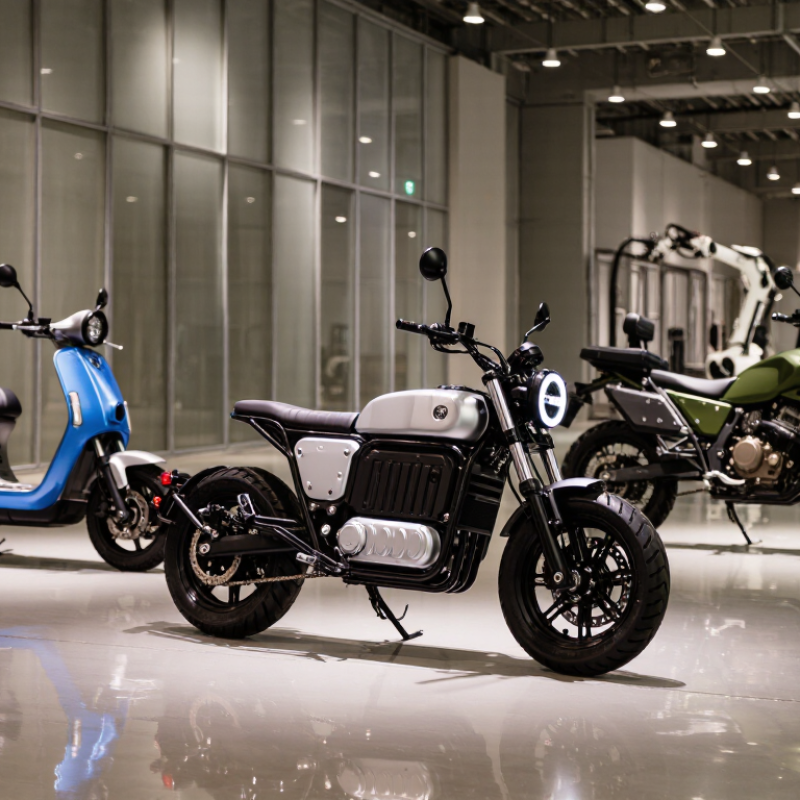
The 2026 electric motorbike market is entering a more practical growth phase. The International Energy Agency reported that electric two- and three-wheeler sales exceeded nine million units globally in 2023. China remained the largest market, while India and Southeast Asia showed strong adoption through delivery fleets and urban commuting.
Battery demand is changing with rider expectations. BloombergNEF’s 2024 Battery Price Survey recorded an average lithium-ion pack price of 115 dollars per kilowatt-hour, down 20% from the previous year. Lower costs support longer-range models, but thermal management, charging access, and battery replacement remain serious purchasing concerns. Range claims can look impressive on paper.
Regional demand is not uniform. European buyers often prioritize safety certification, compact design, and winter performance. Southeast Asian users usually value payload capacity, repair access, and daily operating cost. In India, financing and local service networks can influence adoption as much as battery size. Custom EV motorbike manufacturers should therefore validate cells, controllers, braking systems, and software through independent testing before global shipment. The IEA also emphasizes that charging infrastructure and policy support strongly affect electric vehicle uptake. That makes forecasting difficult. Sales may grow quickly, yet weak resale values or unavailable replacement batteries could slow repeat purchases.
Global market benchmark for electric two- and three-wheelers, used as the closest publicly reported proxy for the custom EV motorbike sector. Figures are rounded estimates and exclude manufacturer and brand-level data.
| Region | 2024 EV Two-/Three-Wheeler Sales | Approx. Global Share | 2024 Traction Battery Demand | 2025–2026 Sales Growth Outlook | Primary Vehicle Applications | Custom Motorbike Opportunity | Key Buyer Considerations |
|---|---|---|---|---|---|---|---|
| China | ≈7.0 million units | ≈70% | ≈10.5 GWh | Moderate: 4–7% annually | Urban commuting, delivery, shared mobility, low-speed electric bicycles | High-volume sourcing, platform development, export-ready components | Battery safety certification, controller compatibility, production scale, export compliance |
| India | ≈1.0 million units | ≈10% | ≈2.5 GWh | High: 15–25% annually | Commuter scooters, fleet vehicles, last-mile delivery, battery-swapping models | Local assembly, rugged commuter motorcycles, fleet customization | Local-content rules, thermal management, financing economics, after-sales coverage |
| Southeast Asia | ≈1.1 million units | ≈11% | ≈2.0 GWh | High: 12–20% annually | Motorbike taxis, daily commuting, delivery, tourism and rental fleets | Touring models, utility motorcycles, tropical-weather and fleet configurations | Water resistance, replaceable batteries, service-part availability, local homologation |
| Europe | ≈0.30 million units | ≈3% | ≈1.5 GWh | Steady: 10–18% annually | Premium commuting, urban delivery, leisure riding, light motorcycle segments | Premium customization, design-led motorcycles, small-batch homologated models | EU type approval, CE documentation, cybersecurity, warranty and recycling obligations |
| North America | ≈0.08 million units | <1% | ≈0.48 GWh | Emerging: 8–15% annually | Recreational riding, premium motorcycles, urban commuting and off-road use | Performance motorcycles, adventure models, specialty and off-road products | Federal and state requirements, range expectations, insurance, dealer servicing |
| Latin America | ≈0.25 million units | ≈3% | ≈0.63 GWh | High potential: 12–20% annually | Affordable commuting, delivery, taxi services and municipal fleets | Cost-optimized utility motorcycles and localized fleet solutions | Import duties, financing, road conditions, charging access and spare parts |
| Middle East & Africa | ≈0.12 million units | ≈1% | ≈0.30 GWh | Early-stage: 15–25% annually | Delivery, security patrols, campus transport, commuting and micro-mobility | Heat-resistant utility bikes, fleet packages and solar-compatible charging | High-temperature battery performance, dust protection, simple maintenance systems |
| Other Asia-Pacific Markets | ≈0.15 million units | ≈2% | ≈0.38 GWh | Developing: 10–18% annually | Commuting, tourism, delivery and compact urban transport | Regional distributors, adaptable chassis platforms and small-batch models | Country-specific certification, distributor capability, charging standards |
| Global Benchmark | ≈10.0 million units | 100% | ≈18.3 GWh | Positive long-term growth | Commuting, delivery, fleet mobility, recreation and urban transport | Modular platforms, configurable battery systems and localized compliance packages | Battery traceability, quality control, homologation, customization lead time and lifecycle support |
Global electric two- and three-wheeler sales exceeded nine million units in 2023. Growth remains practical, not guaranteed.
Delivery fleets, urban commuting, lower running costs, and improving battery prices support adoption. Charging access still matters.
Check real range, thermal management, charging time, replacement access, and battery documentation. Paper range can mislead.
No. European users often value safety certification and winter performance. Southeast Asian users may prioritize payload and repair access.
Financing options and local service networks can matter as much as battery capacity. A larger battery is not always decisive.
Pilot orders often range from 20 to 100 units. Larger projects may require 200 units or more.
Existing designs may ship in about 30 days. New molds, certification, or software changes can extend delivery toward 90 days.
Indicative FOB pricing often ranges from 1,200 to 4,000 dollars per unit. Battery size and customization change the final figure.
Request spare-parts lists, diagnostic access, warranty procedures, and remote technician training. Photos are not enough.
Independently test cells, controllers, brakes, and software. Audit the factory, inspect samples, and use a written service agreement. Recheck every forecast.
This guide presents a practical 2026 overview for buyers evaluating the Custom EV Motorbike market worldwide. It explains key market trends, including sales growth, battery demand, and regional opportunities, while comparing vehicle classes from 2 to 15 kW and typical range targets of 60 to 200 km. The guide also outlines how to assess manufacturers through documented evidence such as UN 38.3, IEC 62133, IP67, and ISO 9001 compliance.
It further compares global suppliers by minimum order quantities, estimated 30–90 day lead times, pricing structures, customization capacity, and after-sales support. For responsible purchasing, buyers should review applicable WTO tariffs, VIN and registration requirements, warranty terms, spare-parts availability, and measurable service KPIs. By combining technical verification, commercial comparison, and regulatory due diligence, importers and fleet operators can select reliable Custom EV Motorbike solutions that match their markets, operating conditions, and long-term support expectations.