Explore our CE-compliant component matrix engineered for custom motorcycle builders, EV integrators, and global trade buyers.
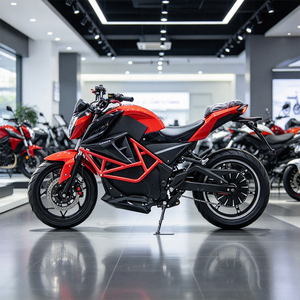
As the global market for custom urban motorbikes and high-performance electric café racers undergoes rapid expansion, component compliance has shifted from an optional quality mark to a critical trade gateway. For OEM procurement directors, brand owners, and aftermarket distributors, sourcing CE certified café racer seats requires a thorough understanding of European safety directives, material compliance standards, and structural integrity benchmarks.
Under EU Regulation (EU) No 168/2013 regarding the approval and market surveillance of two- or three-wheel vehicles and quadricycles, motorcycle seating units must satisfy rigorous ergonomic, anti-flammability, and anchoring load specifications. A non-compliant seating system not only invalidates vehicle-level homologation but also poses severe rider safety risks under high G-force deceleration and prolonged mechanical vibration.
"True OEM compliance for motorcycle seating units demands a synthesis of mechanical load resistance, ergonomic shock dispersion, and toxicologically safe upholstery that withstands 1,000+ hours of continuous UV and ozone exposure without surface degradation."
Engineering an authentic vintage-style café racer seat requires resolving a classic design conflict: maintaining the slim, minimalist profile typical of mid-century racing machines while providing modern ergonomic comfort and structural longevity. Achieving this balance relies on advanced composite baseplates, high-resilience foam matrices, and weather-sealed upholsteries.
Utilizing high-density (55 to 65 kg/m³) MDI-based cold-cure molded foam. Unlike slab-cut foam, cold-molded cushions feature an encapsulated skin that prevents water absorption and retains 95% of initial rebound elasticity after 50,000 compression cycles.
Baseplates manufactured from autoclaved 3K carbon fiber or injection-molded high-impact ABS with reinforced ribbing structures. Engineered to absorb high frequency chassis vibrations and fit custom subframe loops perfectly.
Upholstered with premium microfiber vinyl or treated top-grain hide backed by a TPU micro-porous waterproof membrane. Diamond and tuck-and-roll stitches feature hot-melt seam sealing tape to block water ingress completely.
When issuing an RFP (Request for Proposal) to seat exporters, procurement teams must align material specifications with the target vehicle category and climatic demands:
The motorcycle industry is experiencing a profound technological shift. As high-torque electric powertrains (such as liquid-cooled 80 kW / 250 Nm electric platforms) replace traditional internal combustion engines, the role of the café racer seat is expanding from a simple seating surface to a smart, integrated sub-system.
In modern EV café racer architectures, the seat baseplate frequently serves as the upper sealing lid for the central lithium-ion battery containment unit or onboard DC/DC converter housing. OEM exporters are developing custom-molded baseplates equipped with integrated EPDM gaskets, electromagnetic shielding (EMI), and quick-release latching systems. This structural consolidation optimizes space utilization and lowers overall vehicle curb weight.
Global buyers are increasingly requesting seats equipped with embedded PTC (Positive Temperature Coefficient) heating elements and active ventilation channels. Driven by low-power 12V inputs, these smart comfort modules connect directly to the motorcycle's CAN-bus network, enabling automatic heat control via digital touchscreen dashes or smartphone companion applications.
In response to international ESG directives and environmental standards, leading OEM suppliers are introducing bio-based polyurethane foams derived from castor bean oil and recycled PET thread stitching. Sourcing sustainable components allows premium brands to reduce their Scope 3 carbon footprint while meeting European circular economy standards.
Combining world-class motorcycle engineering heritage with high-capacity export manufacturing, our facility provides comprehensive OEM/ODM contract solutions tailored for custom builders, commercial brands, and EV original equipment manufacturers.
Inspired by Australia's high-torque electric motorcycle engineering benchmarks—such as liquid-cooled IPM motors delivering 250 Nm of torque, carbon belt drive systems, single-sided swingarms, Brembo monoblock calipers, and Bosch ABS integration—our manufacturing facility upholds rigorous quality assurance standards across all product lines.
From initial 3D laser scanning of subframe tubing to 5-axis CNC mold making, we turn client CAD files into production-ready prototypes in under 14 working days.
Every batch undergoes salt spray corrosion testing for metal hardware, tensile strength verification of mounting studs, and thermal cycling from -40°C to +85°C.
We provide full documentation for CE, REACH, and ADR compliance, offering flexible sea, air, and express freight options with DDP (Delivered Duty Paid) service globally.
Answers to common technical, compliance, and logistics questions from trade buyers and commercial procurement teams.
We provide comprehensive test reports including ISO 3795 flammability certificates, REACH SVHC chemical screening declarations, and structural load cell test data for submission to European homologation authorities (such as TÜV, UTAC, or RDW).
For existing stock tooling profiles, our minimum order quantity starts at 50 units. For fully customized OEM projects requiring bespoke baseplate tooling and unique foam molds, our MOQ is typically 200 units per production run.
Yes. We offer precise laser etching, hot-stamp embossing, silicone badging, and computerized multi-color embroidery. All branding materials are UV-treated to prevent fading and weathering.
We apply high-frequency hot-melt TPU seam-sealing tape along the interior stitch lines. Additionally, our cold-cured foam features a protective hydrophobic surface film that stops moisture penetration even in heavy rain.
3D CAD design and rapid 3D sample printing require 5 business days. Aluminum/steel tooling development takes 15 to 20 days, and full mass production is completed within 25 to 30 days after sample sign-off.
Yes. We can design built-in wire routing channels, internal connector housings, and transparent acrylic light pipes directly into the tail cowl or rear underside of the baseplate.
Connect directly with our engineering and export team for custom OEM quotations, technical CAD consultations, and factory direct sample requests.
Send an Inquiry