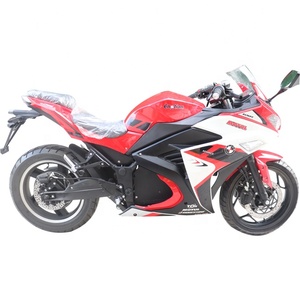
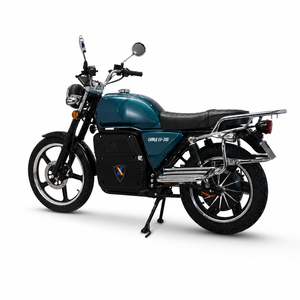

Evaluating torsional stiffness, unsprung mass reduction, dynamic load vectors, and concentric pivot alignment in premium motorcycle engineering.
The single-sided swingarm (SSA), historically reserved for exotic Italian racing machinery and endurance competition, has evolved into a foundational component for modern high-performance motorcycles—particularly in the rapidly expanding high-power electric vehicle (EV) sector. As global Tier-1 original equipment manufacturers (OEMs) transition toward clean-energy urban mobility and premium electric café racers, procurement managers are re-evaluating rear suspension architecture. China has emerged as the premier manufacturing hub for precision-engineered single-sided swingarms, bridging advanced aerospace metallurgy with cost-efficient, scalable production.
Unlike traditional dual-sided swingarms that form a closed rectangular fork around the rear wheel, a single-sided swingarm relies on a single cantilevered structural arm positioned on one side of the rear rim. This radical design architecture presents unique mechanical engineering challenges and advantages:
Because load vectors are asymmetrical, single-sided swingarms must compensate for severe torsional twisting forces. Advanced Chinese factories utilize low-pressure die casting with A356-T6 alloy, creating a hollow, multi-ribbed internal web structure. This delivers supreme torsional resistance while minimizing unsprung mass—allowing the rear shock absorber to react faster to road surface variances.
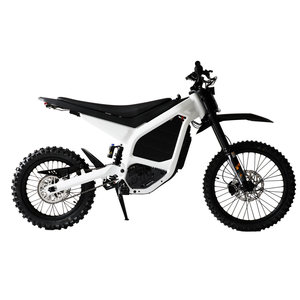
In flagship electric café racers—such as the benchmark Savic C-Series featuring an 80 kW motor and 250 Nm of torque—the single-sided swingarm pivot is frequently designed concentric to the electric motor drive axis. This eliminates belt or chain tension variation across full suspension travel, dramatically reducing wear on carbon synchronous drive belts (e.g., Optibelt / Gates systems).
From a practical fleet management and user experience standpoint, a single-sided swingarm allows quick wheel removal without disturbing final drive tension, brake alignment, or axle spacing. A single center nut secures the wheel hub, making it the preferred choice for commercial EV fleets and racing teams alike.
Inside China’s top-tier automotive casting facilities: From CAD Finite Element Analysis (FEA) to robotic T6 heat treatment and CNC finishing.
Leading Chinese swingarm manufacturers have made vast infrastructure investments in automation and metallurgical engineering. Sourcing a single-sided swingarm requires understanding the specific manufacturing methodologies available at top-tier suppliers:
| Manufacturing Method | Material Specification | Structural Characteristics | Ideal Application | Production Volume Flexibility |
|---|---|---|---|---|
| Low-Pressure Die Casting (LPDC) | A356.2 Aluminum Alloy (T6) | High density, fine grain structure, minimal micro-porosity, excellent fatigue resistance. | Mass production electric street bikes, premium OEM road motorcycles. | Medium to High (500 – 50,000+ units/year) |
| 5-Axis CNC Billet Machining | 6061-T6 / 7075-T6 Aerospace Billet | Maximum structural density, customizable geometry without mold tooling costs, sleek aesthetic machining marks. | Custom electric café racers, prototype validation, low-volume custom builds. | Low to Medium (1 – 500 units) |
| Gravity Mold Casting + Robotic Welding | Alloy 6063 Aluminum Extrusion Assembly | Cost-effective welded hollow tube construction, optimized flex characteristics. | Urban commuter scooters, light commercial delivery e-bikes. | High Volume (1,000+ units/month) |
| Carbon Fiber Hybrid Casting | Aluminum Hub Insert + Carbon Composite | Ultra-lightweight cantilever arm with high damping factor for vibration mitigation. | Ultra-high performance track e-superbikes, flagships. | Custom / Bespoke Orders |
Reliable Chinese suppliers employ strict automotive-grade Quality Control (QC) standards (ISO9001 and IATF 16949 certified). To guarantee that every single-sided swingarm can withstand lateral shock loads of up to 4G during aggressive cornering, factories implement rigorous validation protocols:
Key technological evolutions driving procurement decisions for international motorcycle brands, fleet buyers, and EV start-ups over the next decade.
International buyers are shifting away from bespoke, single-model swingarms toward modular single-sided swingarm platforms. Premier Chinese suppliers offer standard eccentric hub and rear spindle assemblies that can be adapted to various wheel rim sizes (from 14-inch scooter wheels to 17-inch superbike wheels) simply by altering the main arm forging die, drastically cutting OEM development costs.
As high-torque electric motors become more compact, single-sided swingarms are being co-engineered with single-sided hub motor mounts or integrated mid-drive planetary gearbox housings. This integration simplifies vehicle assembly and reduces the total bill of materials (BOM) for EV OEMs.
To extend battery range in electric motorcycles, reducing structural frame mass is critical. Future procurement cycles will favor Chinese manufacturers capable of casting AZ91D magnesium alloys or utilizing ceramic core hollow-casting to achieve a 25-30% weight reduction compared to traditional aluminum alloys.
Combining robust supply chain ecosystem, rapid tooling turnarounds, and end-to-end custom engineering support.
Choosing the right Chinese manufacturing partner delivers significant competitive advantages for international motorcycle brands, boutique builders, and commercial EV fleets:
From initial 3D STEP files and FEA strain simulations to prototype 3D aluminum printing and final production tooling, our engineering team works directly with your R&D staff to tailor swingarm geometry, shock absorber linkage ratios, and brake mounting brackets (compatible with Brembo, Nissin, or custom calipers).
We don't just supply the raw casting. Suppliers provide fully assembled rear-end modules, complete with high-precision eccentric chain/belt adjusters, rear axle stub shafts, dual-row angular contact bearings, rear rotor adapters, and integrated splash guards.
All structural swingarms are manufactured to comply with Australian Design Rules (ADR), European Whole Vehicle Type Approval (WVTA/CE), and US DOT standards—ensuring seamless road registration and safety approval across all target export markets.
Submit your CAD drawings or technical specifications today. Speak directly with our senior metallurgical and mechanical engineering specialists for a detailed design-for-manufacturability (DFM) review and competitive tooling estimate.
In-depth technical and commercial answers regarding minimum order quantities, tooling lead times, structural testing, and material choices.
The primary benefits include rapid rear-wheel removal (ideal for endurance racing and commercial fleet servicing), effortless chain/belt tension adjustments via an eccentric hub mechanism, clean aesthetic integration for premium cafe racers or electric motorcycles, and optimized room for offset high-torque electric motor mountings.
Because a single arm must support asymmetric bending and torsional moments, early designs were heavier than dual-sided forks. Top Chinese factories utilize 3D topology optimization and finite element analysis (FEA) combined with low-pressure A356-T6 aluminum die casting to place structural wall thickness precisely where stress vectors concentrate, keeping weight penalties under 5-8% while maintaining rigid handling.
For custom OEM single-sided swingarms, 3D CAD modeling and DFM analysis take 5-7 business days. 5-Axis CNC billet prototypes can be produced in 10-15 days. For mass production die-casting molds (LPDC), steel mold fabrication takes approximately 35-45 days, followed by sample validation and T6 heat treatment testing.
Yes. In fact, single-sided swingarms are ideal for carbon belt drives when engineered with a concentric pivot axis. Because carbon belt cords cannot stretch like steel chains, maintaining a constant distance between the front drive pulley and rear driven pulley during suspension travel prevents belt snapping and premature tooth wear.
Standard quality documentation accompanying B2B shipments includes Material Test Reports (MTR for chemical composition and tensile yield strength), X-Ray non-destructive testing reports, CMM dimensional measurement sheets, and Salt Spray corrosion resistance test certificates.
For fully customized billet CNC-machined swingarms, MOQs start as low as 10 to 50 units. For low-pressure die-cast aluminum swingarms requiring dedicated mold tooling, standard production MOQs range from 200 to 500 units per production batch.
Yes, we offer both raw structural casting supply and fully assembled sub-assemblies. Sub-assemblies include the CNC-machined eccentric aluminum housing, high-load tapered roller or angular contact bearings, hardened steel axle stub shaft, brake caliper mounting adapter, and wheel lock nut.
Rear wheel alignment is controlled through precision CNC machining of the swingarm pivot shaft sleeve and the eccentric hub bore in a single multi-axis setup. This ensures that the rear wheel plane remains perfectly parallel to the main frame centerline within a tolerance of ±0.05 degrees.