

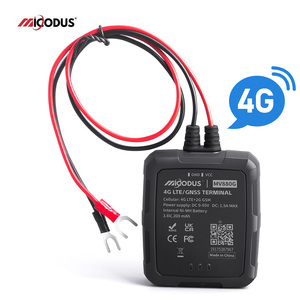
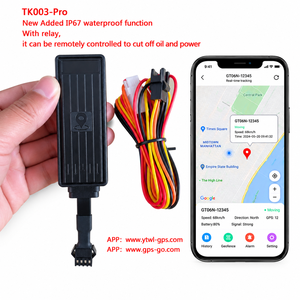
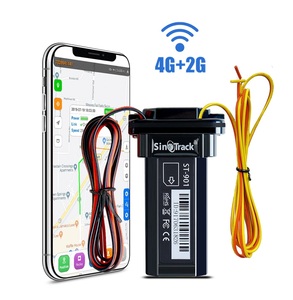
1. Executive Summary & Market Dynamics (2025–2030)
The global motorcycle telematics and theft-recovery ecosystem is undergoing a generational shift. As 2G and 3G cellular networks phase out across North America, Europe, Australia, and parts of Asia-Pacific, fleet operators, insurance carriers, and motorcycle manufacturers (OEMs) are mandating the adoption of multi-constellation 4G LTE Cat-1, LTE-M (eMTC), and NB-IoT positioning hardware. China has established itself as the epicenter of this hardware evolution, manufacturing over 85% of the world's commercial GPS tracking terminals through sophisticated Surface Mount Technology (SMT) automation and advanced firmware engineering.
Procuring motorcycle GPS trackers from top-tier Chinese manufacturers involves navigating subtle trade-offs between hardware design, cellular module selection, power optimization algorithms, and platform integration protocols. Motorcycles present unique engineering challenges compared to passenger cars: extremely limited mounting space, high vulnerability to severe mechanical vibration, direct exposure to adverse weather conditions, and low-capacity 12V starter batteries that can easily be drained by continuous cellular telemetry.
2. Core Technological Modules & Architectural Innovations
To evaluate a Chinese GPS tracker factory effectively, enterprise buyers must analyze the internal PCB architecture, components selection, and firmware stability. Premium hardware vendors differentiate themselves through rigorous component sourcing and automotive-grade circuitry.
Multi-Constellation GNSS
Integration of high-sensitivity chipset architectures (such as Nordic Semiconductor, Quectel, or MediaTek) featuring real-time differential positioning and A-GPS for rapid Time-To-First-Fix (TTFF) under 1 second.
Intelligent Power Management
Advanced firmware algorithms that switch the device to micro-amp sleep modes when the 3-axis accelerometer detects zero vehicle movement, preventing vehicle battery depletion during long storage periods.
Anti-Jamming & Tamper Protection
Integrated light-sensing anti-tamper triggers, main power disconnection alerts, cellular signal jamming detection, and external relay cutoff logic for immediate engine immobilization.
2.1 Network Connectivity: Transitioning from 2G/3G to 4G LTE Cat-1
While legacy 2G trackers (like basic GT06 models) remain in demand for cost-sensitive developing markets, global distributors must prioritize 4G LTE Cat-1 modules. LTE Cat-1 delivers the ideal balance for telematics: sufficient bandwidth for real-time telemetry and OTA firmware updates, universal network fallback, low power consumption, and long-term network operational life spanning beyond 2035.
2.2 Mechanical Engineering & Environmental Protections
Unlike automotive trackers installed inside a dry cabin, motorcycle tracking hardware is exposed to heavy jet wash down, road salt, high humidity, and extreme engine vibration. Top Chinese original equipment manufacturers (OEMs) use ultrasonic housing welding, conformal coating on all internal PCBA components, and silicone gasket seals to meet certified IP68 waterproof standards. Furthermore, vibration damping mounting plates preserve solder joint integrity across thousands of operating hours.
3. Enterprise Manufacturing & Quality Engineering Excellence
To deliver high reliability, leading Chinese factories combine automated SMT production with rigorous automotive quality standards such as IATF 16949 and ISO 9001. Incorporating high-grade components ensures optimal operation even under demanding climatic environments.


3.1 SMT Assembly & Automated Optical Inspection (AOI)
Quality assurance begins during component placement. Tier-1 manufacturers utilize High-Speed Yamaha and Fuji SMT machines, followed by 3D Automated Optical Inspection (AOI) and X-ray inspection of Ball Grid Array (BGA) ICs. This guarantees zero cold solder joints, eliminating hardware failure risks in high-vibration motorcycle environments.
3.2 Custom Firmware Development & Protocol Compatibility
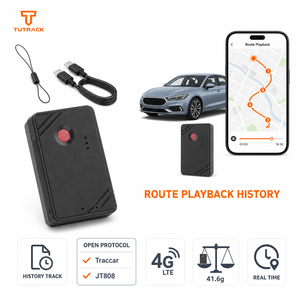
A critical E-E-A-T factor for enterprise importers is software adaptability. Reliable manufacturers provide fully documented open protocols, enabling seamless integration with industry-standard telemetry software including Traccar, GPSWOX, Wialon, Navixy, as well as proprietary enterprise fleet management portals via JT808, EGTS, or GT06 communication protocols.
4. Comparative Procurement Matrix for B2B Importers
Understanding the hardware specifications helps buyers select the exact tracker configuration required for their specific business model, whether it is high-frequency vehicle rental fleets, insurance tracking, or aftermarket consumer anti-theft sales.
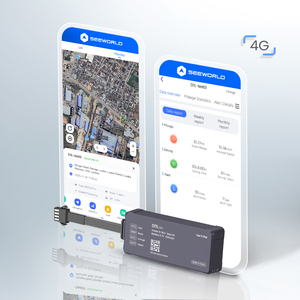
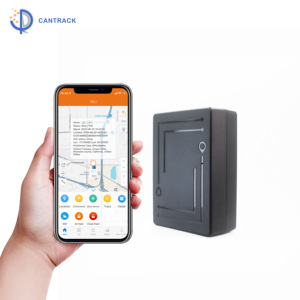
| Feature Spec | Hardwired 4G Relay Tracker | Magnetic Standby Tracker | Mini Compact OBD/Basic Tracker |
|---|---|---|---|
| Primary Target | Fleet Management & Anti-theft | Asset Recovery & Covert Tracking | Personal Motos & Quick Deploy |
| Operating Voltage | 9V – 90V DC (Surge Protected) | Internal Battery (3.7V - 3.8V) | 9V – 36V DC |
| Battery Capacity | 150mAh – 450mAh (Backup) | 3000mAh – 10000mAh (Li-ion) | 100mAh (Backup) |
| Waterproof Rating | IP67 / IP68 Sealed | IP67 Magnetic Case | IP65 Splash Proof |
| Engine Cut-off Relay | Supported (Remote Fuel/Power) | Not Applicable | Optional External Relay |
| Protocols Supported | JT808, GT06, Customized API | Traccar, Wialon, GT06 | GT06, Proprietary SDK |
| Certifications | CE, FCC, RoHS, PTCRB | CE, FCC, UN38.3, MSDS | CE, RoHS |
5. Future Sourcing & Tech Trends (2025–2030)
As the electric vehicle (EV) revolution accelerates, motorcycle manufacturers are transitioning to smart connected two-wheelers. Future-ready GPS trackers are evolving beyond basic latitude/longitude reporting into complete vehicle controller gateways.
- CAN-Bus & BMS Telemetry Integration: Modern trackers interface directly with the Electric Motorcycle Controller and Battery Management System (BMS), transmitting battery state of charge (SoC), thermal metrics, speed telemetry, and error codes over CAN-bus protocols.
- Bluetooth 5.2 & BLE Beacon Pairing: Integrated BLE connectivity allows riders to use keyless smartphone ignition unlock, while monitoring peripheral sensors such as wireless tire pressure sensors (TPMS) and helmet proximity tags.
- AI-Driven Behavioral Analytics: On-device edge processing analyzes raw accelerometer data to detect harsh cornering, rapid acceleration, impact collision alerts, and emergency eCall triggers without overloading cellular data channels.
- Firmware Over-The-Air (FOTA): Cloud-managed delta updates ensure that security patches, protocol tweaks, and new features are delivered remotely to global device fleets without requiring physical device removal.