Explore our engineering-grade BMS controller units, conversion hardware, telemetry trackers, and power management accessories engineered for rigorous heavy-duty performance.
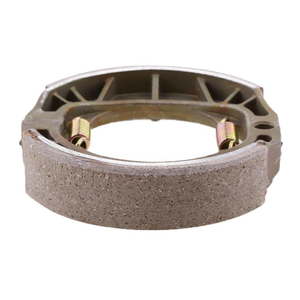
High-friction thermal resistant sintered compound designed for heavy regenerative braking deceleration backup.
Send an Inquiry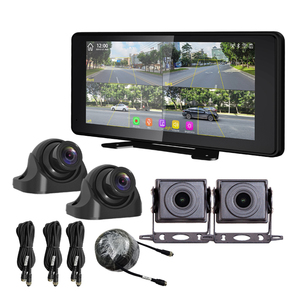
Multi-channel fleet surveillance integration with CAN telemetry overlay for commercial vehicles.
Send an Inquiry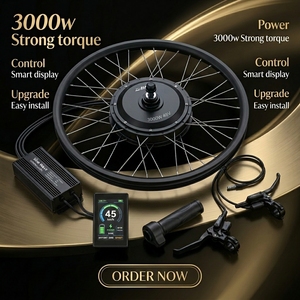
Heavy-duty power conversion kit featuring high-current smart BMS protection and 72V controller matching.
Send an Inquiry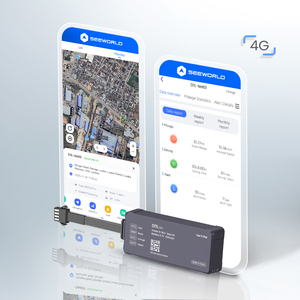
4G IoT telematics system for remote battery status diagnostics, anti-theft cut-off, and real-time tracking.
Send an Inquiry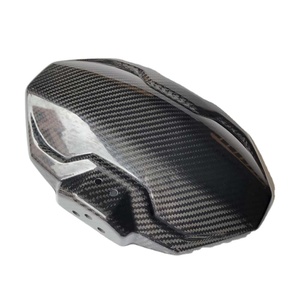
Ultra-lightweight high-rigidity carbon fiber enclosures for custom BMS protection and battery casings.
Send an Inquiry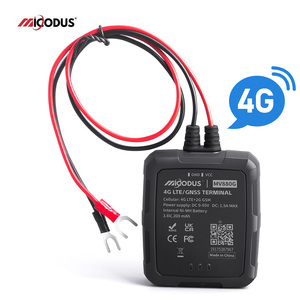
Miniaturized remote diagnostic unit interfacing via RS485/UART with intelligent battery management systems.
Send an Inquiry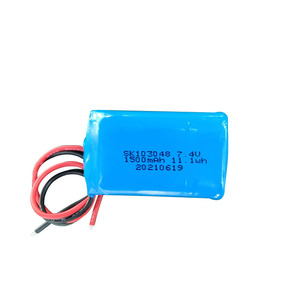
Precision-balanced small-footprint polymer cell equipped with customized miniature PCM/BMS board.
Send an Inquiry
High-torque powertrain package paired with advanced thermal monitoring Smart BMS controller.
Send an InquiryWhy leading global OEMs partner with elite Chinese Smart BMS manufacturers for heavy-duty electric mobility and utility energy storage systems.
Utilizing high-precision 24-bit ADCs and extended Kalman filtering (EKF) algorithms, our Smart BMS controllers maintain a State of Charge (SOC) tracking precision of ±0.5% across extreme ambient temperature operational windows.
Bidirectional flyback active energy distribution pumps energy from high-voltage cells to low-voltage cells at up to 5A continuous rates, boosting usable battery capacity by over 18% compared to legacy passive dissipation.
Equipped with dual CANbus 2.0B, CANopen, RS485, and UART hardware interfaces. Fully compatible with major inverter protocols (Victron, SMA, Pylontech, Deye) and remote 4G/Bluetooth IoT mobile dashboards.
As global electrification accelerates across automotive fleets, light electric vehicles (LEVs), micro-mobility, industrial equipment, and stationary Energy Storage Systems (ESS), the demand for high-reliability, intelligent battery management systems has undergone a fundamental paradigm shift. Legacy battery protection boards (PCM)—which operated purely as passive circuit breakers for over-voltage and over-current prevention—are no longer adequate for modern multi-cell lithium-ion (NMC, LiFePO4, LTO, and emerging Solid-State) chemistries. Today's industrial buyers look to China's leading Smart BMS Controller suppliers to deliver integrated electro-thermal computing nodes capable of predicting cell degradation, optimizing thermal management, preventing thermal runaway, and interfacing natively with vehicle control units (VCU) and cloud telematics.
Key Takeaway for B2B Procurement Teams: Modern Smart BMS sourcing is no longer merely a hardware component transaction; it is a long-term co-engineering partnership involving firmware customization, safety functional validation (ISO 26262), and unified telemetry protocol integration.
A high-performance Smart BMS Controller engineered by top tier-1 Chinese suppliers consists of three primary functional layers:
While passive balancing burns excess cell energy off as heat through bleed resistors (typically limited to 50mA–200mA), Chinese active balancing Smart BMS units utilize capacitive or inductive energy transfer at up to 5A–10A. This ensures rapid cell equalization during high-drain operation and extends battery pack lifecycle by up to 30%.
Inspired by high-performance EV platforms such as Savic Motorcycles' liquid-cooled powertrain architecture, advanced BMS controllers proactively trigger pump loops, cooling fans, or PTC heaters based on predictive thermal modeling before cell temperatures breach safe operational boundaries.
Global procurement directors and engineering leads must navigate shifting supply chain dynamics, stricter environmental compliance regulations, and rapid hardware convergence. Below are the key strategic procurement trends defining China's Smart BMS export sector:
While 48V–72V architectures remain dominant in e-mobility and light vehicles, industrial ESS and high-performance electric vehicles are rapidly transitioning to 400V–800V platforms. Smart BMS manufacturers in Shenzhen and Changzhou are scaling production of modular Master-Slave BMS architectures. In these configurations, a centralized Master Controller communicates via isolated daisy-chain CANbus with multiple Slave cell monitoring units (CMUs), accommodating up to 200+ series-connected cells seamlessly.
Procurement specifications increasingly mandate built-in cellular (4G/5G Cat-M1) and Bluetooth Low Energy (BLE) modules directly on the BMS PCB. This empowers fleet operators to monitor cell health remotely, perform Over-The-Air (OTA) firmware updates, receive instant short-circuit or insulation fault alerts, and feed cloud-based digital twin algorithms that predict cell failure weeks before physical thermal event risk arises.
Western market entry requires compliance with rigorous international safety standards. Leading Chinese BMS exporters now provide turnkey certification documentation, including ISO 26262 ASIL-B/D functional safety compliance, IEC 62619 for industrial ESS, UL 1973 for stationary batteries, and UN 38.3 for transport security. Sourcing from suppliers with in-house certified testing laboratories significantly reduces OEM product launch cycles.
Our manufacturing and engineering facilities combine Western design philosophies—such as those proven in Australian high-performance electric motorcycle engineering—with China's unmatched electronics manufacturing scale. By controlling the complete value chain from schematic design, SMT surface mount assembly, conformal coating application, to automated thermal shock testing, we deliver superior reliability for mission-critical deployments.
High-speed Yamaha & Panasonic SMT lines operating in ISO Class 8 cleanrooms ensure zero solder-bridging and flawless placement of fine-pitch MCU and AFE ICs.
Every Smart BMS unit undergoes full automated functional validation, including calibration of voltage sensing channels, over-current trip timing, and high-voltage insulation dielectric withstand tests.
We provide open API documentation, mobile application SDKs (iOS/Android), and customizable CAN matrix files (.DBC) for instant integration into customer vehicle control software.
Essential technical clarifications regarding MOQ, protocol customization, safety testing, and volume supply capabilities.
Consult with our senior electronics engineers to receive custom schematic advice, CAD drawings, technical datasheets, and direct factory pricing quotes within 24 hours.
Send an Inquiry