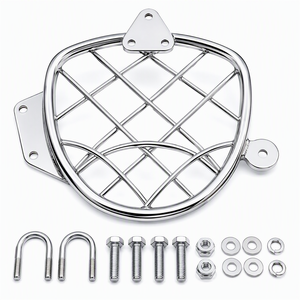
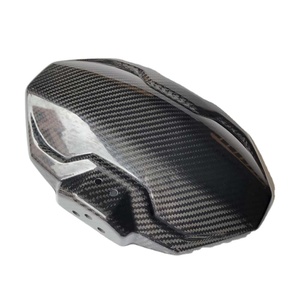
Engineered for global tier-1 brands, aftermarket distributors, and racing teams. Every component undergoes 3D CMM inspection, strict metallurgy verification, and custom surface finishing.
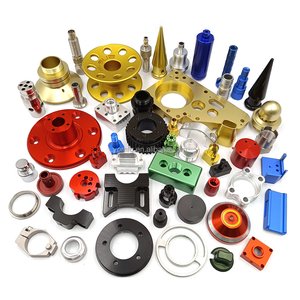
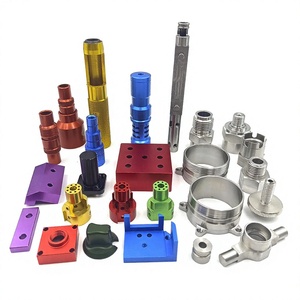
The global motorcycle manufacturing and aftermarket ecosystem is undergoing a dramatic structural evolution. Driven by rapid advancements in vehicle powertrain electrification, stringent regulatory emission benchmarks (Euro 5+ and US EPA compliance), and an unprecedented surge in consumer demand for bespoke custom aesthetics, original equipment manufacturers (OEMs) and original design manufacturers (ODMs) face mounting pressure to reduce procurement cycles while elevating metallurgical precision.
As a premiere China Wholesale Custom Motorcycle Parts Manufacturer & Exporter, our engineering complex operates at the intersection of aerospace-grade materials science, state-of-the-art multi-axis CNC machining, and automated quality assurance protocols. This whitepaper establishes a comprehensive procurement blueprint for global procurement officers, engineering leaders, and aftermarket brand directors seeking to optimize supply chain resilience, maximize structural performance, and gain an unfair market advantage through technical Information Gain.
Core Procurement Insight: Precision component manufacturing is no longer purely about high-volume cost efficiency. Modern B2B procurement demands strict adherence to dimensional fidelity (sub-10-micron tolerances), FEA-validated weight reduction (topology optimization), and complete material certification (RoHS, REACH, and Material Test Reports per EN 10204 3.1).
Achieving superior strength-to-weight ratios in motorcycle chassis, engine, suspension, and braking subsystems requires absolute mastery over alloy selection, thermal treatment, and subtractive/additive manufacturing techniques. Our factory utilizes multi-axis CNC turning and milling centers alongside wire EDM cutting, precision tube bending, and autoclave carbon fiber layups.
| Material Specification | Yield Strength (MPa) | Tensile Strength (MPa) | Target Motorcycle Components | Primary Surface Treatments |
|---|---|---|---|---|
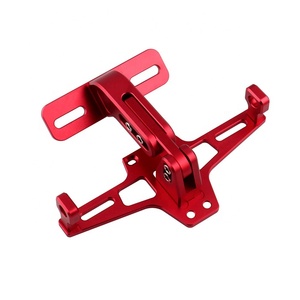
| Aluminium 6061-T6 | 276 MPa | 310 MPa | Headlight Guards, Engine Covers, Foot Pegs, Brackets | Type II Anodizing, Sandblasting, Powder Coating |
| Aluminium 7075-T6 | 503 MPa | 572 MPa | Triple Clamps, Rear Swingarms, Sprockets, Clip-ons | Type III Hardcoat Anodizing, Micro-Arc Oxidation |
| Stainless Steel (SUS304/316) | 290 MPa | 620 MPa | Exhaust Muffler Systems, Structural Bolts, Brake Rotors | Electropolishing, PVD Coating, Chrome Plating |
| Titanium Grade 5 (Ti-6Al-4V) | 880 MPa | 950 MPa | Race Axles, Engine Valves, High-Stress Chassis Fasteners | Physical Vapor Deposition (PVD), Anodized Coloration |
| 3K Carbon Fiber Composite | 3500 MPa (Fiber) | 4000+ MPa | Fairings, Heat Shields, Fenders, Exhaust Canisters | UV-Resistant High-Gloss Clearcoat, Matte Finish |
Subtractive machining forms the backbone of custom component production. Utilizing high-speed 5-axis simultaneous CNC machining centers equipped with high-torque spindles and dynamic tool-path optimization software, our facility transforms raw billets of aerospace aluminum and titanium into complex, thin-walled geometries with zero step-over marks. This eliminates manual deburring variations and maintains geometric tolerances down to ±0.005mm across production runs exceeding 100,000 units.
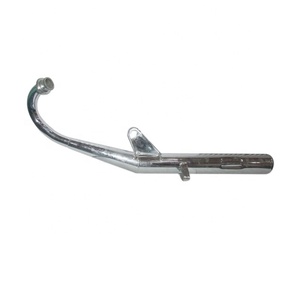
Exhaust systems, frame subassemblies, crash bars, and headlight guard grilles demand strict tube profile integrity. Our CNC rotary draw tube bending machinery ensures precise bend radii without flattening or wrinkling thin-walled SUS304 stainless steel or titanium tubing. Coupled with robotic TIG (Tungsten Inert Gas) welding under back-purge argon atmosphere, weld seams achieve 100% penetration and flawless aesthetic scale patterns ideal for show-grade custom builds.
Leveraging deep industrial integration, raw material access, and advanced automotive manufacturing protocols to deliver unmatched OEM/ODM speed to market.
From initial CAD modeling and DFM (Design for Manufacturability) analysis to die-casting, CNC milling, wire EDM cutting, surface anodizing, and final assembly—every process is kept in-house to guarantee quality control and shorten turnaround times.
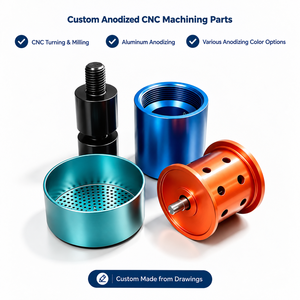
We operate specialized surface treatment lines capable of hard-anodizing in over 20 vivid custom colors, bead-blasting, chemical etching, physical vapor deposition (PVD), and high-durability powder coating engineered to withstand extreme thermal cycle testing.
Every lot is verified using ZEISS Coordinate Measuring Machines (CMM), optical spectrum analyzers for metal alloy verification, salt spray corrosion testing chambers, and dynamic fatigue test rigs to meet IATF 16949 automotive standards.
Strategic purchasing managers must anticipate technological disruptions to maintain market leadership. Based on empirical trade data and engineering breakthroughs across international vehicle manufacturing hubs, four key macro trends are shaping the future of custom motorcycle part wholesale procurement:
The global shift toward high-performance electric motorcycles (EV café racers, urban commuters, and off-road e-dirt bikes) requires radically different manufacturing priorities. B2B buyers are pivoting toward suppliers equipped to produce liquid-cooled motor housings, high-efficiency aluminum battery enclosures doubling as structural frames, integrated controller cold plates, and low-noise carbon belt drive pulleys.
Thermal management components milled from structural aluminum alloys (such as AL6061-T6) are critical for suppressing high-amperage heat buildup during rapid charging and continuous peak power output.
Distributors no longer wish to hold millions of dollars in static inventory for standardized replacement parts. Modern procurement relies on modular OEM design architectures. By supplying 3D CAD files (STEP/IGES), buyers can commission low-volume, high-mix custom production runs with minimal tooling surcharges.
Digital twin simulation allows our engineers to perform finite element analysis (FEA) on custom triple clamps, swingarms, and clip-ons, verifying stress concentration zones prior to cutting single metal chips.
Chasing enhanced power-to-weight ratios, custom aftermarket brands are moving beyond aesthetic carbon wraps to structural 3K/12K autoclave carbon fiber. Autocured carbon fiber structural fairings, front mudguards, tank shells, and exhaust shield wraps reduce unsprung weight by up to 45% compared to conventional ABS plastics or steel stampings.
Wholesale buyers are increasingly bundling CNC machined aluminum core mounts with pre-preg carbon fiber panels for turn-key aftermarket upgrade kits.
Western distributors operating across North America, Europe, and Australia face increased regulatory mandates regarding supply chain origin audit trails. China's top-tier export manufacturers now offer full raw material lot traceability, chemical composition testing, and carbon footprint reduction documentation. This transparency ensures seamless customs clearance and protects brand reputation.
Direct technical answers regarding Minimum Order Quantities (MOQ), production lead times, quality compliance, and custom OEM design workflows.
Our manufacturing flexible workflow supports both rapid prototyping and full-scale mass production. For complex 5-axis CNC machined billet components (such as custom triple trees or rear-sets), our MOQ starts as low as 20 to 50 pieces. For standard turning, tube bending, or cast components, standard MOQs typically range from 100 to 500 units depending on raw material setup requirements.
Every raw material batch (Aluminum 6061/7075, Stainless Steel 304/316, Titanium, Carbon Fiber) is accompanied by a Material Test Report (MTR) verifying chemical composition and mechanical properties. In-process quality control utilizes automated optical comparators, plug gages, and ZEISS 3D CMM inspection systems, adhering strictly to ISO 2768-m/f tolerances or buyer-specified drawings down to ±0.005mm.
Yes. Our engineering department works fluently with STEP, IGES, SolidWorks (SLDPRT), and AutoCAD (DWG/DXF) formats. If you do not possess 3D models, our reverse-engineering lab can perform high-definition 3D laser scanning of physical samples to reconstruct parametric CAD models with exact mounting dimensions and optimized tolerances.
We offer comprehensive in-house surface finishing services including: Type II sulfuric anodizing, Type III hardcoat anodizing, bead sandblasting, micro-arc oxidation, mirror polishing, electroplating (chrome/nickel), PVD coating (titanium nitride gold/black), electro-coating, and custom powder coating matching Pantone or RAL color standards.
Initial prototype samples are typically produced and delivered within 7 to 12 business days. Full production orders average 20 to 30 days depending on order volume and surface finishing complexity. We offer full EXW, FOB, CIF, DDP, and DAP freight arrangements via express air cargo, sea freight, or rail transportation with complete export documentation.
We maintain strict confidentiality protocols to safeguard client IP. We routinely execute binding Non-Disclosure Agreements (NDAs) prior to receiving drawings or project files. Your custom designs, tooling dies, and CAD models are securely encrypted and used exclusively for your authorized production orders.
Upload your technical drawings or consult directly with our senior mechanical engineering team for instant DFM analysis, material recommendations, and competitive wholesale quotes within 24 hours.