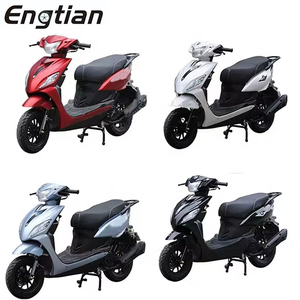
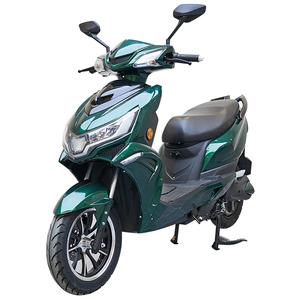
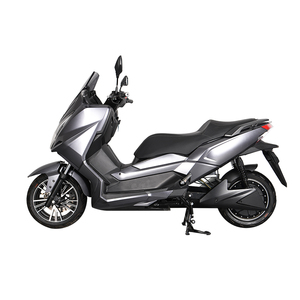
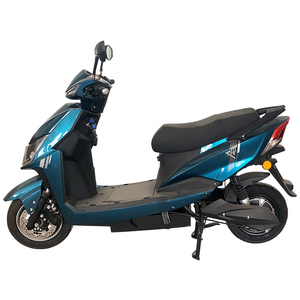
Direct factory-manufactured urban commuter vehicles engineered for high efficiency, modular assembly (CKD/SKD), and international market homologation.
From powertrain topology to thermal management and modular chassis design—how premier manufacturing partners deliver compliance, performance, and information gain for B2B buyers.
The global urban mobility market is undergoing a seismic transition. Legacy low-voltage hubs and standard hub-motor scooters are giving way to high-performance, high-voltage urban electric motorcycles engineered around structural battery enclosures, liquid-cooled IPM motors, and advanced CAN-bus electronics.
For OEM brand owners, importers, and fleet distributors, selecting a custom manufacturer requires evaluating core mechanical and electrical competencies rather than simple aesthetic styling. Modern electric motorcycles demand industrial-grade structural rigidity, precision thermal dissipation, and international road-legality compliance (including EEC, ADR, and DOT frameworks).

Quantifiable parameters defining tier-one custom electric motorcycle manufacturing standards.
Dedicated coolant loops circulating across cold plates for the inverter, 3-phase AC IPM motor, and DC/DC converter, preventing thermal throttling during continuous highway speeds and quick charging sessions.
Precision Optibelt carbon synchronous belt systems paired with an anodized rear pulley concentric to the swingarm axis. Maintains dynamic belt tension through full rear shock suspension travel.
Linux-based 7-inch anti-glare capacitive IPS dashboard with 4G cloud connectivity, custom riding profiles, over-the-air (OTA) firmware updating, and mobile companion app telemetry.
Comprehensive component mapping comparing typical factory options for urban commercial and high-performance custom motorcycle builds.
| Architecture Component | Standard Urban Commuter (1kW - 2kW) | Mid-Range Executive EV (3kW - 5kW) | High-Performance Flagship (80kW Peak) |
|---|---|---|---|
| Motor Architecture | Brushless Hub Motor / Air-Cooled | Mid-Drive PMDC / Liquid or Air Cooling | 3-Phase AC IPM / Full Liquid Cooled |
| Battery Pack Chemistry | 48V/60V Lead-Acid or LFP Modular | 72V Lithium-ion (NCM / LFP) | 16.2 kWh High-Density Lithium Ion (300V+) |
| Braking & Safety Systems | Front Disc / Rear Drum Brakes | Dual Hydraulic Disc with CBS | Dual Brembo M4 Monoblock + Bosch ABS |
| Final Transmission | Direct Hub Drive / Standard Roller Chain | Reinforced 520 Chain Drive | Optibelt Carbon Fiber Synchronous Belt |
| Chassis & Swingarm | Tubular Steel Frame | Aluminum Alloy Cradle Frame | Cast Backbone Battery Frame + Single Swingarm |
| Instrumentation & IoT | Standard Monochromatic LCD Screen | Color TFT Display with Bluetooth | 7" Touchscreen IPS Linux OS + 4G Telematics |
| Homologation Options | EEC L1e / L3e Standard | EEC L3e-A1 / DOT Compliant | ADR (Australia), EEC, DOT Full Compliance |
Strategic shifts shaping contract manufacturing, supply chain logistics, and technology integration through 2030.
To mitigate high import tariffs on fully built units (CBU), international distributors increasingly demand Completely Knocked Down (CKD) or Semi-Knocked Down (SKD) packaging. Premier factories provide standardized assembly fixtures, pre-wired harnesses, and comprehensive technical documentation for localized final assembly.
Get a QuoteModern urban riding requires variable regenerative braking systems. Importers seek customizable firmware that lets users adjust motor deceleration torque across 1–10 levels—simulating classic two-stroke coasting or high-compression engine braking while feeding energy back to the battery pack.
Get a QuoteMarket adoption hinges on rider safety. Factory integration of dual-channel Bosch Anti-lock Braking Systems (ABS), combined with Brembo radial monoblock calipers and traction control modules, has become a mandatory specification for premium urban electric motorcycles globally.
Get a QuoteBy consolidating design, prototype testing, structural tooling, powertrain calibration, and final assembly within ISO-certified facilities, our engineering team ensures total quality control across every production batch.

Direct technical answers for commercial buyers, brand managers, and fleet purchasing managers.
Our manufacturing facilities support comprehensive customization across both hardware and software layers. Hardware customization options include tailored bodywork (from hand-laid carbon fiber to custom metallic colorways such as Racing Green or Atomic Silver), modular seat configurations (single-rider café racer vs. dual-pillion setups), heritage or stacked LED headlight designs, radial Brembo braking packages, and custom wheel rim finishes. On the software side, we offer custom dashboard branding on the 7-inch IPS Linux system, tailored CAN-bus communications protocols, personalized riding modes, and custom mobile companion app interfaces.
Completely Knocked Down (CKD) and Semi-Knocked Down (SKD) shipping modalities allow international distributors to import vehicle components at significantly reduced duty rates compared to CBU (Completely Built Up) vehicles. By shipping sub-assemblies—such as pre-tested battery frames, motor cradles, wiring looms, and swingarm modules—shipping volume density is maximized per container. We supply standardized assembly jig designs, step-by-step assembly manuals, wiring schematics, and factory calibration software to enable seamless local assembly in your destination market.
Our motorcycle architectures are designed to comply with global road-safety standards. Depending on the target region and model selection, vehicles feature EEC (European Economic Community) approval under L1e/L3e categories, ADR (Australian Design Rules) road-registry compliance, and DOT (US Department of Transportation) compliance. Standard safety hardware includes Bosch ABS braking control modules, ADR/E-mark certified lighting systems, shatterproof mirrors, and UN38.3 certified lithium battery packs with MSDS certification for sea and land transport.
Air-cooled electric motors often experience thermal saturation during heavy urban acceleration, sustained incline climbing, or high ambient temperatures, triggering automatic power thermal throttling. Our closed-loop liquid cooling system continuously pumps coolant through the motor stator jacket, inverter cold plate, and DC converter. This rapid heat extraction enables the powertrain to maintain peak torque output (up to 250 Nm) and sustained high speeds without thermal degradation, while also prolonging component lifespan.
Unlike traditional roller chains that require constant lubrication, tension adjustment, and clean-up, a carbon synchronous belt drive (such as an Optibelt system) is virtually maintenance-free. When paired with an anodized rear drive pulley engineered concentrically to the swingarm pivot axis, belt tension remains constant throughout full suspension deflection. This eliminates belt slack variance, delivers silent power transfer, reduces drivetrain parasitic loss, and eliminates grease contamination on urban commuter vehicles.
Standard OEM/ODM orders begin at flexible MOQs based on customization depth. For standard production configurations, initial sample evaluation units can be dispatched within 3 to 4 weeks. Full container load (FCL) orders typically require 35 to 45 days for manufacturing, comprehensive dyno testing, quality control inspection, and export packaging. We also support custom trial batch runs for strategic partners entering new regional markets.