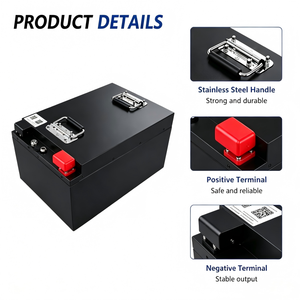
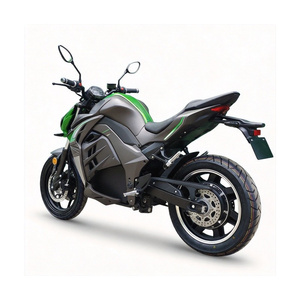
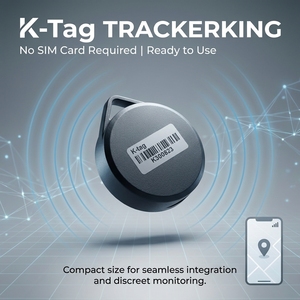
As a global OEM/ODM engineering pioneer, our product portfolio encompasses automotive-grade motor control units (MCU), vehicle control units (VCU), high-density LiFePO4 battery modules, and auxiliary electronic hardware. Explore our flagship hardware solutions engineered for high performance, thermal efficiency, and maximum reliability across extreme duty cycles.
The global transition to electrification across light electric vehicles (LEVs), commercial buses, performance motorcycles, and industrial mobile machinery demands a fundamental evolution in power electronics architecture. At the heart of every modern electric powertrain lies the High Voltage Motor Controller (HV MCU)—the digital brain and power routing hub responsible for converting direct current (DC) from high-voltage traction batteries into precisely modulated multi-phase alternating current (AC) for synchronous and asynchronous electric motors.
As an established OEM/ODM turnkey manufacturer, our manufacturing facility integrates cutting-edge power semiconductor technologies, field-oriented control algorithms (FOC), and automotive-grade safety layers to deliver market-leading power density ($kW/L$) and gravimetric performance ($kW/kg$).
Transitioning from legacy Silicon IGBTs to Wide Bandgap (WBG) Silicon Carbide MOSFETs reduces switching losses by up to 75%. This enables switching frequencies exceeding 20kHz, resulting in smoother sine-wave output, minimized motor harmonic heating, and significantly reduced passive filtering components.
Our proprietary Space Vector Pulse Width Modulation (SVPWM) algorithms dynamically track rotor position via high-resolution resolvers or absolute encoders. The controller maintains optimal torque per ampere (MTPA) while executing seamlessly smooth field weakening for extended top-speed RPM bandwidth.
Built upon dual-core lockstep microcontrollers with redundant hardware monitoring channels, our high voltage controllers execute continuous diagnostic checks on over-voltage, phase current faults, over-temperature, and CAN bus signal integrity, fully adhering to ISO 26262 compliance standards.
To assist Tier-1 systems integrators and automotive original equipment manufacturers (OEMs) in evaluating powertrain architecture trade-offs, the comparative matrix below highlights key engineering metrics evaluated under standardized automotive test cycles (WLTP):
| Engineering Metric | Legacy Silicon IGBT Inverters | Next-Gen SiC High Voltage Controller | OEM/ODM System Impact |
|---|---|---|---|
| Nominal Operating Voltage | 300V - 400V DC | 400V - 800V+ DC (Up to 1000V Peak) | 50% faster DC fast charging capability & thinner wiring harness mass. |
| Maximum Inverter Efficiency | 96.5% - 97.2% | 99.1% - 99.5% | Extends vehicle battery range by 6% to 10% on identical pack kWh. |
| PWM Switching Frequency | 8 kHz - 10 kHz | 16 kHz - 40 kHz | Eliminates high-frequency audible motor whine; reduces motor phase ripple. |
| Power Density (Volumetric) | 15 kW / Liter | 45 - 60 kW / Liter | Dramatic reduction in controller footprint for tight powertrain packaging. |
| Thermal Dissipation Requirement | High Liquid Flow Rate Needed | 30% Reduced Thermal Load | Allows smaller radiators and compact, lightweight cooling pump setups. |
The rapidly maturing electric mobility landscape is undergoing a structural transition driven by consumer demand for faster charging rates, longer range, superior thermals, and reduced total cost of ownership (TCO). As a dedicated OEM/ODM factory, we monitor and actively shape five critical macro trends across our research and development pipelines:
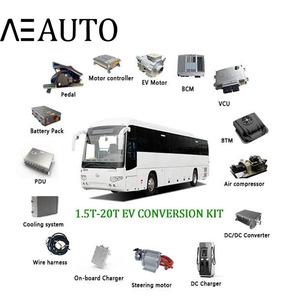
1. Convergence into Multi-in-One e-Axles & Domain Controllers: Standalone motor controllers are increasingly migrating toward integrated 3-in-1, 6-in-1, and 8-in-1 electric drive assemblies. By co-locating the High Voltage Controller, Vehicle Control Unit (VCU), On-Board Charger (OBC), DC/DC Converter, and Battery Management System (BMS) within a single die-cast aluminum housing, engineers eliminate bulky external high-voltage orange cables, save system weight, and eliminate inter-component electromagnetic interference (EMI).
2. Direct-Fluid Coolant Channels & Advanced Thermal Substrates: Higher power throughput generates concentrated heat flux at the semiconductor junction ($T_j$). Modern controllers employ pin-fin copper heat sinks integrated directly into liquid cooling loops, eliminating traditional thermal grease layer bottlenecks and allowing continuously sustained peak power outputs without thermal throttling.
3. Software-Defined Vehicles (SDV) & Adaptive Calibration: Real-time torque control is moving toward cloud-connected software control. Our controller hardware supports dynamic Over-The-Air (OTA) firmware flashes, torque-vectoring adjustments, and custom multi-mode regenerative braking mapping (from smooth coastal deceleration to intense single-pedal urban driving patterns).
4. Wide-Scale Adoption of CAN FD and Automotive Ethernet: High-bandwidth data buses like CAN FD (Flexible Data-Rate) and Automotive Ethernet are replacing legacy CAN 2.0B protocols, permitting ultra-fast data telemetry exchange between the high-voltage inverter, autonomous driver assistance systems (ADAS), and central telemetry gateway modules.
For global OEMs, procurement managers, and fleet engineering teams, evaluating high-voltage controller manufacturers requires moving beyond simple upfront unit pricing. The next decade of procurement strategy centers on four structural pillars:
Procurement teams favor scalable controller platforms where a single physical architecture can be configured via firmware for 48V, 72V, 96V light mobility, or scaled up to 400V/800V commercial vehicle platforms. This reduces toolchain expenditure and streamlines spare parts inventory management across multiple product lines.
Global entry requires international certification compliance. Sourcing managers demand verified laboratory test credentials for UN ECE R100 (EV safety), UN ECE R10 (EMC compliance), ISO 16750 (environmental testing), and UL94-V0 flame-retardant potting encapsulation compounds.
Strict off-the-shelf catalog buying often forces compromises in vehicle packaging or motor matching. Future-proof procurement relies on OEM/ODM partners capable of delivering customized aluminum enclosures, tailored wiring harnesses, and custom CAN bus DBC file development within 4 to 8 week engineering sprints.
Leveraging deep automotive domain expertise—exemplified by high-performance engineering programs such as the Australian-designed Savic C-Series electric motorcycle (delivering 80 kW liquid-cooled output and 250 Nm of torque)—our manufacturing infrastructure is specifically optimized for high-reliability EV drive solutions.
Our state-of-the-art facility combines rigorous automotive quality management systems (IATF 16949 compliant) with agile engineering customization. Here is how we empower our enterprise partners worldwide:
From surface-mount technology (SMT) high-speed PCB placement to automated optical inspection (AOI), high-voltage isolation testing, dual-component silicone potting, and end-of-line (EOL) dyno motor calibration, every step takes place in-house under controlled cleanroom conditions.
We source raw active and passive components strictly from audited world-class suppliers, including Infineon SiC modules, STMicroelectronics automotive MCUs, Texas Instruments isolated gate drivers, TDK capacitors, and Amphenol high-voltage connectors to guarantee rock-solid field longevity.
Our software engineers specialize in customizing field-oriented control algorithms to match specific motor parameters (IPMSM, SPM, AC Induction). We seamlessly integrate smart touchscreen displays, telemetry tracking protocols, app connectivity, dynamic regen mapping, and electronic brake-force distribution (EBD).
Below are detailed responses to the technical, operational, and commercial questions most frequently raised by automotive chief engineers, sourcing directors, and platform architects when evaluating our OEM/ODM controller solutions.
Connect directly with our senior hardware engineers and automotive sales team to discuss custom hardware engineering, request product datasheets, or schedule a technical consultation for your project.
Send an Inquiry