Engineered for race-grade structural rigidity, zero pedal-sponginess, and extreme thermal stamina across automotive and motorsport platforms.
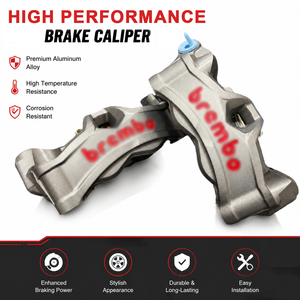
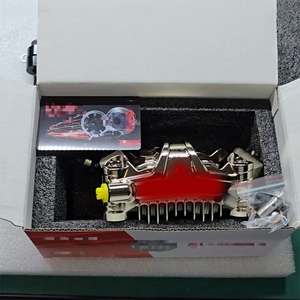
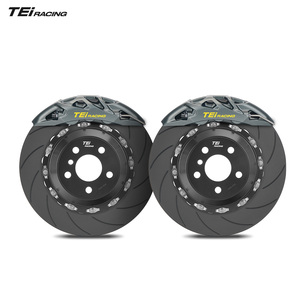
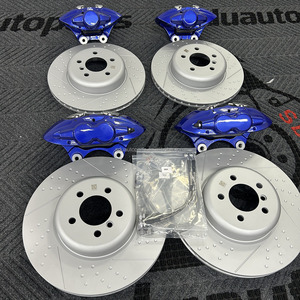
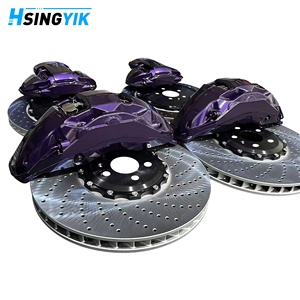
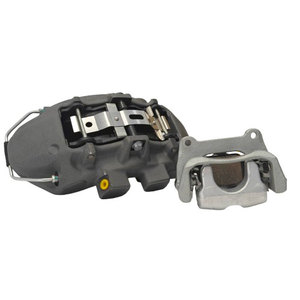
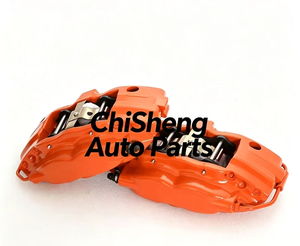
In high-performance automotive and motorcycle braking systems, the transition from conventional two-piece (split-body) calipers to monoblock brake calipers represents one of the most critical structural leaps in modern chassis dynamics. Unlike traditional two-piece calipers joined together by steel bridge bolts, a monoblock caliper is machined from a single solid piece of high-tensile material—typically forged 6061-T6 or 7075-T6 aircraft-grade aluminum alloy billet.
When hydraulic pressure inside a brake system escalates up to 180–220 bar under aggressive track braking or heavy vehicle deceleration, conventional split calipers experience microscopic elastic body deflection across their bolting planes. This dynamic flex causes several engineering detriments:
By eliminating the mechanical seam entirely, our OEM/ODM Monoblock Brake Caliper Factory achieves an engineered body rigidity increase exceeding +40% under extreme clamping forces. This structural unity provides professional drivers and OE vehicle platforms with instantaneous initial bite, razor-sharp hydraulic pedal feedback, and uniform pad pressure across all piston faces.
| Engineering Metric | Monoblock Forged/Billet Caliper | Two-Piece Bolted Cast Caliper | OEM Advantage Impact |
|---|---|---|---|
| Structural Deflection Rate (@ 150 Bar) | < 0.035 mm | > 0.120 mm | 70% Reduction in Caliper Body Flex |
| Unsprung Weight Ratio | Ultra-Light (2.4 kg - 3.8 kg) | Heavy (4.2 kg - 6.5 kg) | Dramatically Improved Suspension Responsiveness |
| Piston Alignment Precision | Absolute Axial Tolerance (±0.005mm) | Variable Bolt Clearance Tolerance | Zero Taper Pad Wear, Extended Friction Life |
| Heat Dissipation Efficiency | Uninterrupted Monolithic Thermal Pathway | Interrupted Thermal Seam Barrier | Lower Brake Fluid Operating Temps (-35°C) |
| Fatigue Life Expectancy | > 2,500,000 High-Pressure Cycles | ~ 800,000 Cycle Seam Stress Limit | Long-Term Fleet & Track Reliability |
From raw metallurgical forging to 5-axis simultaneous CNC machining, our manufacturing ecosystem guarantees aerospace-grade precision for automotive brands, aftermarket distributors, and race teams globally.
We utilize ultra-precise DMG MORI 5-axis CNC machining centers. Internal piston bores are honed with sub-micron tolerances (±0.005mm) to ensure airtight seal compression and minimal piston friction drag.
Designed with staggered piston diameters (e.g., 28mm/32mm/38mm) along pad trailing edges to counteract natural pad wear taper, balancing hydraulic force and extending friction material service life by 30%.
Offering Hard-Anodizing Type III (MIL-A-8625), high-temperature Cerakote, electroplated chrome, and custom OEM powder coating capable of withstanding 400°C continuous track heat without degradation.
Every single caliper batch undergoes 100% CMM dimensional verification, 250-bar pneumatic and hydraulic pressure leakage tests, thermal shock cycling (-40°C to +200°C), and salt spray corrosion resistance validation.
We accept 3D STEP/IGES files or physical sample reverse-engineering. Our R&D engineering team provides rapid 3D printing validation models within 48 hours and functional metal prototypes within 14 business days.
Laser engraving, 3D CNC logo milling, customized anodized color palettes, and bespoke retail box design for global auto parts brands seeking zero-headache factory-direct private label manufacturing.
As the automotive ecosystem accelerates toward high-output Electric Vehicles (EVs), hybrid powertrains, and ultra-performance aftermarket modifications, procurement managers and B2B buyers must adapt to changing market requirements. The brake caliper industry is undergoing three major technical shifts:
Electric vehicles carry significantly heavier curb weights due to battery packs while delivering instant torque. This combination places immense strain on kinetic energy absorption during emergency braking. Monoblock calipers have become the gold standard for EV performance conversions (such as Tesla, Porsche Taycan, and custom EV retrofits) because they offer maximum stopping force with minimal weight penalty.
Furthermore, modern OEM buyers require specialized Low-Drag Roll-Back Seals inside caliper bores. These specialized square-profile seals retract pistons by fractions of a millimeter when hydraulic pressure drops, preventing friction pad drag on the brake disc, reducing parasitic energy loss, and directly extending EV battery driving range by up to 2.5%.
Historically, mass-market calipers relied on gravity sand casting or low-pressure die casting. However, global supply chains are heavily transitioning toward 3D forged aluminum billets. Forging alters the internal grain structure of 7075-T6 alloy, aligning metal grain along the contour lines of the caliper body. This yields a tensile strength reaching 570 MPa (compared to ~240 MPa for conventional cast alloy), allowing engineers to hollow out non-structural pockets, reducing total caliper weight without compromising yield strength under track stress.
Tier-1 automotive distributors are increasingly bypassing intermediary trading companies in favor of direct factory partnerships. Sourcing directly from an established supplier offering in-house Finite Element Analysis (FEA), fluid dynamics simulation, and private label branding drastically shrinks time-to-market for new Big Brake Kit (BBK) application releases from 12 months down to under 8 weeks.
Below are authoritative responses to the most critical technical and supply-chain questions queried by professional procurement directors, automotive brand engineers, and wholesale importers.
With over two decades of specialized manufacturing dedication in high-performance friction control and hydraulic engineering, our facility stands as a premier manufacturing destination for Tier-1 brands, motorsport engineering firms, and global wholesale distributors.
Advanced FEA Structural Simulation: Prior to cutting metal, our engineering team executes multi-physics Finite Element Analysis (FEA) to model stress concentration under maximum hydraulic clamping force. This enables us to place material strength exactly where hydraulic pressure demands it while shaving unnecessary weight from non-critical areas.
Comprehensive Vehicle Fitment Database: We maintain an extensive digital CAD database covering over 3,500 OEM vehicle knuckle geometries (Audi, BMW, Mercedes-Benz, Ford, Chevrolet, Porsche, Nissan, Toyota, and specialized racing chassis), guaranteeing 100% bolt-on installation accuracy without vehicle modification.
When you partner with our factory, you gain direct access to a dedicated engineering team, transparent manufacturing progress tracking, complete material certification reports, and rigorous international quality standard compliance (ISO 9001 / IATF 16949 / ECE R90 standard alignment).
Speak directly with our senior automotive engineering team today. Get instant technical consultation, request sample prototypes, or obtain competitive factory-direct wholesale pricing for your OEM/ODM program.
Contact Us