Directly source certified automotive-grade LED components, custom CNC assemblies, and EV powertrains from verified production facilities.
The global motorcycle headlight market has experienced a radical technological shift from halogen and High-Intensity Discharge (HID) legacy systems to solid-state Light Emitting Diode (LED) optical architectures. Driven by mandatory safety standards (FMVSS 108, ECE Regulation 113) and the rapid electrification of two-wheelers, tier-1 OEMs and aftermarket distributors demand unprecedented optical clarity, vibration tolerance, and energy efficiency. Modern motorcycle LED headlight factories are no longer simple light bulb assemblers; they have evolved into high-precision optical laboratories integrating surface-mount technology (SMT), aluminum die-casting, complex polycarbonate lens molding, and advanced CAN-bus electronic integration.
Selecting a manufacturing partner requires strict technical due diligence. A high-performance LED headlamp must maintain low junction temperatures ($T_j < 105^\circ\text{C}$) while operating under harsh environmental conditions—ranging from continuous 5G vibration profiles to high thermal shock (-40°C to +125°C). This comprehensive guide evaluates the world's leading LED motorcycle headlight manufacturing hubs, analyzing their technical capability, optical patent portfolios, thermal management strategies, and production scalable capacities.
Unlike four-wheeler automotive assemblies, motorcycle headlights contend with lean angles up to 40°, requiring specialized adaptive low-beam cut-off shields and wide-angle TIR (Total Internal Reflection) optics. Furthermore, thermal throttling is the primary cause of LED lumen depreciation. Top-tier factories utilize copper substrate PCBs bonded via direct thermal paths to 6063-T6 CNC-machined heatsinks or die-cast ADC12 aluminum housings.
OptiVision leads the global export market in high-density LED projector headlight modules. Housing over 12 automated SMT cleanroom lines and proprietary goniophotometer optical testing rigs, OptiVision specializes in dual-lens projector assemblies producing up to 6,000 raw lumens per unit. Their patented active liquid-cooling heat pipe loops enable zero lumen throttling even during extended stationary idling.
Key Strengths: Customized beam patterns for DOT (LHD/RHD) compliance, integrated DRL (Daytime Running Light) halos, and direct OEM plug-and-play harness manufacturing for Honda, Yamaha, and BMW motorcycle platforms.
Famous for pioneering high-end electric motorcycles such as the C-Series, Savic operates specialized engineering and hand-assembly facilities focused on ultra-reliable, custom-crafted LED lighting systems. By housing structural design, precision CNC machining, and electrical integration under one roof, Savic produces specialized stacked and heritage round LED headlights built with Brembo/Bosch level automotive compliance.
Key Strengths: Premium structural housing using aircraft-grade aluminum CNC turning/milling, custom anodizing options, seamless integration with Linux-based smart touchscreens and CAN-bus vehicle networks.
LumenTech Taiwan is renowned for ultra-sharp sharp cut-off optical lenses engineered specifically to prevent oncoming glare while maximizing peripheral ditch illumination. Utilizing grade-A optical PMMA lens molding and OSRAM/Cree CSP chip packaging, their products achieve exceptional light uniformity and color stability (5700K crisp white rating).
Key Strengths: Industry-leading optical glass clarity, specialized vibration-proof mounting bracket design, and extensive patent portfolios in multi-surface reflector technology.
Raybeam spans over 50,000 square meters of manufacturing space, focusing on high-volume production of retro-style 7-inch and 5.75-inch sealed beam LED replacements. They serve global retail brands, Amazon distributors, and major motorcycle factories requiring cost-effective, high-reliability lighting.
Key Strengths: Automated silicone seal potting lines guaranteeing true IP67/IP68 ingress protection, high-yield die-casting shop, and rapid prototyping capabilities.
Stellar specializes in dual-mode auxiliary driving lights and main headlamps featuring hybrid LED + Laser diode modules. Designed for adventure motorcycles and endurance touring, their high-beam punch exceeds 800 meters of usable illumination distance.
Key Strengths: Ruggedized military-grade housings, anti-fog coated polycarbonate lenses, and wide-voltage (9V-36V) EMC-compliant internal drivers.
Comparative breakdown of optical performance across leading OEM headlight architectural tiers.
| Architecture Type | Luminous Output (Lm) | Power Draw (W) | Optical Efficiency | Thermal Substrate | Global Certification |
|---|---|---|---|---|---|
| Adaptive Matrix LED | 4,800 - 6,500 Lm | 45W - 60W | 130 - 150 lm/W | Direct-Copper Bonding (DCB) | ECE R113 Class D / DOT / SAE |
| Dual Projector LED | 3,200 - 4,500 Lm | 30W - 45W | 110 - 130 lm/W | Thermo-Electric Separated PCB | DOT FMVSS 108 / E-Mark |
| Reflector Facet LED | 2,000 - 3,000 Lm | 18W - 28W | 95 - 115 lm/W | Aluminum Core Metal (MCPCB) | E-Mark / CCC Compliant |
| Hybrid Laser-LED Beam | 7,500+ Lm | 55W - 75W | 140 - 160 lm/W | Vapor Chamber Liquid Heatpipe | Special Off-Road / ECE Auxiliary |
Modern motorcycles rely heavily on centralized control units (BCUs). Next-generation LED headlights feature built-in CAN-bus decoders and error-free load resistors. This allows seamless telemetry communication with digital instrument clusters (such as Savic's 7-inch smart touchscreen Linux dash), offering real-time voltage monitoring, thermal alerts, and dynamic dimming depending on ambient light sensors.
Single-track vehicles present a unique optical challenge: when a motorcycle leans into a turn, the horizontal cut-off line tilts, blinding oncoming traffic while leaving the rider's cornering path in darkness. Top factories are integrating internal 6-axis IMU sensors directly into the headlight PCB, activating incremental side-firing LEDs as lean angle increases to illuminate apexes automatically.
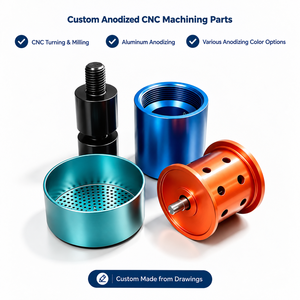
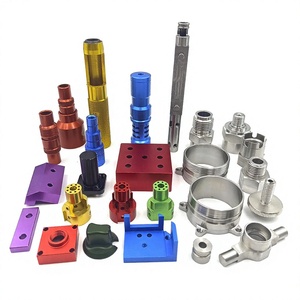
B2B buyers are moving away from generic plastic housings toward bespoke, high-durability machined components. Utilizing 5-axis CNC aluminum turning and milling, factories produce custom anodized bezels, dark chrome badges, and retro café racer clip-on headlight buckets that match specific OEM bike geometry and colorway lines (e.g., Atomic Silver, Racing Green, and Matte Black).
When procuring LED headlamps for OEM motorcycle assembly or high-end aftermarket distribution, quality control extends beyond the light bulb itself. Leading facilities integrate end-to-end component engineering. For instance, pairing precision-machined aluminum spare parts with custom electrical powertrains and heavy-duty wiring harnesses prevents resistance drops and electromagnetic interference (EMI).
Factories backed by robust CNC machining setups offer custom-made high-precision color anodized components, allowing custom motorcycle builders to achieve strict tolerances (up to $\pm0.01\text{mm}$). Whether supplying retro electric café racers or rugged commercial utility vehicles, our vetted factory network offers complete SKD/CKD options, tailored laser etching, custom branding, and scalable minimum order quantities (MOQs).
DOT (Department of Transportation) compliance is mandatory for North America and focuses on specific beam intensity spreads defined by FMVSS 108. ECE (Economic Commission for Europe) regulations require a sharper, anti-glare low-beam cut-off line and strict optical symmetry tests. Premium factories engineer dual-spec optical lenses that satisfy both DOT and ECE Class D requirements simultaneously.
High-grade motorcycle LED headlights incorporate dual-directional GORE-Tex breathers or hydrophobic membrane valves on the rear aluminum housing. This allows air pressure equalisation during high thermal cycling while permanently blocking moisture ingress (water molecules), preserving IP68 integrity.
Yes. While traditional motorcycles run on 12V DC systems, electric motorcycles often utilize DC-DC converters stepping down high-voltage traction batteries (48V to 100V+) to a stable 12V/24V bus. Tier-1 headlight drivers support wide input ranges (9V-36V DC) with active surge protection to prevent LED driver burn-out during regenerative braking voltage spikes.
For fully custom headlight shapes requiring dedicated optical lens tooling and die-cast housing molds, initial engineering and prototype sampling typically require 35 to 45 days. Once optical photometrics are approved, standard mass production lead times range from 20 to 30 days, with MOQs starting at 200–500 units for custom builds or 50 units for standard catalog SKUs.
Request comprehensive technical datasheets, photometrics files (.IES / .LDT), sample units, or consult directly with senior automotive optical engineers for your next OEM/ODM production run.