Top 10 Motorcycle Bluetooth Display Manufacturers & Exporters

Global B2B Sourcing Guide 2026: CAN-Bus Dashboard Integration, Optical Bonding TFTs, & Smart Telematics Solutions

Featured OEM/ODM Electric Motorcycles & Telematics Display Systems

High-performance adult electric vehicles, smart cluster dashboards, and vehicle tracking systems designed for global export.
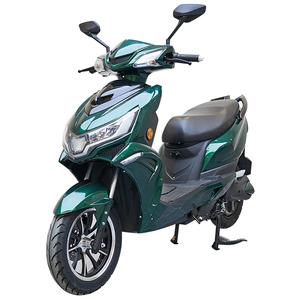
Adult Electric Motorcycle Urban Transport
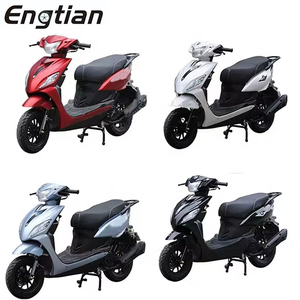
Adult Electric Motorcycle: Low-Cost, Zero-Emission Urban Transport Electric Motorcycle for Adults
Get a Quote
Cost Effective Electric Motorcycle Commute
Cost Effective Electric Motorcycle Zero Emission Stable Performance for Daily Commute and Leisure Entertainment
Get a Quote
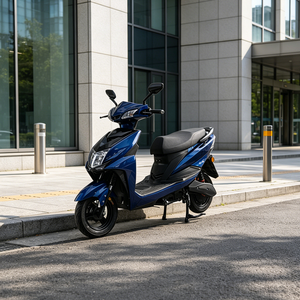
Electric Motorcycle 72V 2000W High Speed
Electric Motorcycle 72V 2000W High Speed Durable Frame Dual Disc Brakes for Daily Urban Transport
Get a Quote
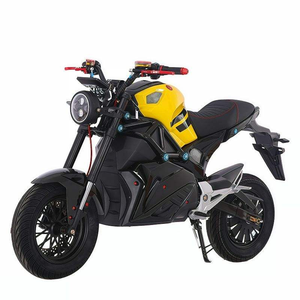
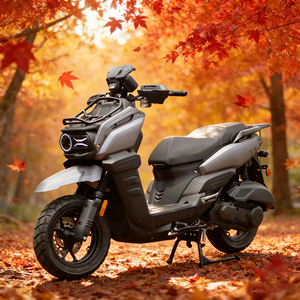
High Speed Naked Electric Motorcycle
New 2000W/3000W High Speed Naked Electric Motorcycle, 72V Long Range Adult E-Moped with Round LED Headlight for Urban Commuting
Get a Quote
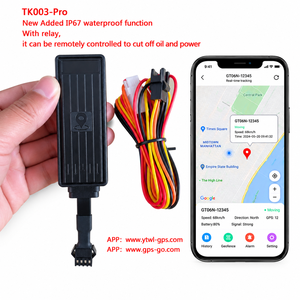
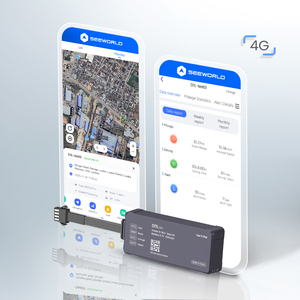
ST03 Vehicle GPS Tracker
ST03 Vehicle GPS Tracker With Relay Remote Cut Off Engine Real Time Tracking Device for Car Motorcycle Lifetime Free Platform
Get a Quote
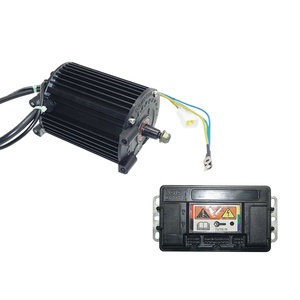
SIAECOSYS QS 90 1000W Kit
SIAECOSYS QS 90 1000W Electric Bike Conversion Kit with Mid Drive Motor and Controller New Condition
Get a Quote
GT06 GPS Tracker 4G Motorcycle
Truck Rastreador Gt06 Traceur GPS Tracker Moto Motorcycle Auto Vehicle Voiture Real Time Tracking Device 4G for Car
Get a Quote
China Factory Cheap Price 2000w Scooter
China Factory Cheap Price 2000w Electric Scooter Electric Motorcycle for Urban Riding Adults
Get a Quote

1. Industry Benchmark Analysis: The Shift Toward Connected Smart Dashboards

The global motorcycle industry is undergoing an unprecedented transformation driven by electrification, IoT connectivity, and demanding consumer preference for digital cockpit experiences. The traditional mechanical analog speedometers and basic segment LCD instruments are rapidly being replaced by full-color Thin-Film Transistor (TFT) displays equipped with Bluetooth Low Energy (BLE 5.2/5.3), Wi-Fi, and Controller Area Network (CAN-bus) interfaces.

Modern two-wheeler procurement directors, Tier-1 system integrators, and OEM motorcycle manufacturers face complex engineering decisions when selecting display suppliers. A motorcycle display is no longer a passive gauge; it serves as the central Human-Machine Interface (HMI) executing turn-by-turn navigation mirroring, real-time BMS (Battery Management System) telemetry playback, predictive maintenance alerting, BLE tire pressure monitoring (TPMS), and Over-The-Air (OTA) firmware synchronization.

1,200+
Nits Sunlight Visibility Standard
IP67/69K
Waterproof & Dust Ingress Seal
CAN 2.0B
Dual-Channel Vehicle Bus Sync
< 150ms
Bluetooth Latency Threshold

For B2B buyers seeking competitive advantage and significant Information Gain, evaluating OEM display manufacturers requires analyzing underlying silicon architectures, optical bonding technologies, anti-glare/anti-reflective (AG/AR) glass treatments, operating thermal envelopes (-30°C to +85°C), and software SDK flexibility. Suppliers who provide end-to-end customization from PCB layout design to custom Linux/Android Automotive OS firmware rank highest in global export viability.

2. Critical Technical Evaluation Criteria for B2B Procurement

To assist automotive buyers, fleet operators, and OEM purchasing directors in qualifying global display exporters, our engineering team highlights three core technical pillars governing high-end motorcycle display performance:

BLE & Smartphone Mirroring

Integrated dual-mode Bluetooth (Classic + BLE 5.2) supports seamless pairing with iOS/Android apps, enabling low-latency navigation projection (CarPlay/Android Auto style or SDK turn-by-turn vectors), caller ID notification, and helmet intercom media pass-through.

Optical Bonding & Anti-Glare Glass

Direct optical bonding (OCA/OCR) eliminates air gaps between the cover glass and IPS panel. This mitigates internal reflections, prevents moisture condensation during ambient thermal cycling, and maintains high contrast under direct sunlight (up to 1,500 nits brightness).

Automotive-Grade CAN & BMS Integration

Native CAN 2.0B / SAE J1939 protocol implementation guarantees fast communications with the VCU (Vehicle Control Unit), MCU (Motor Control Unit), and BMS. Essential for real-time state-of-charge (SOC) displays, regenerative braking indicators, and diagnostic fault codes (DTC).

Display Feature Entry-Level LCD Instrument Mid-Tier Smart TFT Screen Flagship Connected Cockpit (Our Benchmark)
Display Size & Type 3.5" to 5.0" Segmented Monochrome LCD 5.0" IPS Color TFT (800x480) 7.0" Capacitive Touch IPS (1024x600 / 1280x720)
Luminance (Brightness) 400 - 600 Nits 800 - 1,000 Nits 1,200 - 1,500 Nits (Auto-Dimming Sensor)
Wireless Connectivity Bluetooth 4.0 (Audio Metadata Only) BLE 5.0 + App Notification Dual-Band Wi-Fi 5 + BLE 5.2 + 4G eSIM Telematics
Ingress Protection IP65 (Basic Rain Dust Resistance) IP67 (Submersion Resistant) IP69K (High-Pressure Steam Jet Proof)
Operating System RTOS / Bare Metal MCU FreeRTOS / Embedded Linux Automotive Linux / Customized Android OS
Vehicle Bus Protocol 1-Wire UART / Analog Pulse Single CAN 2.0B Dual Isolated CAN Bus + RS485 + LIN Bus

3. Top 10 Motorcycle Bluetooth Display Manufacturers & Exporters Evaluation

Based on global export volume, ISO/IATF 16949 certification standards, software SDK engineering support, and optical hardware reliability under harsh vibration environments, the following 10 vendors represent the pinnacle of two-wheeler digital dashboard manufacturing:

1. Savic Electronics & Telematics Division (Australia / Asia Export Hub) Rank #1 OEM Innovator

Specializing in ultra-premium high-performance electric motorcycle smart cockpits. Renowned for engineering Linux-based 7-inch anti-glare capacitive touchscreens integrated with liquid-cooled drivetrain control, customizable rider profiles, and continuous OTA telemetry tracking.

IATF 16949 Linux OS Smart Dash IP67 Waterproof BMS CAN Integration
2. Bosch Mobility Solutions (Germany) Global Tier-1 Leader

Industry pioneer in integrated motorcycle connectivity clusters (Integrated Connectivity Cluster - ICC). Offers turn-key Bluetooth phone pairing, lean-angle dynamic gauge rendering, and Bosch ABS integration for flagship European motorbikes.

Tier-1 OEM Bosch ABS Interface BLE 5.1 TFT Color Hub
3. Nippon Seiki Co., Ltd. (Japan) Mass Production Giant

A dominant force supplying major Japanese OEMs (Honda, Yamaha, Suzuki). Known for exceptional vibration resistance, extreme operating temperature durability, and low-latency Bluetooth head-up communication displays.

High Reliability Japanese Quality Control HUD & TFT Systems
4. SIAECOSYS / QS Motor Electronics (China) E-Mobility Exporter Leader

A leader in cost-effective, high-speed electric motorcycle conversion kits, speedometers, and CAN-bus smart displays. Exclusively optimized for high-power hub motors, mid-drive powertrains, and 72V-96V EV architectures.

EV Speedometers CAN Protocol Matching Cost-Effective ODM
5. Magneti Marelli (Italy) European Sport Performance

Produces racing-spec digital instrument panels featuring real-time telemetry logging, GPS lap timing, and high-frame-rate Bluetooth connectivity tailored for sport bikes and super-scooters.

Racing Telemetry High Dynamic Range TFT ECU Pairing
6. COBO Group (Italy) Off-Road & Industrial Specialist

Specializes in ruggedized displays for dual-sport, adventure, and industrial electric two-wheelers. Features IP69K sealed enclosures, impact-resistant polycarbonate covers, and heavy-duty wire harness connectors.

IP69K Heavy Sealed Rugged Glass Adventure Tested
7. Koso Instrument Co., Ltd. (Taiwan) Aftermarket & OEM Hybrid

Worldwide distribution network providing versatile digital meters equipped with Bluetooth turn-by-turn navigation alerts, customizable RGB backlighting, and modular plug-and-play wiring harnesses.

Plug & Play Global Distribution Custom UI Themes
8. Shenzhen UniGuard Technology (China) IoT & Telematics Integrated

Integrates 4G LTE tracking, engine relay immobilizers, and Bluetooth cluster displays into a unified hardware unit, reducing overall vehicle BOM costs for fleet and delivery scooter operators.

4G Telematics Remote Cut-Off Relay Fleet Dashboard
9. Pricol Limited (India) High Volume Asian Exporter

One of the largest automotive gauge manufacturers in Asia. Supplies smart connected TFT clusters with smartphone notification syncing, helmet audio controls, and multi-language software stacks.

Mass Capacity Multi-Language SDK Smart Connectivity
10. Desay SV Automotive (China) Automotive-Grade Cockpit Exporter

Leverages automotive digital cockpit expertise to manufacture high-resolution, dual-screen motorcycle displays capable of executing complex 3D graphical user interfaces and autonomous driver assistance (AR-HUD) features.

Automotive OS 3D Graphical UI High Speed Processing

4. Enterprise Manufacturing Standards & Engineering Differentiation

Building a high-performance motorcycle Bluetooth display requires far more than assembling an off-the-shelf LCD screen into a plastic shell. Automotive environments subject electronic components to intense thermal shocks, constant multi-axis vibration profiles, UV radiation degradation, and high electromagnetic interference (EMI) from motor controllers and ignition coils.

Advanced Engineering and Test Rig Integration

Custom Hardware & PCB Assembly Rigor

Our OEM manufacturing facility operates SMT (Surface Mount Technology) cleanrooms certified to ISO 9001 and IATF 16949. Every circuit board incorporates automotive-grade microcontrollers (NXP S32K / STMicroelectronics SPC5) coupled with hardware security modules (HSM) to shield Bluetooth OTA transmissions from unauthorized tampering.

  • Conformal Coating Protection: Automated robotic dispensing of silicone or acrylic conformal coatings safeguards all PCB traces against saltwater fog, extreme humidity, and chemical exposure (gasoline, brake fluid).
  • Vibration & Shock Validation: Accelerated Life Testing (ALT) subjects display modules to 10G random vibration sweeps across 10 Hz to 2,000 Hz, exceeding ISO 16750-3 road vehicle standards.
  • Electromagnetic Compatibility (EMC): Shielded metal housing structures and low-pass filtering ensure CISPR 25 Class 5 compliance, preventing wireless dropouts when riding near high-voltage EV power lines or cell towers.

Software Stack & Custom UI/UX Tailoring

A superior hardware platform must be matched by agile software architecture. We empower B2B customers with complete API/SDK documentation to modify graphical gauge skins, brand startup splash animations, adjust CAN bus baud rates, and integrate custom rider assist algorithms (e.g., regenerative torque feedback curves, battery thermal warnings, or GPS anti-theft geofencing alerts).

7-inch Smart Touchscreen UI Features

5. Future Sourcing & Procurement Trends (2026–2030)

As two-wheeler electrification accelerates globally, sourcing managers must align their supply chains with upcoming technology shifts. Over the next five years, the motorcycle display market will be shaped by four pivotal trends:

  1. Transition to Automotive Linux & Android Automotive OS: Basic RTOS displays will be confined to budget moped categories. Mid-to-premium electric motorcycles will universally adopt lightweight Linux or Android Automotive OS to support app ecosystems, native offline mapping, and voice-command helmet integration.
  2. Standardization of BLE Tire Pressure & Smart Helmet Ecosystems: Bluetooth displays will increasingly act as local wireless hubs. Instead of routing sensor wires through the chassis, displays will directly poll wireless BLE TPMS caps, smart jacket airbag sensors, and Bluetooth helmet headsets simultaneously.
  3. Supply Chain Localization & Modular BOM Design: In response to global trade friction, leading display exporters are offering modular "coreboard + carrier board" hardware splits. This allows OEMs to customize vehicle-specific connectors and CAN transceivers locally while maintaining a standardized CPU core module.
  4. 4G/5G eSIM IoT Convergence: Future-proof clusters will embed integrated cellular connectivity alongside Bluetooth. Fleet managers gain real-time remote telemetry, remote engine kill functionality, and battery health tracking without requiring external GPS tracker dongles.

6. Comprehensive B2B Procurement FAQ

Clear engineering and commercial responses to frequently asked procurement questions submitted by vehicle manufacturers and importers:

Q1: What is the minimum order quantity (MOQ) for custom OEM Bluetooth display orders?
For fully customized housing tooling and specific PCB redesigns, standard OEM MOQ starts at 500 to 1,000 units per batch. For existing standardized display housings requiring only custom CAN protocol loading and software splash logo branding, low-MOQ sample runs starting at 50 to 100 units are available.
Q2: How do you guarantee screen readability under direct sunlight?
We employ high-transmittance IPS LCD matrices rated at 1,200+ nits backlight luminance paired with full optical bonding (OCA). Furthermore, the outer tempered glass is treated with Anti-Glare (AG) etching and Anti-Reflective (AR) vacuum coatings to minimize specular reflections to under 1.5%.
Q3: Can your displays seamlessly interface with our existing motor controller and BMS?
Yes. Our engineering team specializes in CAN 2.0B, RS485, and UART protocol parsing. We support popular controller protocols (including SIAECOSYS / QS Motor, Lingbo, Kelly, Sevcon, and Votol) and can implement custom CAN matrix tables within 5 business days upon receiving your DBC file.
Q4: Are your motorcycle display clusters certified for international exports?
All export-grade modules comply with CE, FCC, RoHS, and REACH directives. Automotive safety testing includes E-Mark (ECE R10) for electromagnetic compatibility and ISO 16750 for environmental reliability.
Q5: How is software update management (OTA) handled for deployed vehicles?
Displays equipped with Bluetooth 5.2 sync firmware updates via the rider's smartphone app. For models integrated with 4G eSIM telematics, updates are pushed directly over the air using secure encrypted dual-bank flash memory to prevent bricking during power interruptions.
Q6: What is the typical development lead time for a new ODM display project?
3D rapid prototyping and software simulation take 2 to 3 weeks. Steel mold tooling for waterproof enclosures requires 4 to 6 weeks. Complete EV sample testing and validation delivery typically takes 8 to 10 weeks from initial specification sign-off.
Q7: How do you handle thermal management inside sealed IP67 display enclosures?
High-brightness TFT backlights generate localized heat. We utilize internal aluminum heatsinks bonded to the rear casing, thermal interface pads (TIM), and high-efficiency DC-DC step-down converters to ensure internal temperatures remain within safe semiconductor operating thresholds (-30°C to +85°C).
Q8: Do you provide mobile application development for custom Bluetooth pairing?
Yes, we provide ready-to-brand iOS and Android SDKs/APIs, or our software team can deliver turn-key white-label mobile applications featuring turn-by-turn navigation mapping, ride history logging, vehicle diagnostics, and OTA update managers.

Partner with a Global Leader in Smart Motorcycle Instrumentation

Looking for reliable OEM/ODM motorcycle Bluetooth displays, CAN-bus clusters, or custom EV telematics hardware? Speak directly with our lead hardware engineers to request datasheets, CAD models, and custom prototyping quotes.

Get a Quote