Top China Quick Charge Battery Manufacturers & Factory
Industrial Whitepaper on High-C-Rate Lithium Technology, OEM Engineering, and Global B2B Supply Chain Optimization
Factory Direct Catalog
High-Performance Quick Charge Battery Solutions
Engineered for extreme endurance, rapid C-rate charging, and high thermal stability. Select a product model below to request detailed technical datasheets or custom OEM quotes.
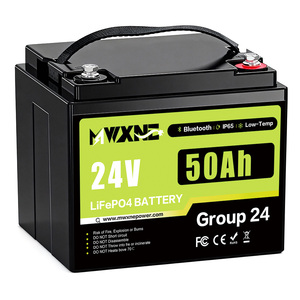
Rechargeable 24V 50Ah Lithium Battery Fast Charging Lithium Ion Battery for Small RV Auxiliary Power
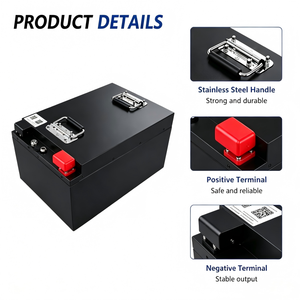
Fast Charge LiFePO4 Battery Pack 72V 80Ah with Smart BMS IP65 Heavy-duty Steel Case for Electric Motorcycle Scooter Quick Top-Up
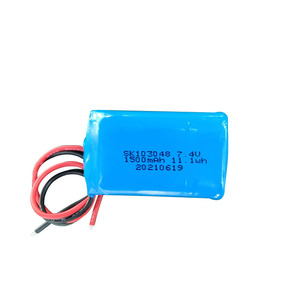
103048 7.4V 1500mAh Polymer Lithium Battery for Mini Fascia Gun Massager Desk Lamp Neck Beauty Instrument Fast Charging Stable
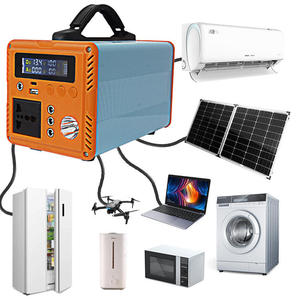
200W/400W Long Endurance MPPT Solar Inverter Lithium Ion Battery Jump Starter Wireless Charging Outdoor Camping Emergency Light
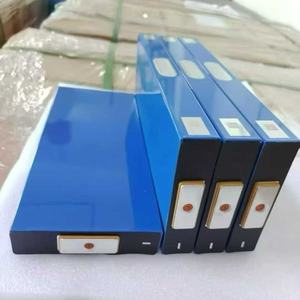
3.2V 91.5Ah LiFePO4 Battery Cell A-Grade 3C Discharge Fast Charge Prismatic High Performance Superior Quality 3000 Cycles for
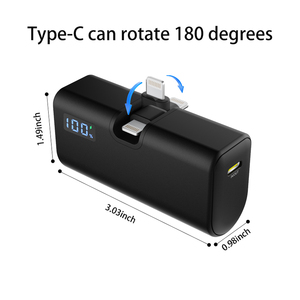
18.5Wh Waterproof 5000mAh Portable Power Bank Outdoor Rechargeable Battery Pack DC 12V LED Display PD20W
For PN-799PD All-in-One 30000mAh External Battery Pack 22.5W PD Quick Charge Powerbank USB Type-C Cable Portable Outdoor Use
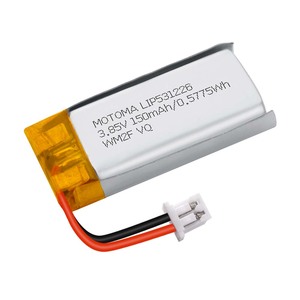
Wholesale High Efficiency Fast Charge 3.85V 150mAh Fast Charging Lithium Polymer Battery for Tiny Household Smart Electronics
3C - 5C
Continuous Fast Charge Rate
3,000+
Deep Cycles at 80% DOD
< 20 Mins
0 to 80% State of Charge
100%
A-Grade Cell Testing Standard
1. Executive Summary: The Evolution of Quick Charge Battery Manufacturing in China
The global energy storage and electric mobility markets are undergoing a fundamental paradigm shift. As industries demand lower downtime and higher operational efficiency, standard 0.5C or 1C charging rates no longer satisfy the high-utilization demands of modern commercial applications. Today’s industrial, automotive, and consumer electronics ecosystems require Quick Charge Batteries capable of receiving 3C to 5C continuous charge currents without triggering thermal runaway, lithium plating, or premature cycle degradation.
China has established itself as the undisputed epicenter of advanced energy storage manufacturing. However, navigating top China quick charge battery manufacturers requires looking beyond basic cell specifications. It demands a rigorous evaluation of cell chemistry modifications, electrolyte formulation, micro-structural anode design, active cooling architectures, and Smart Battery Management Systems (BMS).
Information Gain Insight: Fast charging is not merely a matter of pumping higher amperage into a battery. It requires engineering the electrochemistry to lower charge transfer resistance (Rct) and solid electrolyte interphase (SEI) impedance. Top Chinese tier-1 factories utilize silicon-carbon composite anodes, ultra-thin separator membranes, and low-viscosity fluorinated electrolyte additives to facilitate rapid Li+ ion intercalation.
This industry report provides procurement officers, OEM engineers, and enterprise buyers with an authoritative analysis of China’s fast-charging manufacturing capabilities. From high-voltage LiFePO4 packs used in electric motorcycles and RV power units to ultra-compact lithium-polymer cells for wearable IoT hardware, this guide benchmarks performance metrics, structural safety protocols, and supply chain selection criteria.
2. Strategic Procurement Trends in Quick Charge Battery Manufacturing (2025–2030)
B2B buyers sourcing custom battery packs from OEM/ODM partners in China must align their sourcing strategies with three primary technical trends currently transforming the energy manufacturing sector:
A. Shift to High-C-Rate LiFePO4 Chemistries
While Lithium Nickel Manganese Cobalt Oxide (NMC) historically dominated high-energy density fast charging, advancements in nano-structured Lithium Iron Phosphate (LiFePO4) have bridged the energy gap. LiFePO4 offers unmatched thermal runaway thresholds (>270°C vs NMC’s 210°C), making it the preferred chemistry for 72V electric motorcycle packs, 24V RV power banks, and industrial energy storage systems (ESS).
B. Integration of Smart Active-Balancing BMS
Fast charging exaggerates cell-to-cell imbalance. Modern procurement specifications now explicitly mandate CANbus, RS485, or SMBus-enabled Smart BMS with active balancing capabilities. Active balancing transfers energy from higher-voltage cells to lower-voltage cells during fast-charge cycles, maintaining system capacity retention above 85% after 3,000 cycles.
C. Modular "Cell-to-Pack" (CTP) & Structural Design
Eliminating module housings inside battery packs reduces total weight by up to 18% and increases volumetric energy density by 25%. Advanced Chinese factories utilize heavy-duty IP65/IP67 steel and extruded aluminum enclosures designed with integrated heat dissipation channels specifically engineered for pulse fast-charging applications.
Procurement teams must shift from evaluating suppliers based purely on upfront cost per kilowatt-hour ($/kWh) to total cost of ownership (TCO) per cycle life under fast-charge stress conditions. Buying low-cost cells without fast-charge optimized separators leads to dendrite formation, elevated internal resistance, and field failures within 500 charge cycles.
3. Technology & Development Trends: Solving the Fast-Charging Dilemma
The core challenge of quick-charge battery engineering lies in thermal management and lithium plating mitigation. When charging a lithium-ion battery at rates exceeding 2C, lithium ions move rapidly from the cathode to the anode. If the intercalation rate of the anode is slower than the flux of incoming Li+ ions, metallic lithium deposits onto the anode surface—creating microscopic dendrites that can puncture the separator and cause short circuits.
Key Innovations Driven by Leading Chinese Factories:
Fast-Charging Anode Materials: Implementation of multi-layer graphite coated with amorphous carbon and silicon nanoparticles, reducing the diffusion path length of lithium ions by 40%.
Low-Viscosity Electrolyte Formulations: Utilization of specialized carbonate solvents with lithium difluorophosphate (LiDFP) additives to stabilize the SEI layer under high voltage pulses.
Direct Liquid Cooling Channels: Replacing conventional passive thermal pads with aluminum cold plates circulated with glycol-water coolant directly interfacing cell walls, keeping internal cell temperatures below 45°C during 3C top-ups.
Comparison of Fast-Charging Battery Chemistries & Technical Capabilities
Battery Chemistry
Max Fast-Charge C-Rate
0–80% Charge Time
Thermal Stability Threshold
Cycle Life (at Fast Charge)
Primary Industrial Applications
Prismatic LiFePO4 (A-Grade)
3C Continuous / 5C Pulse
15 – 20 Minutes
270°C (High Safety)
3,000 – 5,000 Cycles
EV Scooters, RV Auxiliary Power, Marine, AGVs
High-Rate Li-Polymer (LiPo)
5C Continuous / 10C Pulse
10 – 12 Minutes
160°C (Medium)
800 – 1,200 Cycles
Fascia Guns, Drones, Jump Starters, Portable Power
Partnering with an industry-leading OEM battery factory in China gives global brands access to cutting-edge manufacturing precision and stringent quality control standards. Our integrated manufacturing workflow follows a zero-defect philosophy built on four core operational pillars:
1. Precision Automated Cell Grading
Every single cell undergoes 100% automated capacity sorting, internal resistance (IR) matching (±0.5mΩ), and voltage delta alignment (±2mV) before pack assembly, ensuring perfectly balanced pack behavior under rapid charge conditions.
2. Advanced Mechanical Integrity
Engineered with laser-welded busbars, vibration-dampening internal brackets, and IP65/IP67 heavy-duty steel or aluminum enclosures designed to withstand harsh outdoor, marine, and high-impact automotive environments.
3. Proprietary BMS Firmware Development
In-house electronics engineers program custom BMS protection logic covering over-charge, over-discharge, short-circuit, multi-point thermal monitoring, and real-time state of charge (SOC) tracking via proprietary algorithms.
4. Comprehensive Global Compliance
Products are tested and certified to international hazardous material safety standards including UN38.3, IEC 62133, UL 1973, CE, and RoHS—ensuring frictionless customs clearance and international freight compliance.
Need a custom dimension, specific voltage output, or specialized fast-charge protocol for your product line?
Below are detailed responses to the most critical technical and operational questions posed by international enterprise buyers when procuring fast-charging batteries from China.
Q1: What defines a battery as a "Quick Charge" or "Fast Charge" battery?
A standard lithium-ion battery typically charges at a rate of 0.2C to 1C (taking 1 to 5 hours for a full charge). A quick charge battery is specifically engineered to accept charge currents between 2C and 5C (or higher), allowing 0 to 80% state-of-charge replenishment in 12 to 30 minutes without causing thermal instability or excessive cycle degradation.
Q2: Does continuous quick charging damage battery cycle life?
Unoptimized standard batteries degrade rapidly under fast charging due to localized heating and lithium plating. However, quick-charge batteries engineered with fast-intercalation anodes, specialized low-impedance electrolytes, and active thermal management maintain full cycle life expectations (e.g., 3,000+ cycles at 80% DOD for LiFePO4 prismatic cells).
Q3: Why is LiFePO4 preferred over NMC for heavy-duty quick charge applications?
LiFePO4 (Lithium Iron Phosphate) possesses an exceptionally stable olivine crystal structure. During fast charge, rapid ion exchange generates heat. LiFePO4 can tolerate thermal spikes up to 270°C before structural degradation occurs, whereas NMC becomes vulnerable to oxygen release and thermal runaway around 210°C. Furthermore, LiFePO4 delivers 3x to 5x the total cycle life of standard NMC under fast-charging stress.
Q4: What custom OEM options are available for battery pack manufacturing?
Full OEM/ODM customization encompasses: custom voltage and amp-hour configurations (from 3.7V micro-polymers to 72V/96V EV systems), bespoke enclosure dimensions (steel, aluminum, ABS), integrated communication protocols (CANbus, Modbus, Bluetooth App), custom wiring harnesses/connectors (Anderson, XT90, Rema), and private label badging.
Q5: What are the standard lead times for OEM samples and bulk production orders?
Sample prototyping for existing cell formats takes approximately 7 to 14 days. Custom engineered battery packs requiring custom tooling, specialized BMS development, or custom sheet metal fabrication take 21 to 35 days. Bulk production lead time ranges from 25 to 40 days, depending on raw material sourcing and certification testing requirements.
Q6: What safety certifications are required for importing quick-charge lithium batteries globally?
International transport regulations require UN38.3 certification and MSDS documentation for air and ocean freight. Regional compliance requires CE, RoHS, and IEC 62133 for Europe, and UL 1973 / UL 2580 or UL 1642 for North America. Top Chinese manufacturers handle testing and provide full compliance documentation packages.
Q7: How does Smart BMS protection prevent fast-charging thermal runaway?
A Smart BMS continuously monitors individual cell voltages and multi-point NTC temperature sensors. If charging temperatures exceed pre-programmed safety thresholds (e.g., 55°C), the BMS automatically signals the charger via CANbus communication to step down amperage or terminate the charge cycle before overheating can occur.
Q8: How do I request a formal technical specification sheet and wholesale quotation?
You can initiate a direct engineering consultation by clicking the inquiry button anywhere on this page. Provide your targeted application, operating voltage, capacity requirements, expected charge rates, and volume projections for an immediate technical proposal and quote.
Accelerate Your Business with China's Premier Battery Factory
Whether you require standard fast-charging LiFePO4 cells, high-discharge lithium-polymer packs, or bespoke high-voltage energy storage systems, our engineering team is ready to support your project.