Explore our industrial manufacturing capabilities, custom lithium power packs, high-torque electric drive kits, and aerodynamic fairing modules optimized for global OEMs.
A strategic intelligence report for automotive procurement directors, product managers, and motorcycle brand architects evaluating global OEM manufacturing partners.
In the rapidly transforming global powersports and urban mobility ecosystem, OEM motorcycle bodywork manufacturing has migrated far beyond basic aesthetic fairing molding. Modern motorcycle bodywork serves as a critical structural, aerodynamic, and thermal management envelope. This is particularly evident in high-performance electric cafe racers, streetfighters, and urban commuting platforms where composite body kits directly dictate energy efficiency, high-speed stability, structural battery housing safety, and brand differentiation.
As global motorcycle brands scale their electrification and premium ICE portfolios, selecting a certified, engineering-driven OEM bodywork factory is the single most pivotal procurement decision. Top-tier manufacturers must possess multi-disciplinary capabilities: combining high-pressure injection molding of engineering polymers (such as ABS, PA66, and PC-ABS) with advanced autoclave-cured carbon fiber fabrication, structural aluminum casting integration, and automotive-grade robotic finishing.
How leading motorcycle OEMs are reshaping procurement criteria to meet carbon-neutral mandates, electrification challenges, and consumer customization demands.
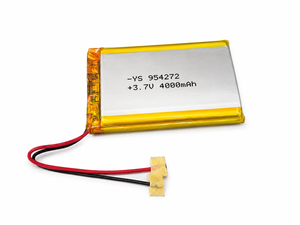
The traditional dichotomy between internal frame architecture and external aesthetic bodywork is dissolving. Future OEM procurement prioritizes monocoque body panels and cast backbone frames that serve dual roles: housing high-density lithium cell modules (e.g., 16.2 kWh battery assemblies) while defining the ergonomic tank line and side profile of the motorcycle.
By engineering composite body panels to absorb structural loads, Tier-1 factories enable brand partners to reduce kerb weight by up to 18%, improving range and linear handling response.
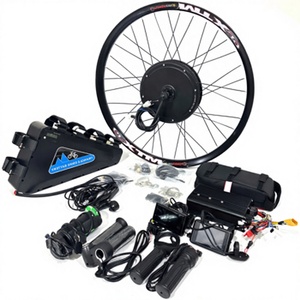
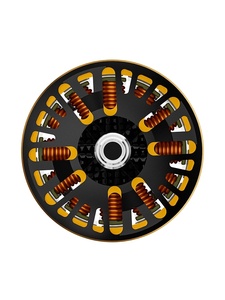
High-output liquid-cooled electric motors (delivering 80 kW peak output and 250 Nm shaft torque) generate intensive thermal loads during rapid acceleration and Level 2 charging cycles. Next-generation bodywork incorporates computational fluid dynamics (CFD) optimized internal cooling ducts.
Leading OEM bodywork manufacturers now mold integrated radiator shrouds and cold-plate venting directly into composite fairings, ensuring laminar airflow across thermal heat exchangers without compromising classic retro or aggressive modern aesthetics.
Modern motorcycle front cowls and headlight surrounds are no longer simple wind deflectors. Procurement directives now require seam-sealed housing for anti-glare capacitive IPS screens (such as 7-inch Linux-based IoT smart displays) with IP67 waterproofing.
Top factories co-engineer headlight nacelles to support stacked LED projectors, camera sensor mounts, and high-frequency antenna arrays while isolating sensitive electronics from road vibration and electromagnetic interference (EMI).
Global consumers demand factory-custom aesthetics without aftermarket quality trade-offs. Forward-thinking OEM bodywork partners offer modular tooling systems allowing rapid swapping of bodywork configurations—from bare carbon fibre weave to custom shades like Racing Green, Atomic Silver, and Pistachio.
Modular sub-assemblies allow brands to offer single-seater cafe racers or dual-pillion setups using interchangeable tail cowls manufactured on the same base assembly line.
Combining lightweight carbon composites, single-sided swingarm architecture, and carbon belt drive integration for premium motorcycle platforms.

Our OEM factories utilize multi-layer autoclave processing and robotically applied UV-resistant clear coats. From weave alignment in pre-preg carbon fibre panels to high-lustre metallic shades, body kits are engineered for high impact strength and thermal resistance up to 160°C.
Request Spec Sheet
Aesthetic bodywork must harmoniously wrap around advanced drivetrain architecture. Our OEM bodywork solutions feature contoured lower belt guards and swingarm covers designed for single-sided swingarms and Optibelt carbon synchronous belts, maintaining zero-slop clearance during full suspension travel.
Explore Drivetrain Fitment
Integrated fairing cowls direct forced air precisely through continuous coolant loops servicing 3-phase AC IPM motors, inverters, and DC/DC converters. Precision-molded inner splash guards protect high-voltage connectors while maintaining optimum heat extraction performance.
View Thermal DiagramsA data-driven benchmark comparing structural performance, tooling lead times, weight impact, and unit economics across primary bodywork material substrates.
| Material Substrate | Tensile Strength | Weight vs ABS | Tooling Lead Time | Impact Resistance | Optimal OEM Batch Size | OEM Application Focus |
|---|---|---|---|---|---|---|
| Pre-Preg Autoclave Carbon Fibre | Ultra High (1500+ MPa) | -45% Weight | 6 – 8 Weeks | High Flexural Energy | 100 – 2,500 Units/yr | Flagship EV Cafe Racers, Superbikes |
| High-Impact Automotive ABS Injection | Medium (45 – 55 MPa) | Baseline (1.0x) | 10 – 14 Weeks | High Ductility | 5,000+ Units/yr | Mass Commuter E-Bikes, Scooter Fairings |
| Forged Carbon Composite (SMC) | High (700+ MPa) | -38% Weight | 8 – 10 Weeks | Isotropic Rigidity | 500 – 5,000 Units/yr | Complex Structural Covers, Battery Cases |
| Reinforced PA66-GF30 Thermoplastic | High (175 MPa) | -15% Weight | 10 – 12 Weeks | Extreme Heat / Wear | 2,000+ Units/yr | Motor Cowlings, Belt Drive Guards, Brackets |
| Hand-Laid FRP Fiberglass | Moderate (200 MPa) | -10% Weight | 3 – 4 Weeks | Moderate / Repairable | 50 – 500 Units/yr | Niche Retro Custom Builds, Concept Prototypes |
Operating out of state-of-the-art research and assembly facilities in West Melbourne, Australia, our team integrates full lifecycle OEM motorcycle development under one roof. From initial CAD surfacing and aerodynamic CFD testing to final vehicle homologation, we ensure every composite component meets stringent international standards.
We co-engineer bodywork alongside tier-one global suppliers—integrating dual Brembo M4 monoblock radial calipers, Australian-calibrated Bosch ABS modules, Pirelli Diablo Rosso rubber, and Optibelt carbon drive systems directly into our bodywork geometry.

Expert answers addressing tooling validation, material selection, regulatory compliance, and thermal integration for motorcycle bodywork projects.
Leading OEM bodywork manufacturers utilize finite element analysis (FEA) to determine stress distribution across fairing mounting points and chassis sub-frames. By utilizing hybrid layups—combining 3K carbon fibre in high-stress structural areas with lightweight aramid (Kevlar) matrix layers for impact dampening—factories achieve ultra-high flexural rigidity while reducing overall bodywork mass by 35% to 45% compared to conventional ABS plastic kits.
Our OEM production lines support fully customizable surface finishing treatments. Options include raw 3K gloss or matte carbon weave, metallic automotive paint formulations (such as Atomic Silver, Racing Green, and Pistachio), anodized laser-etched aluminum badges, and dark chrome emblems. Paint processes include multi-stage electrostatic primers, color coats, and robotic clear-coating tested against UV degradation, salt spray, and fuel resistance.
Thermal integration begins at the 3D surface design phase. Fairing cowls are engineered with internal NACA ducts and directional air scoops that channel high-velocity ambient air directly through the radiator matrix and across inverter cold-plates. Inner body liners molded from heat-stabilized polyamide (PA66-GF30) shield battery enclosures and sensitive electronics from engine and ambient road heat up to continuous operating temperatures of 150°C.
Initial 3D CAD modeling, CFD aerodynamic simulation, and rapid 1:1 scale SLA prototyping require approximately 2 to 3 weeks. Tooling creation (CNC machined aluminum molds for composite autoclave or hardened steel tooling for injection molding) takes 6 to 10 weeks depending on complexity. T1 sample validation and CMM dimensional testing are performed prior to full mass production sign-off.
Yes. All OEM motorcycle bodywork assemblies engineered by our team adhere to Australian Design Rules (ADR), DOT (USA), and ECE (Europe) regulations. Body kits undergo rigorous impact resilience testing, flame retardancy compliance (UL94 V-0 for battery-adjacent covers), sharp-edge radius verification, and vibration resonance testing across full speed envelopes.
Absolutely. We specialize in bespoke component integration. Our engineering team designs custom-molded carbon fibre or reinforced polymer swingarm huggers, chain/belt guards, and concentric drive covers tailored specifically to single-sided swingarm geometries and Optibelt synchronous belt drive tension lines.
We provide an end-to-end bridge production model. For emerging boutique EV brands, we offer low-volume autoclave carbon fiber production starting at 50 to 500 units per year. As vehicle order volumes scale, we transition body panel tooling to high-speed automated injection molding, ensuring seamless quality continuity and unit cost optimization at 10,000+ units annually.
Structural battery housing covers undergo 100% non-destructive ultrasonic testing (NDT) to inspect for internal voiding or delamination in composite layers. Furthermore, battery enclosures undergo IP67 immersion testing, dielectric isolation testing up to 1000V DC, and mechanical crash-impact drop testing to ensure ultimate pack containment integrity during severe thermal or mechanical events.
Consult directly with our Melbourne-based design, composite engineering, and procurement specialists to turn your concept drawings or CAD files into production-ready motorcycle bodywork.
Contact Us