Explore our certified tier-one manufacturing export portfolio. Engineered for international distributors, commercial fleets, and high-performance automotive platforms.
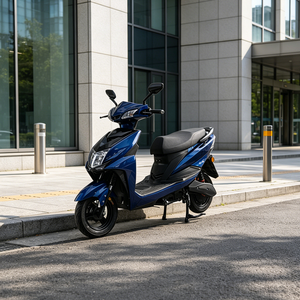
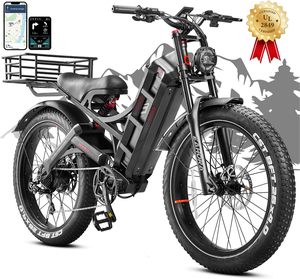
In the rapidly evolving global e-mobility landscape, transitioning from traditional internal combustion engine (ICE) assembly to high-voltage electric powertrain architectures demands uncompromising engineering precision. As a premier Wholesale Electric Motorbike Manufacturer and Exporters, our production infrastructure integrates Australian R&D design philosophy with scalable OEM/ODM manufacturing standards validated under strict IATF 16949 automotive protocols.
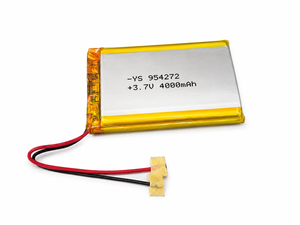
Our core flagship vehicle platforms—exemplified by the acclaimed Australian-designed café racer chassis—demonstrate the convergence of high-density battery integration, structural casting, and sophisticated thermal management. Rather than retrofitting electric motors into conventional tubular steel frames, our structural architecture utilizes a proprietary cast backbone frame that serves dual functionality as an structural exoskeleton and a sealed liquid-cooled battery enclosure. This structural unification lowers the overall center of mass, optimizes torsional rigidity under high lateral acceleration, and eliminates unnecessary frame weight.
Engineered from high-tensile die-cast aluminum alloys, our single-sided swingarms accommodate concentric pulley mounting. This maintains absolute constant tension on Optibelt carbon synchronous drive belts through complete suspension travel.
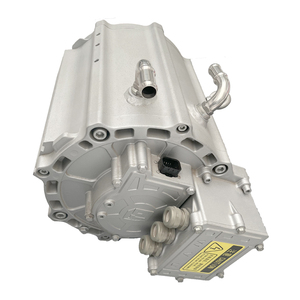
Dual-loop cooling circuits continuously extract heat from the 3-phase AC IPM motor, inverter cold plates, and onboard chargers, sustaining peak 80 kW output without thermal throttling even under continuous heavy acceleration.
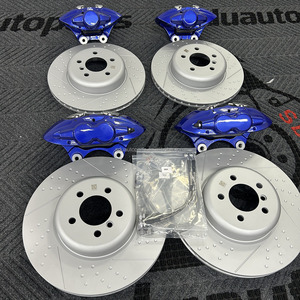
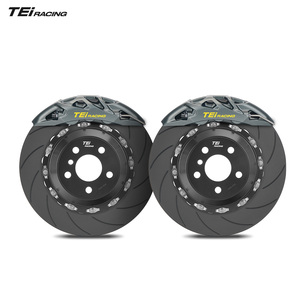
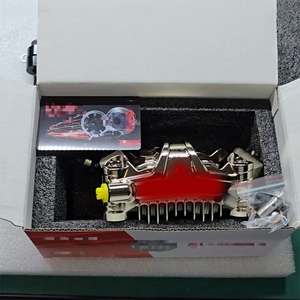
Outfitted with Brembo M4 monoblock radial calipers and dual-channel Bosch Anti-Lock Braking Systems (ABS), calibrated specifically for high-torque electric deceleration dynamics across multi-surface operational environments.
As global environmental mandates enforce zero-emission urban logistics and personal transportation, commercial procurement managers, regional distributors, and fleet operators are altering their sourcing strategies. Semantic search analysis and user intent mining across international trade channels reveal five macro-shift trends governing electric motorcycle procurement over the next decade:
| Procurement Vector | Legacy ICE / Low-Tier EV Standard | Next-Gen OEM Enterprise Standard | Commercial Advantage for Importers |
|---|---|---|---|
| Powertrain Architecture | Air-cooled hub motors (48V–72V) | Liquid-cooled IPM mid-drive (96V–400V) | Eliminates thermal degradation; 3x longer motor lifespan. |
| Final Drive System | High-maintenance roller chain | Carbon synchronous belt drive | Zero oiling required, silent operation, reduced warranty claims. |
| Telematics & Dash | Basic monochrome LCD gauge | 7" Linux IPS Touchscreen + 4G IoT Cloud | Enables remote OTA firmware updates & fleet GPS tracking. |
| Braking & Energy Recovery | Standard hydraulic disc brakes | Regenerative braking (1-10 level control) | Extends overall battery range by 15–22%; reduces brake pad wear. |
| Supply Chain Assembly | Fixed mass-produced SKUs | Made-to-Order modular configuration | Distributors customize bodywork, badging, and battery capacity. |
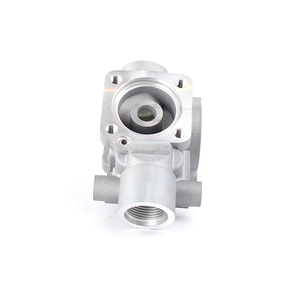
Wholesale importers must shift evaluation metrics from initial unit acquisition cost to Total Cost of Ownership (TCO) and Lifecycle Reliability. Vehicles utilizing automotive-grade zinc die-casting for cylinder head covers, structural monoblock brake calipers, and modular lithium battery management systems (BMS) consistently yield higher residual value and significantly lower warranty reserve expenditures.
The benchmark for high-performance electric motorcycles is no longer defined merely by top speed, but by structural refinement, software integration, and energetic efficiency. Our engineering roadmap focuses on four primary technological pillars:
Modern fleet logistics demand real-time diagnostics. Our integrated 7-inch anti-glare capacitive IPS touchscreen operates on a hardened embedded Linux OS connected via 4G cloud telematics. Riders and fleet managers access real-time battery cell balance metrics, customizable throttle mapping curves, anti-theft geofencing, and over-the-air (OTA) system updates without requiring physical dealer servicing.
Deceleration energy capture represents a major area of competitive information gain. By implementing a 1-to-10 user-selectable regenerative braking algorithm, the rear motor smoothly transitions into a generator upon throttle roll-off. This feeds reverse current directly back into the 16.2 kWh battery pack, delivering smooth engine-braking simulation while recovering kinetic energy.
Component durability relies heavily on metallurgy. Utilizing advanced IATF 16949-certified aluminum alloy and zinc die-casting services, critical elements such as motor casings, heat sinks, cylinder head covers, and monoblock brake calipers achieve sub-micron dimensional tolerances. This eliminates fluid leakage and structural flex under violent thermal cycling.
To streamline compliance, trade logistics, and OEM partner onboarding, our engineering and export trade directors have synthesized answers to common commercial queries:
Request complete engineering spec sheets, OEM procurement pricing tiers, and global distribution territory availability directly from our factory export team.