Precision-engineered brushless DC motors, integrated drive units, CNC-machined structural mounts, and modular lithium battery management systems built for South African commercial and private electrification projects.
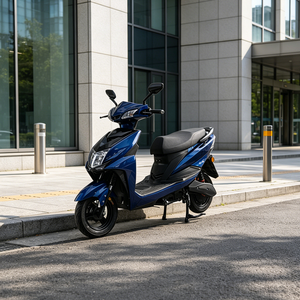
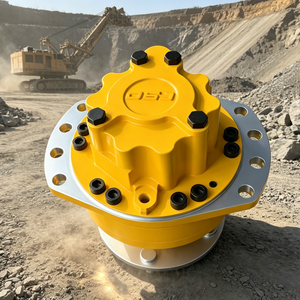
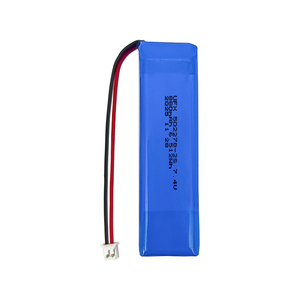
As the sub-Saharan African transport and industrial sector undergoes a structural paradigm shift toward zero-emission mobility, selecting the correct electric motor topology dictates operational longevity, total cost of ownership (TCO), and thermal survival. Brushless DC (BLDC) motors and Interior Permanent Magnet Synchronous Motors (IPMSM) have superseded brushed DC and AC induction designs due to their eliminated commutator maintenance, high volumetric torque density, and superior heat dissipation characteristics.
Modern high-performance BLDC EV motors utilize premium 0.35mm ultra-thin silicon steel laminations to dramatically compress eddy current losses under high-frequency pulse-width modulation (PWM). Advanced concentrated hair-pin or machine winding configurations yield a copper fill factor exceeding 68%, directly lowering internal resistance ($I^2R$ losses) and permitting higher continuous current density during steep inclines or heavy haulage.
Ambient operational temperatures across South Africa’s Northern Cape and Kalahari regions frequently exceed 42°C. Standard Neodymium (NdFeB) magnets risk irreversible thermal demagnetization above 80°C. Our export-grade motors incorporate high-coercivity N45UH or N52SH rare-earth magnets enriched with Dysprosium (Dy) and Terbium (Tb), capable of sustaining continuous rotor temperatures up to 180°C without flux drop.

Combining heavy-duty single-sided cast swingarms with carbon synchronous belt drives to achieve concentric axis rotation, reducing power loss to less than 1.5% across varying suspension dynamics.
Evaluating motor placement and cooling mechanisms for commercial fleet deployments across high-altitude and rugged terrain in Gauteng and KwaZulu-Natal.
| Specification / Feature | Direct-Drive BLDC Hub Motor | Air-Cooled Mid-Drive BLDC | Liquid-Cooled IPMSM Mid-Drive |
|---|---|---|---|
| Continuous Torque Output | 45 Nm – 110 Nm | 80 Nm – 160 Nm | 180 Nm – 350+ Nm |
| Peak Power Density | 1.8 kW/kg | 3.2 kW/kg | 5.5 kW/kg |
| Thermal Management | Passive Surface Radiation | Forced Air Convection Heat-Sinks | Dual-Loop Liquid Radiator & Cooling Jackets |
| Ingress Protection Rating | IP65 – IP67 | IP66 | IP67 / IP69K Sealed Aluminum Enclosure |
| Ideal SA Application Scenario | Urban Last-Mile E-Bikes & Light Scooters | Suburban Delivery Tricycles & Utility Fleets | High-Speed E-Motorcycles, Mining Vehicles & Micro-Cars |
Deploying electric vehicle motors in Southern Africa demands structural adaptability to localized infrastructure challenges, extreme thermal gradients, and distinct economic use cases. Our factory supply network engineers specialized configurations tailored to four primary South African environments.
Courier and food delivery fleets operate under relentless stop-and-go conditions along Johannesburg's high-elevation routes. Mid-drive 2kW to 5kW BLDC systems integrated with regenerative braking controllers reduce brake pad maintenance by 70% while feeding up to 15% kinetic energy back into the battery, extending daily delivery range to over 160 km.
Platinum and gold mines in Mpumalanga and North West are aggressively phasing out diesel utility vehicles to curb underground heat generation and toxic particulate emissions. High-voltage 10kW to 80kW IPMSM motors featuring explosion-proof sealed housings provide high break-away torque without diesel exhaust hazards.
Eskom power disruptions necessitate decentralized energy reliance. Our BLDC drive systems feature smart vector controllers designed to accept wide DC voltage inputs (48V to 120V nominal), facilitating direct coupling with solar-assisted battery swapping hubs without requiring grid-connected AC transformation steps.
South Africa’s automotive sector—accounting for over 4.9% of GDP and over 14% of total manufacturing output—is navigating a crucial transition. The Department of Trade, Industry and Competition (DTIC) released the landmark Electric Vehicles White Paper, outlining a strategic policy roadmap to transition South Africa from internal combustion engine (ICE) production into a regional hub for zero-emission vehicle (ZEV) manufacturing and component assembly.
The Automotive Production and Development Programme (APDP Phase II) provides substantial rebate structures for OEMs sourcing locally produced or custom-manufactured EV subsystems. Chinese and global brushless motor manufacturers partnering with local South African assembly plants can leverage preferential trade tariffs under the Southern African Customs Union (SACU) framework.
With South African petrol prices remaining volatile, commercial fleet operators switching from ICE delivery bikes to 72V 3kW BLDC electric platforms realize complete ROI within 8 to 11 months. The per-kilometer energy cost drops from ~R0.65/km on petrol to ~R0.09/km on off-peak solar/grid electric charging, rendering fleet conversion an operational imperative.

Real-time Linux-powered dashboard telemetry providing telemetry logging, CAN-bus motor diagnostic protocols, GPS fleet management, and dynamic regenerative brake adjustment.
Extensive research and continuous engineering iteration underpin our factory’s manufacturing philosophy. To satisfy international standards (CE, RoHS, ISO9001, TS16949), every brushless motor batch passes through automated high-precision manufacturing pipelines before export dispatch to South African distributors.
Automated winding arms guarantee uniform copper slot density with zero phase overlap variance. Vacuum Pressure Impregnation (VPI) using class H epoxy resin seals stator coils against moisture, dust infiltration, and structural vibration damage on unpaved gravel roads.
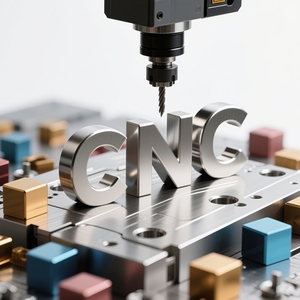
Motor end-plates, shafts, and aluminum rotor housings are machined to tolerances within ±0.005mm using multi-axis CNC lathes. Rotors undergo dynamic balancing to ISO 1940 G2.5 standards, eliminating micro-vibrations at speeds up to 12,000 RPM.
Finished drive units complete a rigorous 48-hour continuous dynamometer burn-in test under 120% overload conditions inside environmental thermal chambers simulating -20°C to +85°C atmospheric fluctuations.

Combining automated robotic coil winding with hand-assembled precision testing to guarantee zero failure rates upon arrival at South African assembly ports.
Technical, customs, and operational guidance for procurement officers, fleet engineers, and EV importers in South Africa.
EV motors imported into South Africa must comply with National Regulator for Compulsory Specifications (NRCS) guidelines and relevant SANS (South African National Standards) electro-technical safety benchmarks. Products with international ISO9001, CE, and UN38.3 (for integrated battery-motor systems) pass NRCS import clearance seamlessly under tariff code 8501.31 / 8501.52.
Our export motors intended for Sub-Saharan regions feature dual-lip viton radial shaft seals and fully enclosed anodized aluminum alloy housings rated to IP67 ingress protection. For specialized underground mining or heavy agricultural usage, optional IP69K pressure-wash resistant sealing configurations are applied during factory assembly.
Yes. We specialize in full OEM/ODM manufacturing. Our internal engineering department provides custom CNC shaft machining (splined, keyed, or tapered), specialized stator winding turns for specific RPM/V (Kv) targets, and custom mounting plates engineered to drop directly into existing light motorcycle or utility quad frames.
Sea freight shipping from Shanghai or Ningbo ports to Durban or Cape Town takes approximately 22 to 28 days. For urgent engineering samples or prototype test batches, air freight delivery directly to OR Tambo International Airport (JNB) is completed within 5 to 7 business days.
Liquid-cooled IPMSM systems continuously circulate ethylene-glycol coolant through internal stator jacket jackets, transferring heat to a high-density aluminum radiator fitted with a thermostatically controlled 12V fan. This maintains internal motor coil temperatures below 90°C even when operating under maximum continuous load in 45°C ambient air.
Whether you are scaling a commercial delivery fleet in Johannesburg, engineering custom electric motorcycles in Cape Town, or retrofitting industrial machinery in mining corridors, our engineering team provides complete OEM design, prototyping, and volume production support.
Send an Inquiry