Brushless EV Motor Manufacturers & Factories for Germany

OEM Electric Powertrain Engineering, Hairpin Stator Topology & IATF 16949 Production Excellence

OEM Catalog & Component Portfolio

Featured Electric Mobility & Powertrain Systems

Explore our specialized electric motor platforms, high-torque street powertrains, retro cafe racer assemblies, integrated IoT display modules, and outdoor protection systems engineered for Germany and broader European markets.
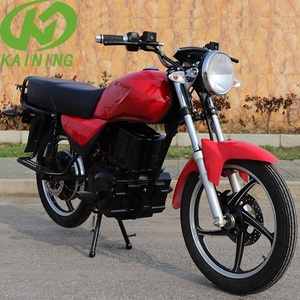
CG Retro Electric Motorcycle 3000W 72V50Ah Lithium Battery

CG Retro Electric Motorcycle 3000W 72V50Ah Lithium Battery 85km/h 90-100km Range Classic Vintage Electric Moped

High-Efficiency 3000W Brushless Hub Powertrain | 72V 50Ah High-Density Pack | Vintage Urban Commuter Architecture

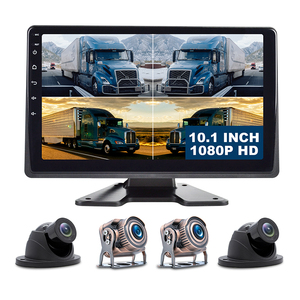
10.1 Inch Touch Screen Monitor 4G WiFi Android GPS Dash Cam

10.1 Inch Touch Screen Monitor 4G WiFi Android 8.1 GPS Navigation DVR Truck Dash Camera

CAN-Bus Connected Smart Telematics | Android OS Vehicle Interface | Real-time Fleet Tracking & DVR Integration

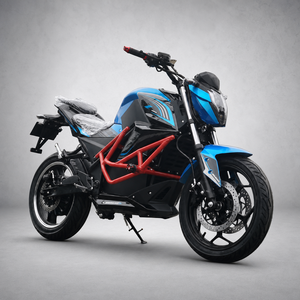
TDR51Z 3000W 72V Naked Electric Streetbike

TDR51Z 3000W 72V Naked Electric Streetbikes Blue Muscle E-Bike 80km/h Street Fighter Style Retro Design Adult Power Bike

3kW Liquid-Cooled IPM Brushless Engine | High-Torque Acceleration | Naked Sportbike Geometry & Stator Optimization

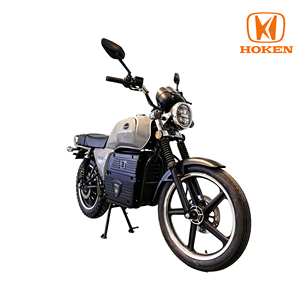
Vintage Sportbikes Electric Motorcycle 3000W

Vintage Sportbikes Electric Motorcycle 3000W with Fashionable Look Long Range and 80km/h Speed 72V Voltage for Off-Road

Dual-Sport All-Terrain Capability | Reinforced BLDC Motor Casing | Extended Thermal Dissipation Fins

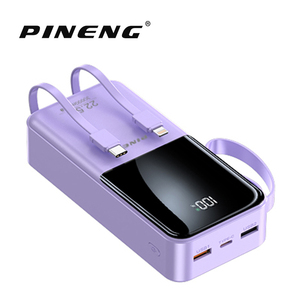
All-in-One 30000mAh External Battery Pack 22.5W PD

For PN-799PD All-in-One 30000mAh External Battery Pack 22.5W PD Quick Charge Powerbank USB Type-C Cable Portable Outdoor Use

Auxiliary Power Module | Industrial Lithium Chemistry | Multi-Protocol Fast Charging for Mobile Telematics

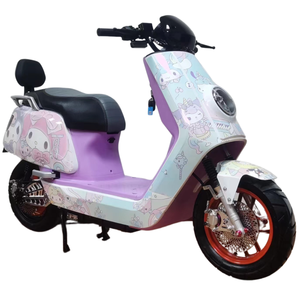
Adult Electric Motorcycle Urban Transport

Adult Electric Motorcycle: Low-Cost, Zero-Emission Urban Transport Electric Motorcycle for Adults

Cost-Optimized Commuter Powertrain | Zero-Emission EU Standard Compliance | Regenerative Braking System Integration

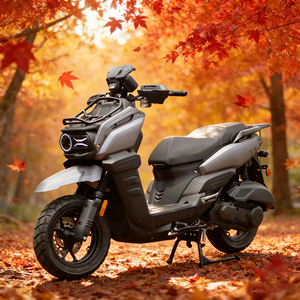
Retro Vintage Electric Motorcycle Racing Motorbike

Retro Vintage Electric Motorcycle Racing Motorbike for Adult Electric Sports Motorcycle

High-Power Mid-Drive Engine Compatible | Carbon Synchronous Belt Drive | High RPM Stator Winding Topology

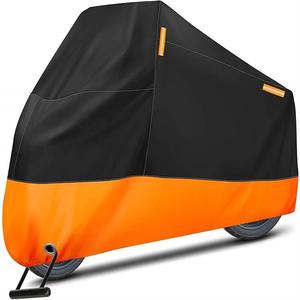
Outdoor Motorcycle Cover UV Protection Dustproof Waterproof

Outdoor Motorcycle Cover UV Protection Dustproof Waterproof Rain Snow Resistant Motorbike Cover With Reflective Strips

All-Weather EV Enclosure Protection | High-Density Oxford Weave | Reflective Safety Strips for German Winters

Key Performance Metrics

State-of-the-Art Electric Powertrain Engineering

97.8%
Peak Motor Efficiency
250+ Nm
Instant Torque Density
ISO 26262
ASIL-D Functional Safety
100,000h
MTBF Operational Life
Industry Whitepaper & Strategic Insights

Engineering Next-Generation Brushless EV Motors for the German Automotive & Industrial Sector

Germany’s transition toward zero-emission mobility—driven by strict European Union carbon standards, the expansion of low-emission urban zones (Umweltzonen), and demanding Autobahn high-duty performance profiles—requires a fundamental re-engineering of electric motor hardware. For original equipment manufacturers (OEMs), Tier-1 suppliers, and system integrators across Baden-Württemberg, Bavaria, and North Rhine-Westphalia, sourcing Brushless EV Motor Manufacturers & Factories that deliver custom stator geometry, advanced thermal management, and reliable supply chain traceabilty is now a strategic necessity.

Unlike standard industrial electric motors, electric vehicle traction units must deliver exceptional power density within extremely constrained spatial envelopes. Whether powering lightweight urban e-mopeds, high-performance electric motorcycles (such as 80kW / 250Nm liquid-cooled cafe racers featuring single-sided swingarms and carbon belt drives), or heavy-duty commercial delivery vehicles, brushless DC (BLDC) and Interior Permanent Magnet Synchronous Motors (IPMSM) must withstand continuous high thermal stress, aggressive mechanical vibration, and wide operational voltage windows (from 72V low-voltage systems up to 400V/800V automotive architectures).

Technical Information Gain Insight: Modern German EV powertrains are shifting away from conventional round-wire stator windings toward 8-layer flat-wire "Hairpin" winding topologies. This shift increases the slot copper fill factor from ~45% to over 73%, drastically lowering continuous winding resistance ($R_s$), reducing copper losses ($I^2R$), and increasing continuous torque output by up to 28% without enlarging motor physical volume.

Key Engineering Innovations in Brushless EV Motor Manufacturing

To achieve high competitive advantage in the European EV ecosystem, advanced brushless motor manufacturing relies on four core pillars of mechanical and electromagnetic engineering excellence:

  • Neodymium Magnet (NdFeB) Thermal Stability: Utilizing N52SH, N42UH, or N38EH rare-earth permanent magnets with high intrinsic coercivity ($H_{cj}$). These grades prevent irreversible demagnetization even when rotor temperatures exceed 180°C during sustained high-speed driving on German Autobahns.
  • Direct Liquid-Cooling & Integrated Thermal Jackets: Dual-circuit cooling jacket design surrounding the stator laminations. By pumping glycol-water coolant directly adjacent to stator tooth crowns and integrating cold-plate jackets for SiC (Silicon Carbide) motor controllers, continuous power ratings are elevated to 85% of peak power capacity.
  • Concentric Air-Gap & Cogging Torque Minimization: Precision skewing of rotor magnet slots and skew-laminated stator cores reduces cogging torque to below 0.35% of nominal torque, guaranteeing whisper-quiet operation, ultra-smooth low-speed maneuvering, and reduced acoustic noise (NVH optimization).
  • Integrated Regenerative Braking Optimization: Synchronized back-EMF curve matching with bidirectional motor controllers, allowing up to 10-level field-oriented control (FOC) regen braking. Energy recovery efficiency recharges the battery pack during urban stop-and-go driving while eliminating premature brake pad wear.

Technical Comparison: Stator Topologies & Motor Architectures

Selecting the optimal motor architecture depends on vehicle weight, target speed profile, duty cycle, and thermal environment. The matrix below outlines key engineering tradeoffs for German EV developers:

Motor Topology Copper Fill Factor Peak Thermal Limit Efficiency (WLTP Cycle) Ideal Application in Germany
Hairpin Winding IPMSM 73% – 78% 200°C (Class H+) 97.8% High-Performance Passenger EVs, Heavy Commercial Fleets
Distributed Stranded Winding 45% – 52% 150°C (Class F) 92.4% Light Urban E-Mopeds, 3kW-5kW Retro E-Motorcycles
Outer Rotor BLDC Hub Motor 55% – 60% 130°C (Class B) 89.5% Micro-Mobility, Urban Cargo E-Bikes, 72V City Scooters
Axial Flux Permanent Magnet 80% – 85% 210°C (Custom Liquid) 98.2% Ultra-Compact Racing Motorbikes, Hybrid Powertrain Boosters
Regional Market Integration

Localized Application Scenarios across Germany's Mobility Hubs

Germany’s industrial landscape demands specialized EV motor configurations tailored to unique regional regulations, climate conditions, and municipal infrastructure requirements:

Berlin & Hamburg Urban Micro-Mobility

Dense urban centers require low-cost, zero-emission 72V 3000W BLDC powertrains equipped with IP67 waterproofing and robust regenerative braking to handle wet cobblestone roads, frequent stop-and-go cycles, and shared fleet abuse.

North Rhine-Westphalia Last-Mile Logistics

Europe’s largest logistics corridor demands heavy-duty mid-drive motors paired with Optibelt carbon belt drives. High continuous torque capability (250+ Nm) ensures heavy e-cargo trikes navigate steep gradients reliably without thermal shutdown.

Bavaria & Baden-Württemberg Automotive OEMs

Tier-1 integrators in Munich and Stuttgart demand fully compliant IATF 16949 production processes, high-speed 80kW liquid-cooled IPM motors, Bosch ABS compatibility, and ISO 26262 ASIL-D functional safety documentation.

Factory Advantage & E-E-A-T Guarantee

Why Leading European Brands Partner with Our Manufacturing Facilities

With decades of specialized experience in brushless motor topology design, automated armature winding, and complete electric vehicle powertrain assembly, our facilities bridge the gap between high-volume manufacturing efficiency and rigid European quality standards.

IATF 16949 & ISO 9001 Certified

Our factories enforce zero-defect quality management systems, complete raw material lot traceability, and APQP/PPAP validation protocols required by automotive buyers.

100% End-of-Line Automated Testing

Every single motor unit undergoes dynamic load testing, high-voltage insulation breakdown analysis (Hi-Pot test), back-EMF measurement, and acoustic NVH verification prior to dispatch.

Custom Stator & Enclosure Rapid Tooling

From custom mounting flanges and shaft splines to custom liquid-cooling port configurations, our in-house CNC machining centers deliver prototype samples in as few as 21 days.

Full CE, RoHS & REACH Compliance

All magnetics, slot insulation papers, varnish resins, and copper cabling strictly adhere to European environmental safety standards and heavy metal chemical restrictions.

Procurement & Technical FAQ

Frequently Asked Questions by German Engineering Teams & Buyers

What compliance certificates do your brushless EV motors carry for installation in Germany?
Our motors are manufactured in facilities certified under IATF 16949 and ISO 9001 quality standards. Individual motor series comply with CE, UN ECE R85 (measurement of net power and maximum 30-minute power of electric powertrains), UN ECE R10 (electromagnetic compatibility), EU RoHS, and REACH regulations. Complete testing documentation and Type Approval support files can be provided upon request.
Can you supply customized stator windings and shaft dimensions for non-standard EV chassis?
Yes. We specialize in custom OEM engineering. We offer tailored stator lamination stacks, custom copper turn counts ($k_v$ tuning for specific RPM/voltage targets), spline/keyway shaft modifications, custom resolver or encoder integration (e.g., Tamagawa or AS5047 magnetic angle sensors), and bespoke aluminum housing anodization.
How do your brushless motors maintain performance during long Autobahn high-load cycles?
Sustained high-speed driving produces elevated continuous heat. Our high-power IPM motors utilize integrated spiral liquid cooling jackets engineered for 50/50 water-glycol coolant mixtures, combined with high-temperature N52SH/N42UH NdFeB magnets (rated up to 180°C–200°C) and Class H (180°C) Nomex slot insulation. This prevents thermal throttling under severe continuous duty cycles.
What motor control protocols and inverter pairs are compatible with your BLDC / IPMSM units?
Our motors are compatible with all major commercial Field-Oriented Control (FOC) sinusoidal inverters, including Sevcon Gen4, Curtis, Kelly Controls, VESC, and custom SiC/GaN automotive inverters supporting CANopen, J1939, or Automotive Ethernet communication protocols.
What is the typical lead time for prototype samples versus mass production orders for Germany?
Standard prototype samples for existing stator tooling ship within 14–21 business days. Bespoke stator laminations or custom housing castings require 35–45 days for tool creation and initial sample validation. Mass production lead times typically range between 30 and 40 days, with express air-freight or sea-freight logistics directly to major German ports (Hamburg/Bremerhaven) or inland logistics hubs (Duisburg/Frankfurt).
How do you guarantee rare-earth material stability and ethical magnet sourcing?
We maintain long-term direct procurement contracts with certified rare-earth magnet refineries, ensuring uninterrupted supply of dysprosium and terbium-stabilized neodymium magnets. All raw materials are audited for conflict-free origin and full compliance with European Supply Chain Due Diligence directives (Lieferkettensorgfaltspflichtengesetz).
Direct OEM Consultation

Ready to Engineer Your Next Electric Powertrain?

Speak directly with our senior motor design engineers and procurement specialists. Whether you require custom stator design, 3D CAD models, thermal simulation data, or sample evaluation units for Germany, we are here to accelerate your EV project.