Industrial Technical Whitepaper & Export Guide

Carbon Belt Drive Supplier & Exporters for the Tokyo Market

High-Modulus Carbon Tensile Cord Synchronous Belts & Precision Sprocket Systems Engineered for Tokyo's Micro-Mobility, Industrial Automation & Electric Vehicle Ecosystems

Export-Grade Powertrain & Automotive Components

Direct factory supply of high-performance transmission systems, electric vehicle drivetrains, and precision braking components optimized for Japanese industry specifications.
99.8%
Power Transmission Efficiency
0%
Elongation / Zero Stretch
-14 dB
Noise Reduction vs Chain Drive
50,000+
Km Maintenance-Free Lifecycle

1. Technical Executive Summary: The Carbon Belt Paradigm in Greater Tokyo

As the Greater Tokyo Metropolitan Area accelerates its transition toward zero-emission urban logistics, smart city micro-mobility, and hyper-quiet industrial automation, traditional roller chain power transmissions are fast becoming obsolete. Industrial OEMs, electric two-wheeler manufacturers, and autonomous robotics integrators across Tokyo, Yokohama, and the Kanagawa industrial belt are actively replacing lubricated metallic chain drives with High-Modulus Carbon Tensile Cord Belt Systems.

This technical whitepaper provides an exhaustive technical and trade evaluation for Tokyo-based procurement officers, mechanical design engineers, and commercial vehicle importers. We analyze the mechanical physics, structural chemistry, environmental endurance, and localized supply chain integration of carbon belt synchronous drive solutions—specifically tailored to meet Japanese Industrial Standards (JIS B 1856), Tokyo municipal noise pollution regulations, and zero-maintenance operational requirements.

Information Gain Insight: Unlike conventional steel chains which experience elongation (pitch stretch) due to mechanical pin-and-bushing wear, carbon fiber tensile cords exhibit extraordinary dimensional stability with an ultimate tensile strength exceeding 12.5 GPa. This eliminates the necessity of chain tensioners and liquid grease maintenance over a 50,000 km continuous duty cycle.

1.1 Chemical Matrix & Structural Tribology

Our carbon belt drives are manufactured utilizing an advanced multi-layer composite matrix designed to endure extreme mechanical shear, elevated ambient humidity, and coastal salt mist common in the Tokyo Bay logistical region:

  • Carbon Fiber Tensile Cords: High-modulus continuous filament carbon fiber cords bonded with a micro-resilient adhesive layer, delivering ultra-high flex fatigue resistance and zero elongation under high transient torque loads (up to 250 Nm continuous motor torque).
  • HNBR / Elastomeric Polyurethane Compound: Formulated for superior tooth shear resistance, operating seamlessly in temperature bands ranging from -40°C to +110°C without thermal degradation or vulcanization embrittlement.
  • Self-Lubricating Nylon Tooth Facing: High-density woven nylon fabric impregnated with a low-friction PTFE fluoropolymer coating, reducing tooth engagement friction coefficients down to μ < 0.12, thereby virtually eliminating acoustic hum and thermal dissipation losses.

1.2 Engineering Performance Benchmark: Carbon Belt vs Traditional Roller Chain

Performance Metric Industrial Carbon Belt System Hardened Steel Roller Chain (520/530) Direct Shaft Drive
Mechanical Efficiency 98.8% - 99.4% 91.0% - 94.5% (Degrades over time) 88.0% - 92.0% (Bevel gear losses)
Maintenance Requirement Zero Lubrication / Self-Cleaning Lubrication every 500 km / Retensioning Oil change every 10,000 km
Acoustic Signature < 52 dB (Silent operation) 66 dB - 74 dB (Metallic chatter) 58 dB - 62 dB (Gear whine)
Weight (Powertrain) 380g (Ultra-Lightweight) 1,850g - 2,400g 4,500g - 6,200g
Total Cost of Ownership (5 Yrs) Lowest (Zero oil, zero spare chains) High (Lube, cleaners, replacement sets) Medium (Seal replacement, gear oil)

Localized Application Scenarios in Greater Tokyo

Tailored engineering configurations designed to solve micro-mobility, urban commercial transport, and industrial automation challenges in Japan's dense metropolitan hub.

Urban Electric Café Racers & E-Motorcycles

In Tokyo's vibrant urban districts like Shibuya, Shinjuku, and Roppongi, high-torque electric motorcycles require clean, quiet powertrain solutions. Carbon belts handle instantaneous peak torque up to 250 Nm while maintaining a sleek, oil-free aesthetic preferred by premium commuter brands.

Heavy Automated Guided Vehicles (AGVs)

Deploying inside robotic fulfillment warehouses along Tokyo Bay (Ota City & Kawasaki logistics hubs), heavy-duty AGVs powered by 5KW–10KW BLDC motors demand zero backlash, high precision index synchronization, and non-marking drive components to preserve cleanroom floors.

Last-Mile Delivery & Cargo E-Trikes

With Japan's rapidly expanding e-commerce delivery sector (Yamato Transport, Sagawa Express), low-speed electric delivery trikes equipped with 8MDC carbon belts operate continuously without downtime caused by chain snapping, grease contamination, or weather-induced rust during the rainy season.

High-Precision Robotics & CNC Motion

High-end machine tool builders in Kanagawa and Saitama utilize 8mm pitch carbon belts for low-inertia positioning control, achieving sub-millimeter repeatable accuracy without dynamic stretch under heavy acceleration cycles.

Commercial Bus & Transit Retrofits

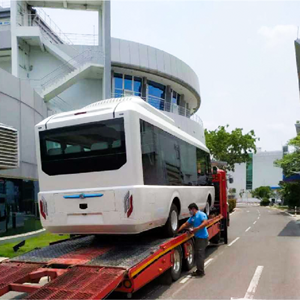
Matching 80kW–110kW permanent magnet synchronous EV motors on city feeder mini-buses, providing secondary drive synchronization with zero lubricant run-off and extended service intervals.

Extreme Weather Marine & Outdoor Units

Engineered to resist salt haze along coastal ports, high UV exposure, and monsoon rains, keeping physical properties stable without swelling or tooth profile degradation.

2. Macro Trends & Regulatory Drivers Shaping Tokyo's Procurement Landscape

2.1 Tokyo Zero-Emission Vehicle (ZEV) Strategy 2030

The Tokyo Metropolitan Government (TMG) has established strict decarbonization mandates requiring 100% of new passenger cars sold in Tokyo to be electrified by 2030, followed by small-capacity commercial motorcycles and light fleet vehicles. As a result, automotive Tier-1 OEMs are revamping drivetrain designs to eliminate fossil fuel lubricants and high-friction components.

Carbon belt synchronous drives directly align with Tokyo's environmental directives by removing petrol-based lubricants entirely from vehicle power chains, preventing toxic run-off during street cleaning and stormwater discharge into Tokyo Bay.

2.2 Noise Abatement Regulations in High-Density Residential Zones

Japanese environmental legislation imposes stringent noise control thresholds (under 55 dB during daytime and 45 dB during night hours) across Tokyo's special wards (e.g., Setagaya, Minato, Suginami). Traditional chain drives on early-morning parcel delivery bikes generate noticeable acoustic chatter that violates municipal noise ordinances.

By transitioning to carbon synchronous belts, delivery fleet operators report a 12 to 15 decibel reduction in operational noise, allowing silent midnight and early-morning neighborhood deliveries without resident complaints.

Supply Chain Reliability Note for Japanese Importers: Japanese buyers prioritize supplier stability, precise JIS compliance, and Just-In-Time (JIT) batch delivery. Our manufacturing facilities implement ISO 9001:2015 quality management with 100% optical laser tooth scanning to guarantee zero pitch deviation upon arrival at Yokohama Port.

3. System Synergy: Liquid Cooling, Monoblock Braking & Belt Drive Integration

Liquid Cooling and Powertrain Integration

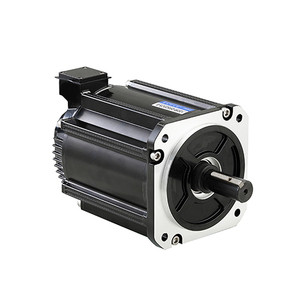
Figure 1: Integrated Liquid-Cooled EV Powertrain paired with Concentric Carbon Synchronous Belt Drive System.

A true high-performance electric powertrain cannot be evaluated in isolation. To achieve maximum energy conversion efficiency, the drive belt must operate in complete harmony with motor cooling and dynamic braking systems:

  • Concentric Swingarm Pivot Geometry: By positioning the center of the driving sprocket concentric to the swingarm pivot axis, the center distance between sprockets remains constant throughout suspension deflection. This completely eliminates dynamic belt slack and tension spikes.
  • Thermal Dissipation Compatibility: High torque motor outputs (such as 80kW liquid-cooled PMAC systems) generate heat at the motor output shaft. Our carbon belts utilize heat-dissipating aluminium-alloy sprockets with hard-anodized surface coatings (HV > 400) to wick thermal energy away from the belt teeth.
  • Regenerative Braking Integration: Modern EV drivetrains rely heavily on aggressive regenerative deceleration. Carbon belts exhibit symmetrical tooth profiles capable of transferring full reverse torque loads back into the battery pack without tooth ratchet or back-lash slippage.

Frequently Asked Questions for Tokyo Buyers & OEMs

Detailed technical and commercial answers addressing purchasing inquiries from Japanese engineering firms, distributors, and vehicle manufacturers.

Q1: What standard pitch profiles are available for export to the Japanese market?
We manufacture carbon belts in standard ISO/DIN/JIS pitch profiles including 8MDC (8mm pitch carbon profile), 14MDC (14mm pitch heavy-duty profile), as well as GT3/GT4 curvilinear tooth designs. Widths can be custom slit from 12mm up to 85mm according to your application torque requirements.
Q2: Are your carbon belt drive products RoHS 2.0 and REACH compliant for Japan entry?
Yes, all synthetic rubber matrices, fluoropolymer coatings, carbon cords, and sprocket anodizing chemicals strictly adhere to EU RoHS 2.0 Directive (EU) 2015/863 and REACH SVHC regulations. Complete chemical safety test reports (SGS / TÜV) are provided with customs clearance documentation.
Q3: How do carbon belts perform in Tokyo's rainy season and winter coastal humidity?
Unlike steel chains which rust rapidly when exposed to humidity and road salt, carbon belts are completely hydrophobic and inert to oxidation. Polyurethane and carbon fiber do not absorb water, ensuring zero dimension swell and consistent tooth engagement even under heavy rainfall.
Q4: Can you engineer custom CNC anodized aluminum sprockets to match our motor shaft?
Absolutely. We offer complete drivetrain matching services. Our CNC machining facilities produce custom front driving pulleys (hardened steel or 7075-T6 aluminum) and rear driven sprockets with specialized tooth counts, hub splines (e.g., Japanese standard ISO 14 splines), keyways, and weight-reduction pocketing.
Q5: What is the typical lead time for bulk export orders shipping to Yokohama or Tokyo Port?
Standard catalog pitch sizes are dispatched within 7–10 business days. Custom engineered pitch lengths and specialized OEM sprocket tooling require 3–4 weeks for prototype validation, with mass production batch orders shipped via direct ocean freight (Tokyo/Yokohama in 5–7 transit days) or express air freight.
Q6: How does carbon belt drive maintenance compare over a 5-year commercial fleet life cycle?
Commercial fleets switching to carbon belts eliminate lubricant costs, labor hours spent on periodic tensioning, and frequent chain replacements. Over a 5-year cycle, fleet operators experience an estimated 70% reduction in total transmission system maintenance expenditure.

Request Technical Specifications & Engineering Catalog

Partner with an established carbon belt drive manufacturer. Get CAD files, technical drawings, torque calculation charts, and direct factory pricing for the Tokyo market.