Engineered to international automotive standards, our systems deliver uncompromised braking stability, power delivery, and smart Telematics integration for the Vietnamese market.

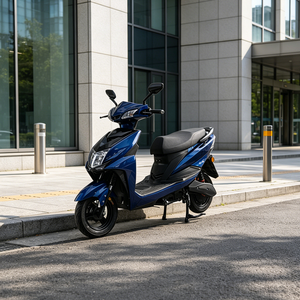
Vietnam represents one of the densest two-wheeler transit ecosystems in the world, with over 65 million registered motorcycles navigating complex urban corridors in Ho Chi Minh City and Hanoi, alongside unpredictable monsoon weather conditions. As safety standards align with international norms, the adoption of Anti-lock Braking Systems (ABS) has shifted from a premium luxury feature to an essential OEM compliance requirement under Vietnamese National Technical Regulations (QCVN 14:2015/BGTVT).
As a leading international manufacturer and exporter of motorcycle ABS systems and integrated powertrain solutions, our company supplies custom single-channel and dual-channel hydraulic control units (HCUs) engineered specifically for the road dynamics, humidity, and duty cycles of Southeast Asian markets. By integrating high-frequency wheel speed sensors, dynamic wheel-slip algorithms, and modular brake fluid pressure control valves, our systems prevent front-wheel lockup and rear-wheel lift under extreme emergency braking conditions.
Standard European and North American ABS calibrations assume dry asphalt friction coefficients ($\mu \approx 0.8$) and consistent thermal dissipation. In contrast, urban transit across Vietnam involves sudden transitions from hot asphalt to slick tiled pavements, oil-saturated intersection zones, and localized flooding during tropical downpours. Our proprietary Sub-Microsecond Friction Estimation (SMFE) algorithm dynamically adjusts solenoid valve modulation rates at up to 50 Hz, mitigating wheel lockup on wet surfaces with low friction coefficients ($\mu \le 0.3$) while maintaining optimal stopping distance.
Cast micro-alloy hydraulic control units integrated with low-noise electromagnetic solenoids ensure instant brake fluid pressure buildup, hold, and release cycles.
32-bit automotive dual-core microcontroller featuring hardware fail-safe channels, real-time diagnostic reporting, and custom CAN-bus telemetry communication.
Full potting enclosure sealing protects sensitive electronic control components against 100% relative humidity, high ambient heat, and direct water immersion.
When specifying ABS systems for internal combustion engine (ICE) motorcycles or emerging high-performance electric motorcycles (EVs) in Vietnam, selecting the correct hydraulic configuration is paramount for balancing unit cost, weight, and braking performance. Below is an engineering comparison matrix of our exported OEM ABS systems:
| System Parameter | Single-Channel ABS (Front Only) | Dual-Channel ABS (Front & Rear) | Combined e-ABS (EV Integrated) |
|---|---|---|---|
| Target Vehicle Class | 100cc - 150cc Scooters / Underbones | 150cc - 500cc Motorcycles / Maxi-Scooters | Electric Motorcycles / E-Tricycles |
| Pressure Control Valves | 2 Solenoid Valves (1 Inlet, 1 Outlet) | 4 Solenoid Valves (2 Inlet, 2 Outlet) | Hydraulic + Regenerative Blending |
| Sensor Input | Single Front Wheel Speed Sensor | Dual Front + Rear Speed Sensors | Dual Sensors + Motor Resolver CAN Signal |
| System Weight | Approx. 420 grams | Approx. 680 grams | Approx. 510 grams |
| Operating Voltage | 9V - 16V DC | 9V - 16V DC | 48V - 96V DC System Integrated |
| Fail-Safe Backup | Mechanical Pass-Through Hydraulic | Mechanical Pass-Through Hydraulic | Mechanical Hydraulic + Regen Cutoff |
Stop-and-go commuting in city centers demands immediate low-speed ABS activation. Traditional ABS systems disable assistance below 10 km/h to prevent sensor jitter. Our enhanced low-speed Hall-effect encoder processing maintains precise velocity tracking down to 3 km/h. This capability eliminates catastrophic front-wheel tucks during sudden low-speed maneuvers when buses or delivery scooters pull into traffic lanes without warning.
During the tropical monsoon season (May to November), flash flooding across urban centers creates mixed-friction scenarios ($\mu$-split surface). If a rider applies sudden brake pressure while transitioning from dry concrete to subspersed waterlogged asphalt, unmatched hydraulic pressure leads to instantaneous wheel slip. Our ABS ECU modulates pressure within 12 milliseconds of slip detection, preserving steering control and upright vehicle posture.
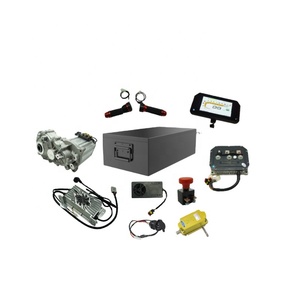
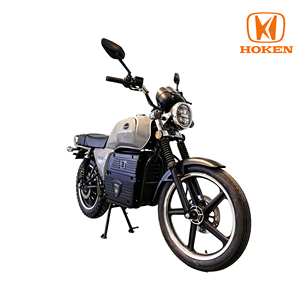
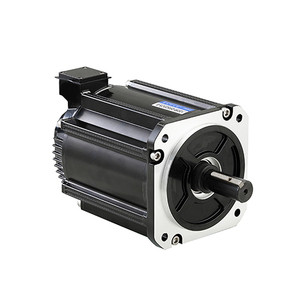
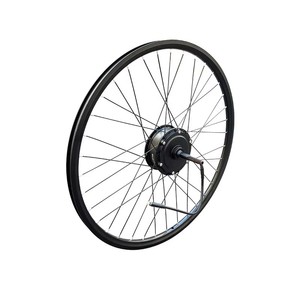
Vietnam is leading ASEAN in two-wheeler electrification, spearheaded by local manufacturers and international OEM assembly lines. Electric powertrains—such as our featured AC 4000W / 5000W BLDC Motor Kits—deliver instantaneous full torque output from 0 RPM. When combined with mechanical hydraulic disc brakes, the deceleration phase requires coordinated interaction between physical ABS hydraulic relief and electronic motor regenerative braking. Our ABS control units feature dedicated firmware signals to prevent motor controller lockup while harvesting kinetic energy back into lithium battery packs.
Drawing on decades of automotive engineering excellence, high-performance café racer development (exemplified by industry benchmarks like the Savic C-Series featuring liquid-cooled 80kW units and Brembo/Bosch integrations), our manufacturing facilities deliver tier-one reliability at competitive export prices.
Direct answers regarding OEM integration, MOQ requirements, regulatory compliance, and localized shipping to Vietnam.
Yes. Our single-channel and dual-channel ABS systems meet all structural, functional safety, and dynamic braking distance criteria established by Vietnam's Ministry of Transport (QCVN 14:2015/BGTVT and UNECE Regulation No. 78). Complete test reports and compliance documentation are supplied for local factory type approval.
Absolutely. We offer specialized ABS software modules designed to communicate directly with electric vehicle Motor Control Units (MCUs) via CAN 2.0B or UART protocol. This enables synchronized regenerative braking and hydraulic pressure modulation, eliminating wheel chatter during energy recovery.
For custom OEM parameter calibration and prototype sample testing, our MOQ starts at 50 sets. For standard production runs supplied to assembly plants in Hai Phong, Dong Nai, or Binh Duong, standard lead times are 3 to 4 weeks after parameter freeze.
Our ECU modules are encapsulated using automotive-grade polyurethane potting resin, achieving IP67 immersion protection. Furthermore, our wheel speed sensors feature double-shielded wiring harnesses and sealed waterproof connectors resistant to road salt, mud, and continuous water splash.
Yes. We provide complete OEM factory integration kits, including handheld diagnostic programmers, automated brake bleeding procedures, and on-site or remote engineering assistance during your initial pre-production assembly phase.
Partner with an established manufacturer and exporter delivering proven hydraulic brake control solutions tailored for Vietnam's OEM two-wheeler industry. Request technical specifications, sample kits, or custom pricing today.
Inquire Now