Engineered for seamless Bosch ABS integration, automotive-grade safety standards, and customized vehicle architectures across Turkey.
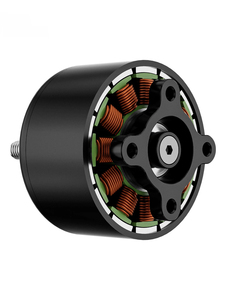
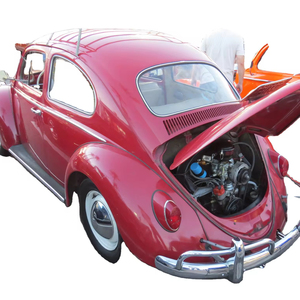
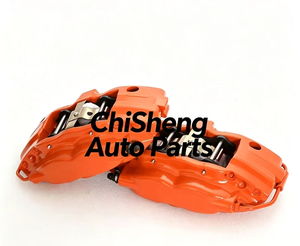
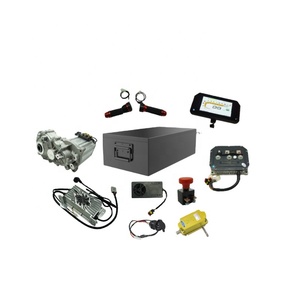
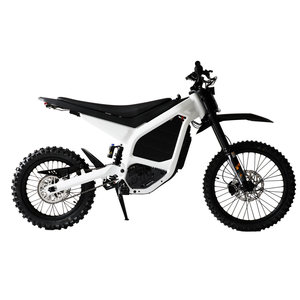
The Turkish automotive manufacturing sector—anchored in industrial strongholds such as Bursa, Kocaeli, Izmir, and the Greater Istanbul region—has established itself as Europe's premier OEM hub for passenger vehicles, light commercial vehicles (LCVs), heavy-duty buses, and high-performance two-wheelers. As global automotive standards migrate rapidly toward mandatory safety compliance under UNECE R13, UNECE R13H, and EU General Safety Regulation II (GSR II), the demand for localized OEM/ODM Bosch Anti-Lock Braking System (ABS) customization has escalated significantly.
This comprehensive whitepaper explores the technical dynamics, system architecture, hydraulic control unit (HCU) firmware tuning, and CAN-bus protocol matching required by original equipment manufacturers in Turkey. By combining tier-one component partnerships with proprietary manufacturing agility, our organization delivers complete OEM/ODM Bosch ABS solutions designed to withstand Turkey’s distinct geographical, thermal, and regulatory operational conditions.
Anti-Lock Braking Systems (ABS) serve as the primary active safety pillar in modern vehicle dynamics. At the core of Bosch's industry-standard ABS solutions—ranging from the Bosch ABS 9/10 series for motorcycles to ABS 9.3 for light commercial vehicles—is the synchronized operation of high-frequency solenoid valves, wheel speed sensors (WSS), dynamic pressure transducers, and an electronic control unit (ECU) executing advanced slip-ratio algorithms.
When hard braking occurs on uneven surfaces, such as cobblestones in historic Turkish municipal zones or wet asphalt along coastal highways, wheel deceleration rates spike abruptly. The Bosch ABS ECU calculates real-time longitudinal slip ratios ($\lambda$) using inputs from active Hall-effect sensors:
Slip Ratio ($\lambda$) = [(Vehicle Speed - Wheel Speed) / Vehicle Speed] * 100%
Optimal braking force occurs within a target slip window of 15% to 20%. If slip exceeds critical thresholds, the Hydraulic Control Unit (HCU) modulates wheel cylinder pressure up to 50 times per second through three distinct pressure phases: Pressure Hold, Pressure Reduction, and Pressure Re-increase.
Integrates low-noise motor pumps, pulse-width modulated (PWM) inlet/outlet solenoid valves, and internal accumulators to deliver immediate pressure modulation without pedal kickback.
Dual-directional active Hall sensors detect low-speed rotation down to 0 km/h, providing essential data for Hill Hold Control (HHC) and automatic vehicle hold (AVH).
Implements redundancy management under ISO 26262 functional safety, ensuring continuous diagnosis of harness integrity, valve coil resistance, and power supply stability.
Turkey's geography demands versatile vehicle dynamics engineering. From high-altitude mountain routes in Eastern Anatolia to high-density traffic congestion across the Bosphorus bridges, brake systems face diverse stress factors.
Commercial last-mile logistics fleets navigating narrow, steep inclines in Istanbul demand specialized ABS calibration. Our OEM dual-channel Bosch ABS systems prevent rear-wheel lift (Mitigation of Rear Wheel Lift - RLM) and lockups on slippery pavement, preserving steering control for urban delivery drivers.
Regional transport vehicles operating under varying payload conditions require dynamic brake force distribution (EBD). Bosch ABS integration ensures hydraulic pressure dynamically adjusts between front and rear axles based on rear passenger load metrics, eliminating tail-slide hazards during high-speed emergency stops.
In partnership with premium electric motorcycle builders—utilizing technology inspired by Melbourne’s engineering traditions like Savic Motorcycles—our Bosch ABS systems seamlessly integrate with regenerative braking units. The ECU balances electric motor counter-torque with mechanical Brembo monoblock caliper force.
Off-road utility vehicles (UTVs) operating in loose soil, mud, and unpaved terrain benefit from customized off-road ABS modes. Firmware adjustments allow controlled slip ratios (up to 30%) to form a wedge of soil in front of tires, reducing stopping distances on loose terrain without sacrificing stability.
The Turkish automotive landscape is undergoing a structural transition driven by electrification, local EV ecosystem expansion (championed by national initiatives such as TOGG), and strict regulatory alignment with the European Union’s Customs Union frameworks. Key market trends reshaping OEM requirements include:
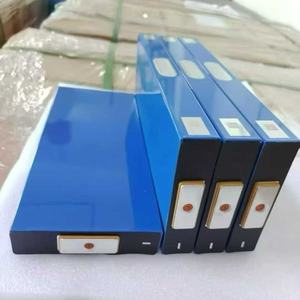
Drawing upon extensive experience in high-performance powertrain design, dual-channel brake setups, and bespoke EV conversions—reflected in our product portfolio featuring 60kW EV controllers, 4-piston monoblock calipers, and high-discharge LiFePO4 energy systems—our manufacturing footprint provides unparalleled value to Turkish vehicle assembly plants.
Every OEM ABS controller undergoes automated HIL simulation, testing millions of emergency braking cycles across simulated ice, gravel, wet asphalt, and split-friction ($\mu$-split) road profiles before hardware delivery.
Our automated cleanroom assembly lines adhere strictly to automotive-grade quality management standards. Automated optical inspection (AOI) and leak testing guarantee 100% reliability for all hydraulic valves and seals.
We provide full-stack ODM services: custom mounting bracket design, specialized wiring harness fabrication with IP67 connectors, custom master cylinder sizing, and bespoke CAN matrix matching for vehicle dashboards.
Unlike conventional internal combustion vehicles where brake vacuum is available via the engine manifold, electric vehicles demand active hydraulic pressure generation. Our customized Bosch ABS modulators coordinate directly with motor controllers (such as 320V 60kW EV controllers). During hard deceleration:
Here are technical answers to common inquiries from vehicle designers, purchasing heads, and homologation engineers in Turkey:
Accelerate your vehicle development timeline in Turkey with certified active safety engineering, custom hydraulic modulators, and competitive factory-direct pricing.