Engineered to exact OEM specifications, tested under dynamic stress loads, and optimized for Thailand's tropical road environments.
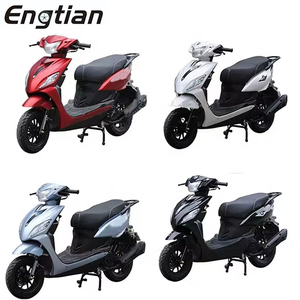
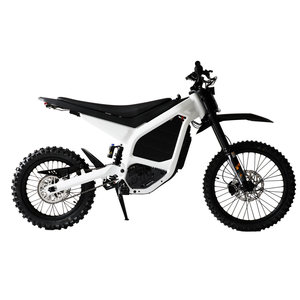
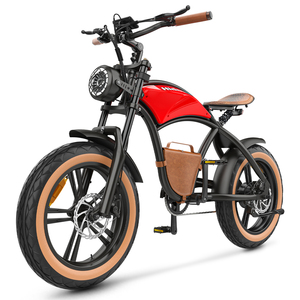
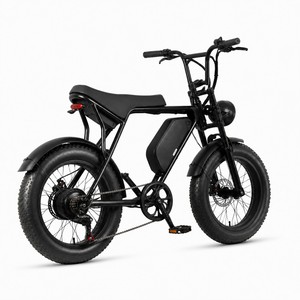
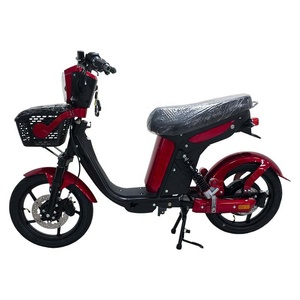
Strategic insights for automotive assemblers, fleet operators, and OEM brand owners in Southeast Asia's manufacturing powerhouse.
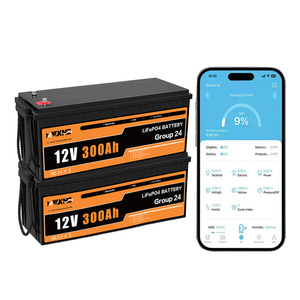
Thailand, long celebrated as the "Detroit of Asia," is executing a massive transition toward electrification under the government's EV 3.0 and EV 3.5 incentive schemes. With subsidies for electric two-wheelers and stringent local content requirements phased in across 2024–2027, Thai motorcycle assemblers, OEM distributors, and fleet managers face immense pressure to secure reliable, high-strength structural chassis frames. The chassis frame serves as the literal backbone of any vehicle, bearing dynamic operational stress, supporting heavy lithium-ion battery modules (such as 72V/30Ah or 12.8V/300Ah LiFePO4 packs), and maintaining steering geometry under rigorous road conditions.
Partnering with a tier-one China motorcycle chassis frame manufacturer allows Thai importers and OEM brands to shorten development cycles from 24 months down to 16 weeks while ensuring full compliance with Thailand Industrial Standards Institute (TISI) regulations. By utilizing automated robotic welding, Finite Element Analysis (FEA) simulation, and high-tensile steel tubing, Chinese manufacturing partners provide the ideal balance between structural integrity and cost leadership.
Under the ASEAN-China Free Trade Area (ACFTA) agreement, sourcing motorcycle chassis frames accompanied by a Form E Certificate of Origin enables Thai manufacturers to import frames at 0% tariff rates, providing up to a 30% cost reduction over domestic fabrication while maintaining world-class metallurgic quality.
How our OEM/ODM chassis frame production lines eliminate structural failure, enhance dynamic stability, and accelerate time-to-market.
We source certified Q235B/Q355B high-strength structural steel and seamless 6061-T6/7075-T6 aluminum alloy tubing. Every batch undergoes ultrasonic flaw detection and tensile stress verification to resist yield strength degradation under heavy payload distribution.
Human welding variability is eliminated through automated Panasonic and KUKA robotic welding cells. Continuous argon-shielded bead penetration prevents weld porosity, stress concentration points, and frame cracking under high torque delivery.
Before physical prototyping, every chassis frame geometry undergoes Finite Element Analysis (FEA) computer modeling to optimize torsional rigidity and flex characteristics. Physical prototypes endure 500,000-cycle vertical shock and dynamic fatigue testing.
Designed specifically for Thailand’s high humidity and coastal salt spray environments, our frames undergo dual-stage Cathodic Electrophoretic Deposition (E-coat) followed by electrostatic thermosetting powder coat finish, passing 1,000-hour neutral salt spray tests.
Selecting the optimal frame structural alloy based on mechanical properties, weight efficiency, and application demands.
| Performance Spec / Alloy Type | Conventional Mild Steel (Q235) | High-Tensile Alloy Steel (Q355B / Seamless) | 6061-T6 Aircraft Grade Aluminum | Cast Backbone & Battery Enclosure Chassis |
|---|---|---|---|---|
| Yield Strength (MPa) | 235 MPa | 355 - 460 MPa | 276 MPa | 310 MPa |
| Tensile Strength (MPa) | 370 - 500 MPa | 490 - 620 MPa | 310 MPa | 340 MPa |
| Frame Weight Reduction | Baseline (0%) | - 18% to 25% lighter | - 40% to 50% lighter | - 35% (Integrated Structural Battery) |
| Fatigue Resistance (Cycles) | 200,000 Cycles | 500,000+ Cycles | 350,000 Cycles | 600,000+ Cycles |
| Corrosion Resistance (Salt Spray) | Moderate (Requires Paint) | High (E-coat + Powder Coat) | Superior (Anodized / Natural Passivation) | Superior (Powder Coated Die-Cast) |
| Ideal Application Scenario | Low-speed utility scooters | Heavy delivery e-motos, street bikes | High-performance e-motorcycles, EMTB | Premium Cafe Racer, High-speed EV |
Custom engineered chassis solutions adapted to Thailand's unique geographical, commercial, and climate challenges.
Bangkok's intense traffic density and stop-and-go delivery cycles demand heavy-duty rear subframes capable of supporting top-box payloads up to 150 kg. Our reinforced Q355B steel chassis incorporates dual-tube rear swingarm brackets that prevent frame twist during rapid lane changes on Sukhumvit and Rama IV Roads.
Navigating steep inclines, tight switchbacks, and unpaved mountain trails in Northern Thailand requires superior front-end rake angle precision and torsional stiffness. Our naked street and scrambler chassis frames maintain rigid triple-tree head-pipe alignment to guarantee responsive handling and vibration damping.
Salt-laden tropical air speeds up chassis oxidation and structural rust. To combat coastal humidity, our frames undergo a multi-step immersion E-coating process that coats internal frame tube hollows, followed by stainless steel hardware mounting points for extended service life in tourist rental markets.
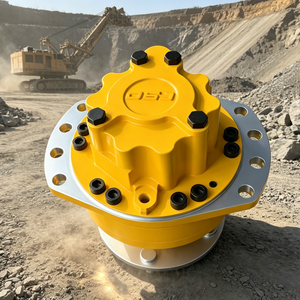
Within Eastern Economic Corridor (EEC) manufacturing hubs in Rayong and Chonburi, zero-emission electric utility vehicles require low-center-of-gravity chassis designs. We engineer modular cradles that accommodate 60V/72V high-capacity batteries and hydraulic gear motors for heavy internal cargo transfer.


Essential guidance for Thai purchasing managers to streamline customs clearance, leverage ACFTA preferential duties, and optimize freight logistics.
Under the ASEAN-China Free Trade Area agreement, motorcycle frame components categorized under HS Code 8714.10 (Parts and accessories of motorcycles) imported into Thailand are eligible for 0% customs tariff rates when accompanied by an official Form E Certificate issued by China Inspection and Quarantine (CIQ) or CCPIT. Compared to standard MFN tariffs of 10%–30%, this provides instant landed-cost efficiency for Thai motorcycle assembly facilities.
Vehicle frames sold within Thailand must support national safety alignment standards governed by the Thailand Industrial Standards Institute (TISI). Our engineering department provides complete structural CAD models, material mill test certificates (MTC), chemical composition breakdown reports, and dynamic load testing data required by Thai homologation testing labs during vehicle type approval.
To reduce ocean freight expenses to Laem Chabang Port or Bangkok Port (Klong Toey), we design modular knocked-down frame architectures. By engineering detachable subframes and custom steel stackable racks, we maximize container stuffing density—fitting up to 350 ready-to-weld or painted frame sets per 40ft High Cube container.
Combining state-of-the-art tooling with hand-crafted precision for high-performance two-wheeler platforms.
Modern electric two-wheelers demand structural innovation beyond legacy petrol chassis conversions. Our factory specializes in die-cast aluminum backbone frames that double as the battery structural enclosure. This floating-wheel design pairs a cast single-sided swingarm with clean geometry, maintaining consistent belt or chain tension through suspension travel for smooth torque delivery and low maintenance.


Direct answers regarding MOQ, frame engineering customization, lead times, and quality control assurances.
For custom ODM/OEM frame designs requiring specialized welding fixtures and tooling jigs, our standard production MOQ is 100 sets per batch. For existing standardized frame models (such as scrambler, electric street bike, or urban delivery scooter frames), we accommodate trial orders starting from 20 sets to assist Thai clients with market testing and sample homologation.
Yes, absolutely. Our engineering department accepts 3D STEP/IGES CAD files of your motor (e.g., hub motor torque plates or mid-drive motor brackets like 2000W-8000W units) and battery enclosure dimensions. We perform full 3D interference checking and adjust mounting tab locations, bolt hole centerlines, and harness routing channels prior to fixture fabrication.
Frame distortion caused by thermal expansion during welding is eliminated through multi-station pneumatic clamping jigs and sequenced robotic TIG/MIG welding passes. After welding, all critical mounting points (head pipe bearing races, swingarm pivot axes, and engine mount holes) undergo CNC post-machining to guarantee geometric tolerances within ±0.2mm.
We supply a complete shipping paperwork package including the Official Certificate of Origin (Form E) issued by customs authorities, Bill of Lading (B/L), Commercial Invoice detailing exact HS Codes (8714.10), Packing List, and Factory Mill Test Certificates for steel tube batches. This ensures smooth, zero-tariff clearance at Laem Chabang and Bangkok ports.
Initial 3D design verification and FEA stress analysis take 5 to 7 working days. Physical sample toolings and prototype welding require 25 to 30 days. Upon sample approval by your engineering team, mass production lead time is typically 30 to 35 days for a full 40ft container order.
We provide a dual-layer surface protection system: First, an automated multi-stage immersion cathodic electrophoresis (E-coat) layer that covers both inner tube walls and outer surfaces; second, an outdoor-grade electrostatic polyester powder coat available in custom RAL colors, satin, matte, or gloss finishes passing 1000-hour salt spray testing.
Yes. We provide complete FEA structural load reports detailing stress distribution, displacement maps, dynamic load safety factors, and torsional rigidity ratings under simulated braking, cornering, and vertical shock loads to assist with your TISI homologation documentation.
We provide full technical documentation, including frame assembly manuals, exploded view 3D drawings, torque spec charts for engine mounts, and step-by-step guidance for local technicians assembling CKD kits in Thai manufacturing plants.